Character Creation
What makes a good character?
Without characters, a story lacks heart. If there is no heart to pump the muscle of setting, or the lifeblood of plot, or to keep the bones of worldbuilding alive, there can be no story.
A world may establish the rules and a plot may create events, but characters are what give a story meaning.
In order to create a character that can contribute to the narrative, there are a few key parts that they need to have.
The Heart of Character
A character is like a heart. They do not exist to be. They exist to move something.
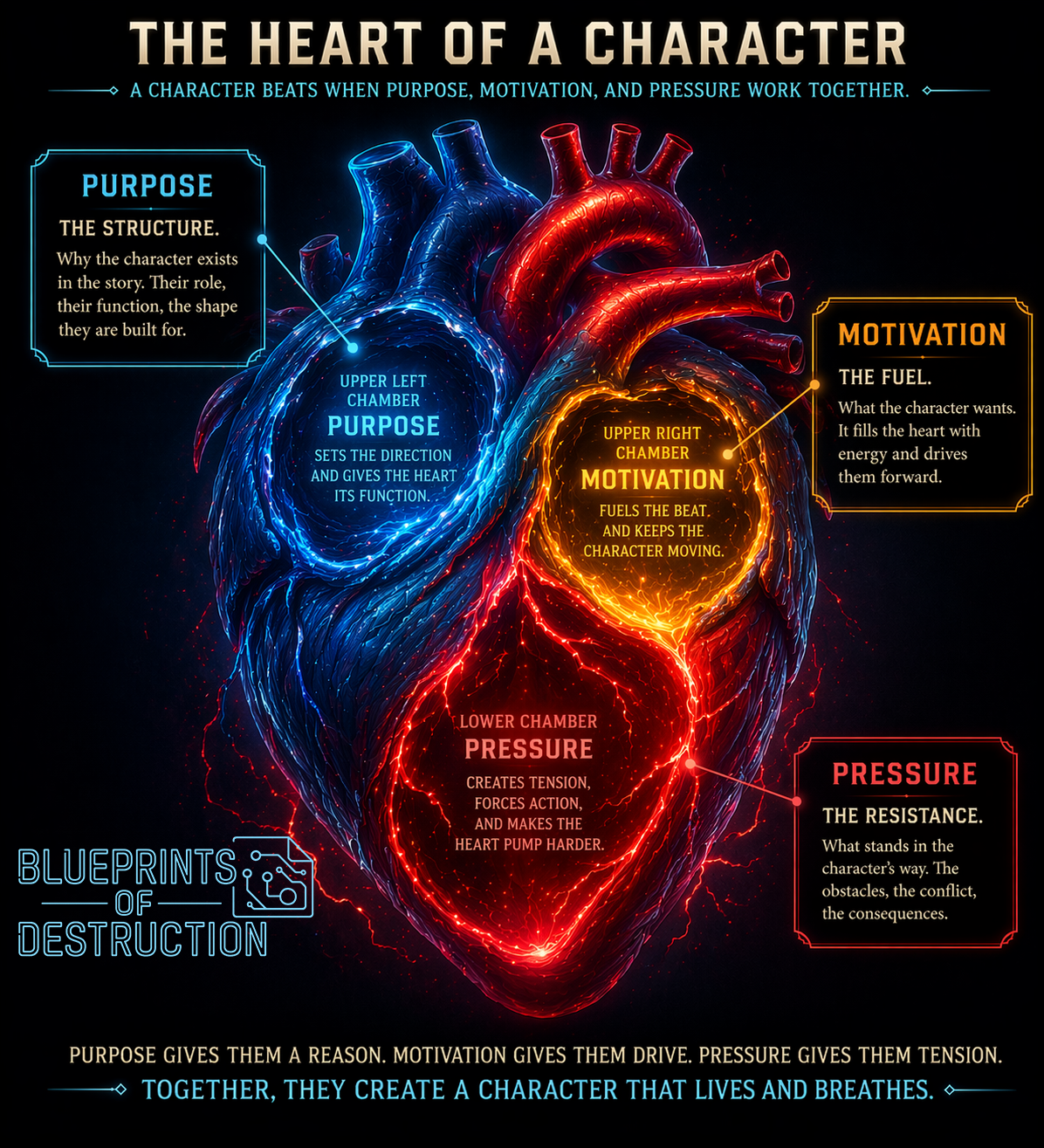
The Structure of Purpose
This is the physical form. Just like the heart has chambers, valves, and shape, purpose is what a character is built to do. Without structure the heart cannot function. Without purpose, a character has no narrative role.
The Blood Flow of Motivation
Direction, force, and circulation are what move blood through the heart. Motivation is what moves the character. The blood is what gives the heart meaning, and motivation is what gives a character direction. The movement of plot is the motivation that drives the character through the story.
The Pulse of Pressure
The heart exists to push. Blood pressure is the resistance generated by the heart as blood travels through vessels. Blood can only be moved when the heart beats. A character only acts because something is pushing back. This is how a story creates tension and effort.
Characters are built from three main components:
- Purpose
Why the character exists in the story - Motivation
What the character wants in the story - Pressure
What stands in the characters way.
When all three of these mechanisms are present, the character "beats." When even one is missing, a character begins to feel as lifeless as a heart that is no longer beating.
Foundations of Character
Purpose
Let's first tackle the character's purpose.
Every element of a story needs to serve the greater body of the narrative. Characters are no different. They must have a reason to be in the story. If a character does not have a motive or objective, they do not belong.
The most common roles of a character are:
- Protagonist
- Antagonist
- Mentor
- Foil
- Catalyst
Each of these roles further the plot, and drive the story as it continues to make it's way through the twists and turns of the arteries and veins.
Goals and Motivations
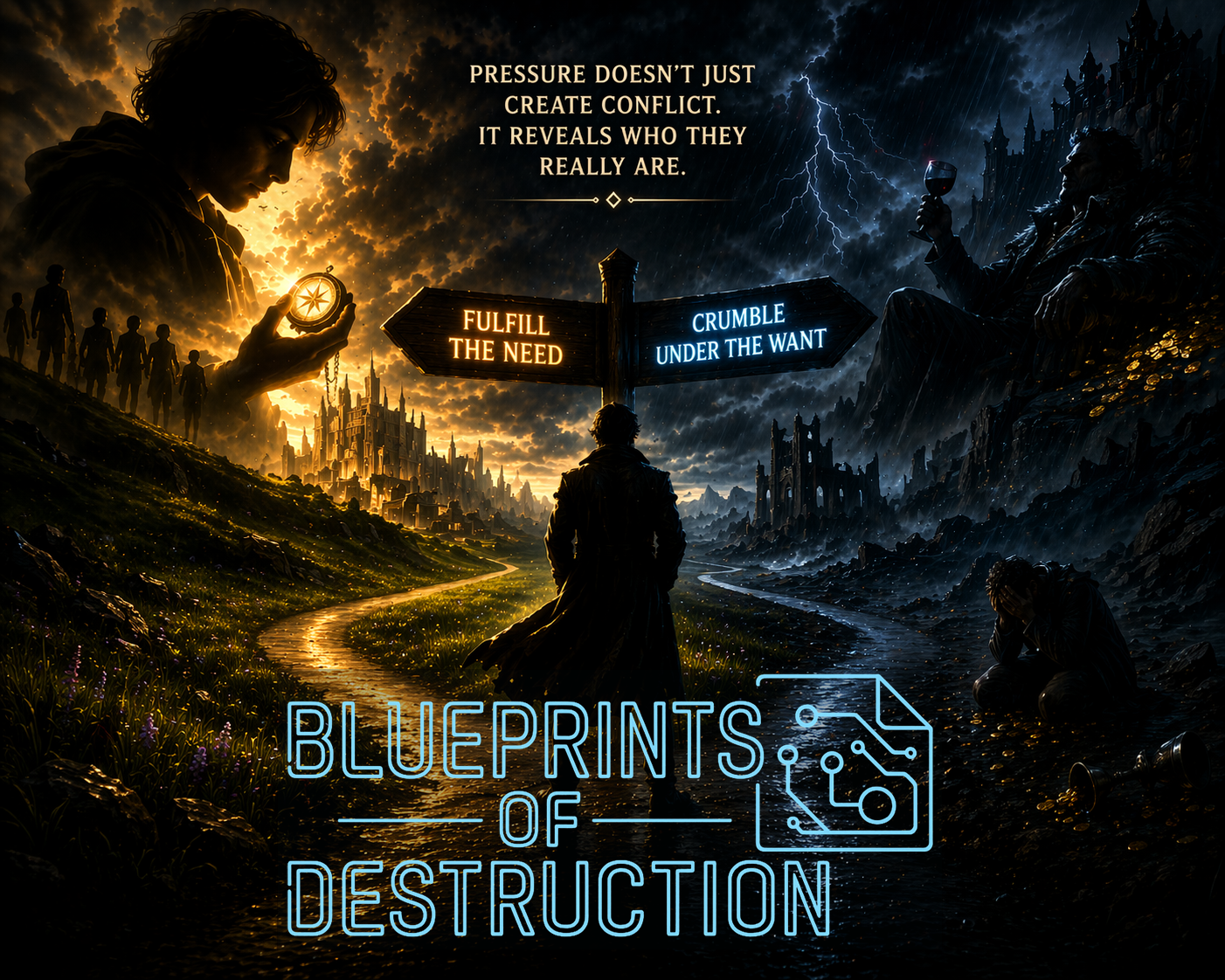
Every functional character in a story should have a need and a want. This is what drives the character to continue their journey. When the time comes, it pushes them to either make a tough decision to fulfill the need, or to crumble underneath their want. The need and the want should be different.
A simple example of a need versus a want might be:
A character needs to forgive the individual that killed their friend but they want revenge for their loved one's death.
Xal is driven to find proof of betrayal and in the process of his obsession, he kills his friend. He needed to let go of something from his past, but in the pursuit of his wants he kills a loved one.
The climax decision of the story is about whether they will choose to forgive or take revenge.
Flaws and Weaknesses
Flaws and weaknesses are what make a character believable even as they generate conflict in the story.
For example, a flaw or weakness when developing a character might be:
- Pride
- Fear
- Obsession
- Naivety
Negative traits not only help add pressure within the story, but also allow for the character to grow and change. They are ultimately up to you as the author to establish. You get to decide whether they grow out of their weakness or sink deeper into it.
Character Arcs
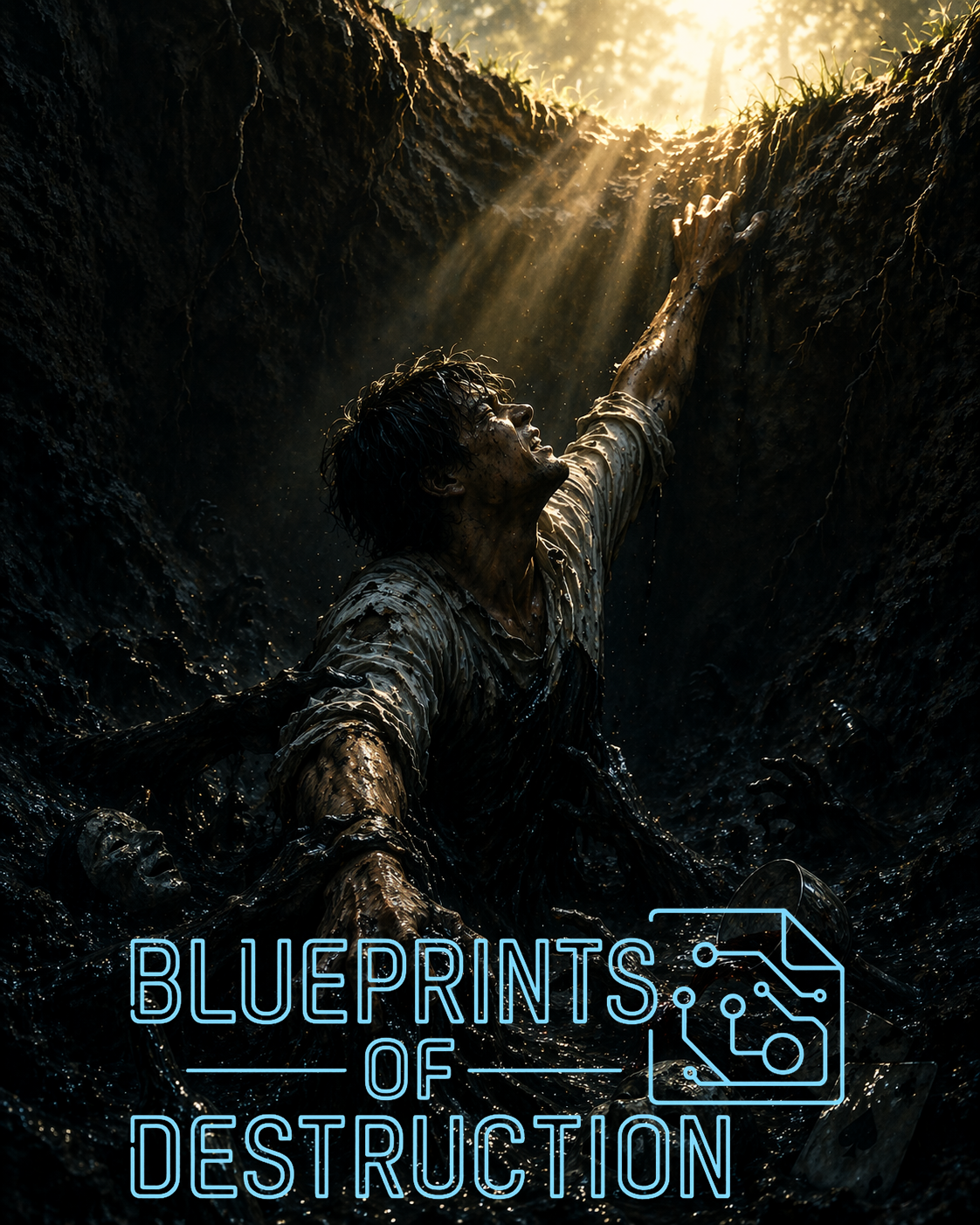
The character arc is the process the character goes through to morph into their true potential. Common arcs include:
- Positive Arc
- Negative Arc
- Flat Arc
While these three cover most character arcs, there are more nuanced variants like the:
- Redemption Arc
- Tragic Arc
- Corruption Arc
- Growth Arc
Building Characters for Stories
Characters only exist inside of complex systems. These systems shape cultural expectations and social roles. They determine how characters react within power structures, and even how characters interact with each other.
How characters Drive Story
- Conflict
- Relationships
- Systems and Society
The Process of Designing Characters
Below is a simplified character design process to get you started on your character development journey:
- Define the Character's Role
What functions do they serve in the story? - Identify Their Goal
What is this character trying to accomplish? - Create Their Flaw
What weakness will create tension? - Define Their Pressure
Who or what opposes them? - Decide How They Change
How will they transform in the end?
Character Creation Exercise
To clarify your growing character concept, below are five more questions to help you determine who exactly this character is:
- What does your character want most?
- What is he/she afraid of?
- What mistake does he/she keep making?
- Who stands in the way?
- What would break your character emotionally?
Surface vs Core Character Design
As much as people hate to admit it, everyone judges a book by it's cover, especially when it comes to the way that individuals present themselves.
Developing a character's core and surface traits can be equally important when designing a character. The way that a character interacts with their world will give both the reader and other characters clues as to who this individual is.
When designing a character, keep in mind that outward appearance is a reflection of the inside. This can assist you when you are making stylistic choices. The more you understand your character, the better you can estimate the choices they would make.
This is where you can use symbolism to your advantage. It never hurts to look into the meaning of metaphors and euphemisms behind such things as:
- Color
- Weather
- Shapes
- Unassuming details
These can be a fantastic way to add layers of information for the reader to dissect.
Character Creation Guides
- What is Character Development
- How to Make a Character
- How to do Character Development
- Creating Characters for a Book
- Character Arc Ideas
- How to Fix a Flat Character
Character Development Through Randomization
Writers often fall into predictable patterns when creating characters. Authors tend to repeat the same personality types, motivations, or character roles without realizing it. Randomization introduces unexpected combinations that can encourage a storyteller to explore ideas they might never have otherwise considered.
Randomized systems allow writers to:
- Break creative habits
- Generate surprising character traits
- Build characters quickly
- Discover story ideas organically
- Help Characters Create Pressure
What is Randomized Character Design?
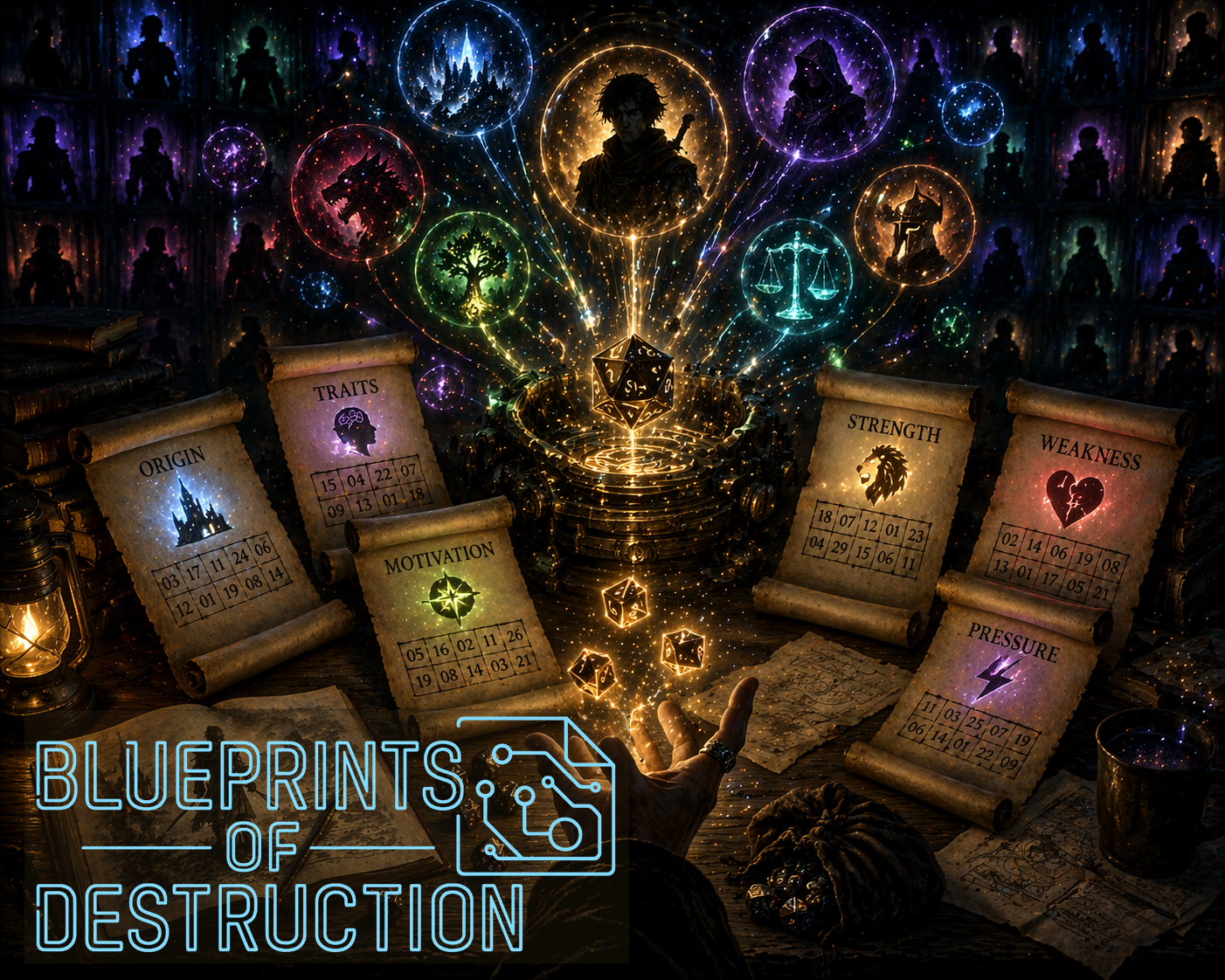
Randomized character design is the process of generating character elements using chance-based systems. Instead of choosing traits intentionally, a writer lets a system produce variables such as motivations, personality traits, strengths, weaknesses, or background elements.
Each separate component is then assembled into a comprehensive character concept.
For example, a random generation system might produce a character like:
Profession: Archivist
Motivation: Revenge
Flaw: Cowardice
Secret: Former Criminal
Suddenly, the writer has a character concept that might not have appeared through normal brainstorming. Randomization does not replace creativity. Instead, it sparks it. This urges the author to discover their character before introducing them to their audience.
The Power of Unexpected Combinations
Creativity often happens when unrelated ideas collide. Randomization forces those collisions to happen.
Contradictions naturally create tension and story possibilities. Unexpected combinations can lead to:
- deeper personalities
- unusual story arcs
- unique character voices
Structured Randomization Systems
While simple dice rolls can generate ideas, structured systems allow writers to build more detailed characters.
Structured systems might randomize elements such as:
- Personality traits
- Moral alignment
- Emotional triggers
- Social roles
- Hidden motivations
By combining many variables, the system can produce thousands or even millions of unique character possibilities.
This is the design behind the CMD, the Character Motivations Diagram.
CMD's
CMD's are a structured randomization system designed to generate complex character foundations quickly. Rather than producing only simple traits, CMD's generate combinations of behavioral patterns, emotional drives, and narrative roles.
The result is not just a random character, but a story-ready personality framework.
Writers can then refine the generated results into a fully developed character.
Want to dive deeper into making some of your own randomized characters? Here are some guides and tools to help you in the process!
Ready to Build Your Character?
Now that you understand the foundations of character creation, use these resources to turn your ideas into a working character:
- Create a character quickly with the Random Character Generator
- Discover what drives your character with the Character Motivations Diagram
- Plan how your character changes by deciding which character arc you should use
- See these character development principles in action with Gagle Paxx's Character Profile
