- Home
- What is Character Development
What is Character Development
What is character development? Character Development is the process of creating fictional characters with depth and motivations that feel real as you show growth and change throughout your story. The process of change or failure to change, reveals who each character is by the end of a story. A good character arc needs a few key components to make it effectively hit the emotional beats your story needs.

Why Does a Good Character Arc Matter
When readers recall their favorite stories, they're usually remembering the characters, not the plot. Change, or even the refusal to do so, gives the audience a reason to stay emotionally invested in your story. Whether the arc is a positive or negative change, the result is a meaningful payoff that helps the reader to have resolution and closure. Character arcs and character development in general are the emotional engine of a story.
The Lie
A good character arc starts with something that the character thinks is true, but isn't. A couple of common examples of this could be a character thinking that wealth is the only way to be safe or even that no one can be trusted. Without this initial false belief, the character has no room to grow.
The Wound
In order for a character to have a lie that they believe, there must be a painful event in their past that gives them a reason behind their belief. This emotional root gives rise to their fears and flaws. The audience must be able to sympathize with your character even when the character makes unfavorable choices. A damaging event from their past is an effective way to help the reader connect with your characters.
Want Vs. Need
Every character with a good arc needs to have both a want and a need. The want is the external goal that the character thinks will solve their problem, and the need is what the character actually needs to become a better version of themselves. The story is the process the character goes through to help them stop chasing their want and move toward embracing their need. An example of a want could be to defeat an enemy, while the character's need would be to stop running from themselves. An alternative want and need could be that a character wants to earn approval, but what they really need is to accept themselves.
Confrontation
In order to create emotional friction or transformational conflict, you can introduce escalating obstacles that challenge the lies the character believes are true. Through this confrontation, your character is forced to change. The goal of these events is to cause the character's old mindsets to fail as their coping mechanisms stop working. Through these obstacles, their fears surface and their relationships begin to fray. As their habits become self-destructive, they are pushed closer to their pivotal event.
Moment of Truth
This is the moment in the story where the character must choose to cling to The Lie or embrace The Truth. This moment usually happens at either the emotional or narrative climax, and could involve the character either admitting weakness or sacrificing something they value. This decision is what defines the character's arc.

The Transformation
A good arc ends with change. A tangible alteration that the audience can see or feel. There are three options for transformation: the positive arc, the negative arc, and the flat arc. All arcs use the same structure, but have a different outcome.
The Positive Arc:
This is where positive change happens. The character overcomes their Lie when they embrace The Truth. They have conquered their Lie and as a result become more whole, brave, honest, or compassionate. An effective positive arc should cost your character something. Their willingness to pay the toll is what transforms them.
Let's take Ebenezer Scrooge for an example of a positive arc.
The Lie: Human connection is pointless; only wealth brings security.
The Truth: Compassion, generosity, and relationship are what give life meaning.
Change: Scrooge becomes joyful, generous, warm, and connected.
The Negative Arc:
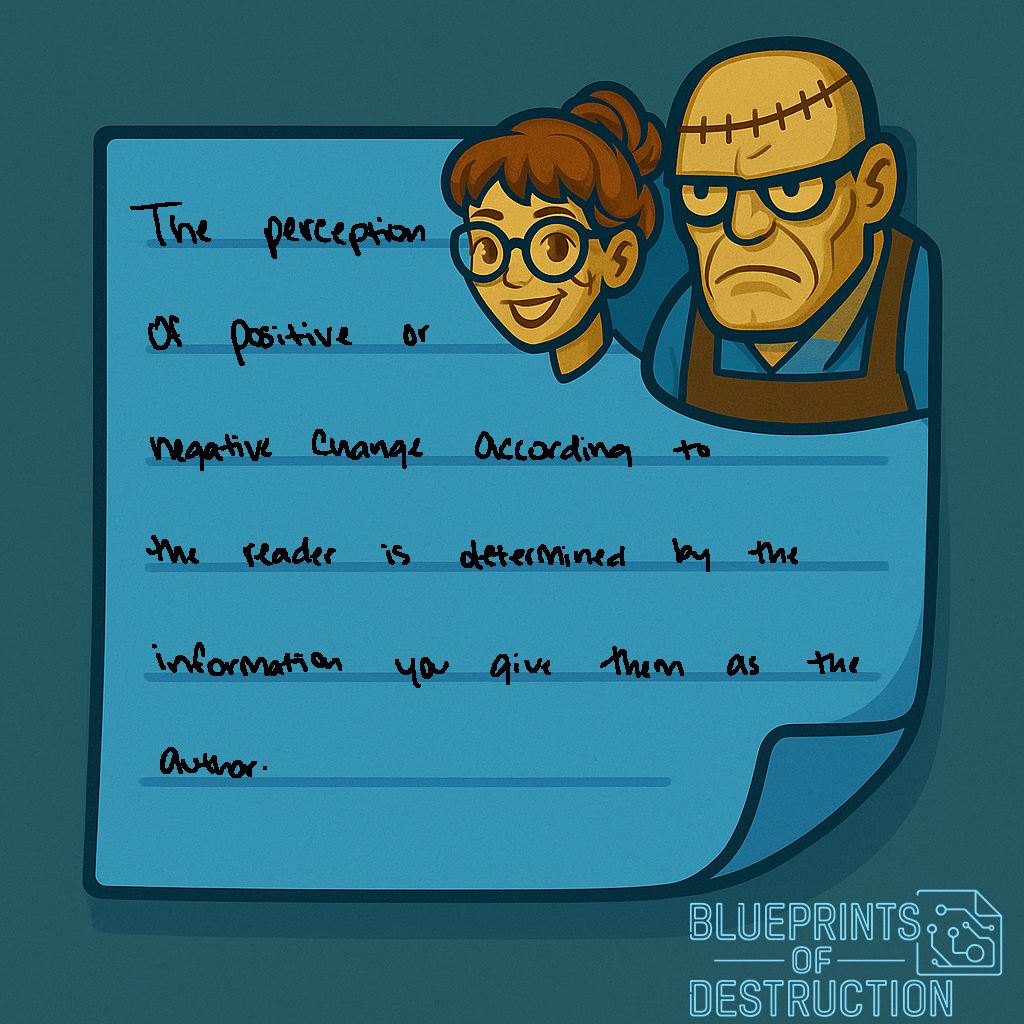
The negative arc is achieved when the character rejects The Truth and cling to their Lie. A negative arc can also happen when they discover a devastating truth that begins to make them fray at the edges. As they fail, their actions define the story. Where a positive arc requires a cost the character is willing to pay, the negative arc is the result of weakness and an unwillingness to sacrifice. The hard choice demands a heavy, immediate offering, while the refusal to pay in the moment will return to reap what it is owed with an interest that can never be paid off.
Let's look at Dr. Jekyll and Mr. Hyde as an example of a negative arc.
The Lie: I can separate myself from my darker impulses and control them.
The Truth: Human nature cannot be divided; ignoring the shadow self gives it power.
Change: Dr. Jekyll clings to a lie that destroys him physically, morally, and spiritually.
This is where the character does not change internally. Instead, their Truth changes the world around them. This character acts as a catalytic stabilizing force, or as a moral anchor. This character shines brightest when he or she is surrounded by those who do change.
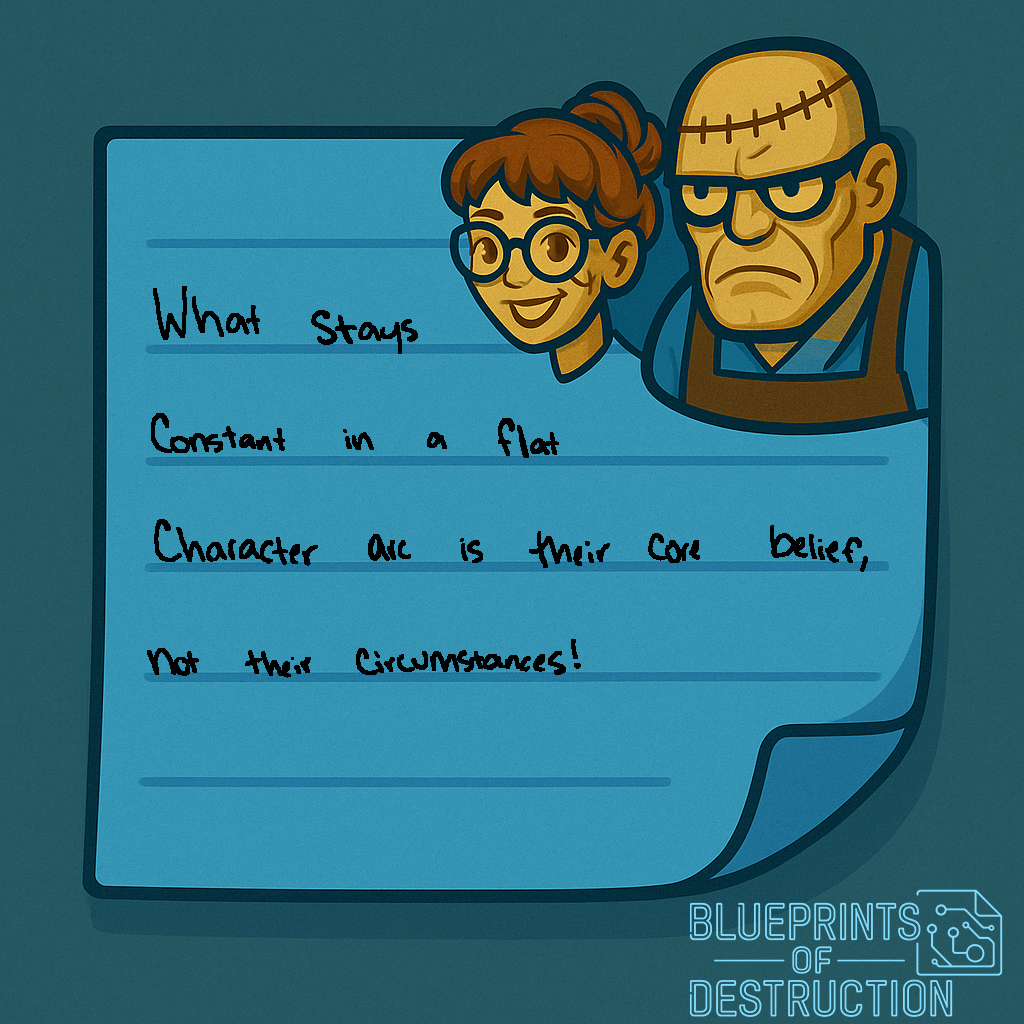
This is not to say that a character with a flat arc goes through the story unopposed. Characters with a flat arc still face tremendous challenges, even as their core belief remains constant.
A flat arc is used to emphasize either the world or characters around them. Their lack of positive or negative growth in the story is only illustrated because the story isn't about them. It is possible to take that character from the arc with no change, and put them in a scenario where the audience is able to see them face their own challenges.


For an example of a flat arc, we turn to Sherlock Holmes.
The truth: Reason and observation reveal truth; emotion only clouds judgment.
Change: Sherlock Holmes himself does not change. Instead, his rationalism helps others overcome their superstition, fear, bias, or emotional conclusions.
The flat arc does not mean that there is no growth, but rather that the growth happens externally rather than internally.
All three versions of transformation use the same structure, but achieve different goals.
Character development gives your story heart. Great stories are build on great characters. Character development turns simple moments into powerful events. When you understand what your character believes, what hurts them, and what they truly need, their choices begin to make sense.
By shaping how your characters change, or refuse to, you give your story meaning that can last beyond the final page.
