- Home
- Getting Started
How to Write a Story
A Beginner's Guide to Turning Ideas Into a Draft
Lucy came to her dad and asked, “Can you show me how to write a story, dad? I have twenty-six characters I would like to write about.”
Frank had been writing since he was in high school, and Lucy decided she was interested in stepping into a story of her own.
“Twenty-six,” he responded with a sigh. “Of course you do,” he answered half-heartedly with a smile. He thought about how to proceed as he mulled over the enormity of such a request. Frank loved her energy, and didn’t want to discourage her enthusiasm, but with a request like that he realized this was going to be an uphill effort. “What kind of story do you want to write?”
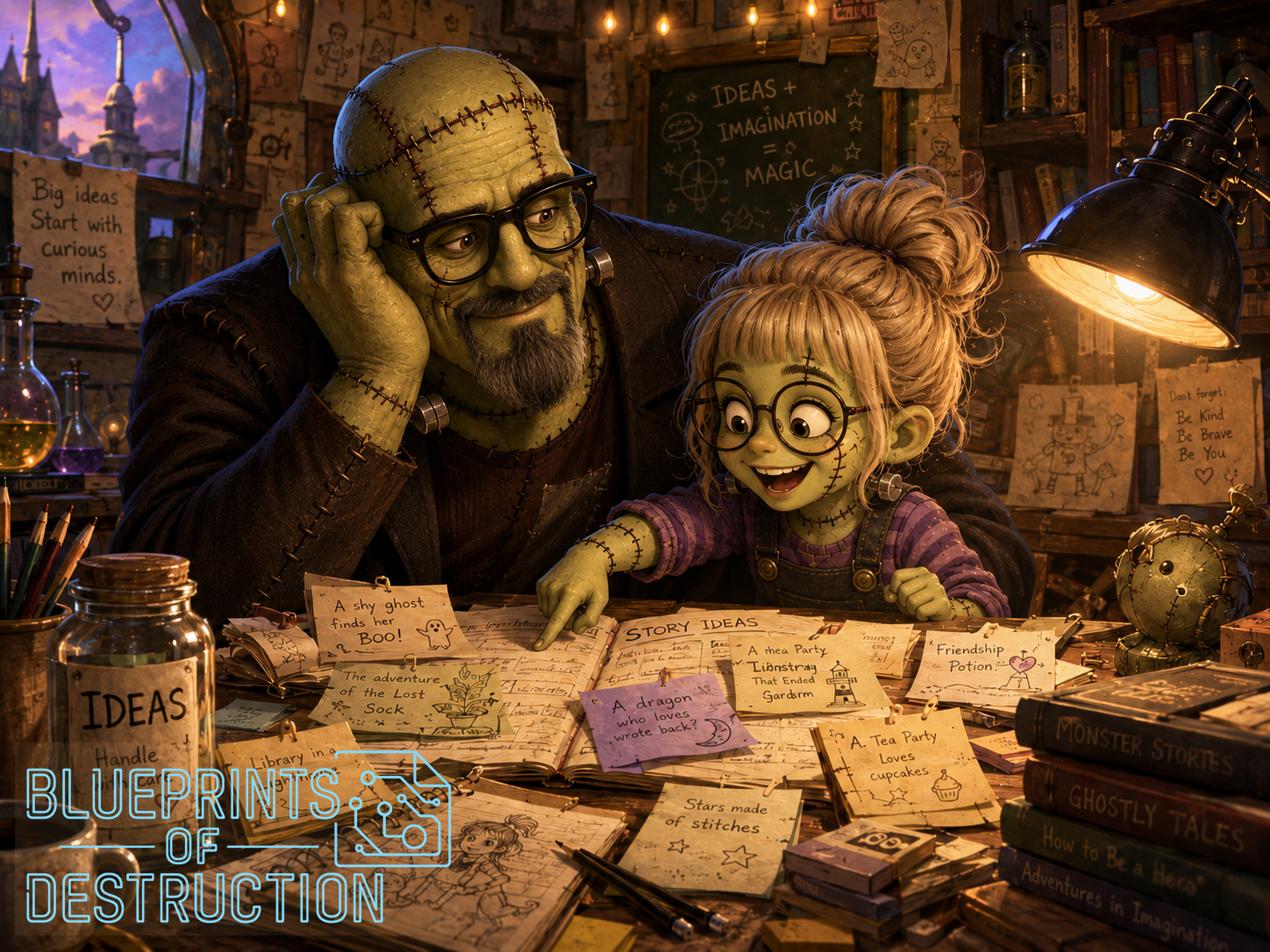
"I don't know yet," Lucy answered, deep in thought as she peered deep into the recesses of her mind. “I know I want at least twelve different kinds of species, a city with thirteen levels, and a battle over the freedom of the citizens in a society which currently uses legal slavery. Oh, yeah. And I want it to be called Blueprints of Destruction.”
"Is that all?" Frank thought to himself. Her answer was resolute. He was not sure he had the energy for the epic-level story she was asking about whether she knew it or not. He did not want to crush a growing love for writing. He started with a few simple questions.
Getting Started
Most stories do not begin neatly. They usually start out as a pile of characters, settings, scenes, questions, and half-formed ideas. That is not a problem. This is simply a pile of raw materials. The hard part is not finding an idea. Sometimes the hard part is organizing the ideas you already have.
Gather Your Ideas
Inspiration
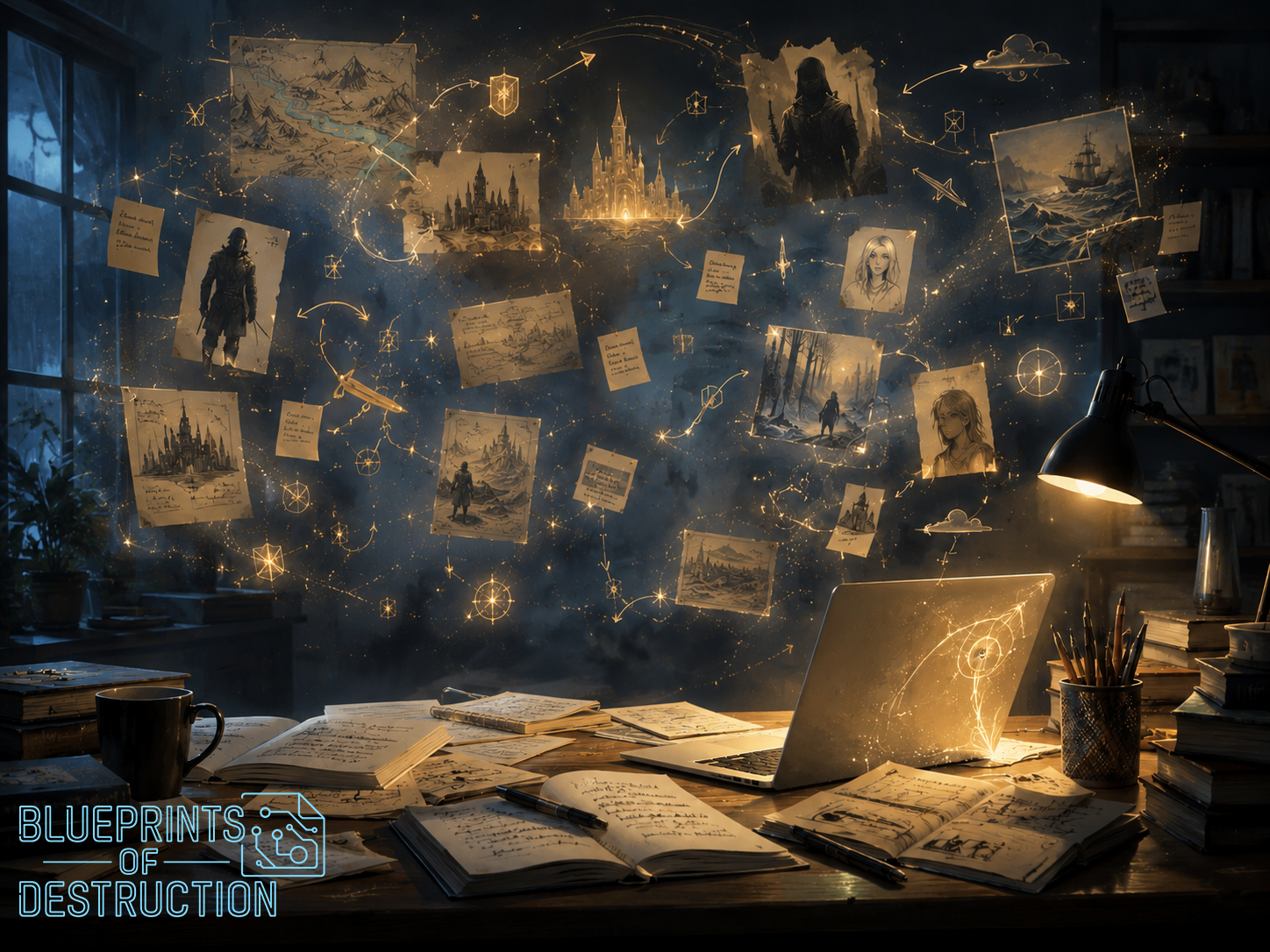
Inspiration is wonderful and it is part of every story, but it is not the whole story. It is one of the biggest indicators that someone has an inner author, desperately trying to get out and write something. Inspiration might come from a dream, a conversation, a book, a picture, a question, or a strange idea that pops into your head randomly.
Inspiration gives you the beginning push in the writing process, but it will take a little bit more work to shape it into something useful.
Brainstorming
Brainstorming is where your idea is able to start spreading out onto the table.
You may have characters, places, conflict, and even scenes floating around in your head. That is good. Write them down. At this stage you do not need to worry about where every idea belongs. This is only where you gather up all your materials.
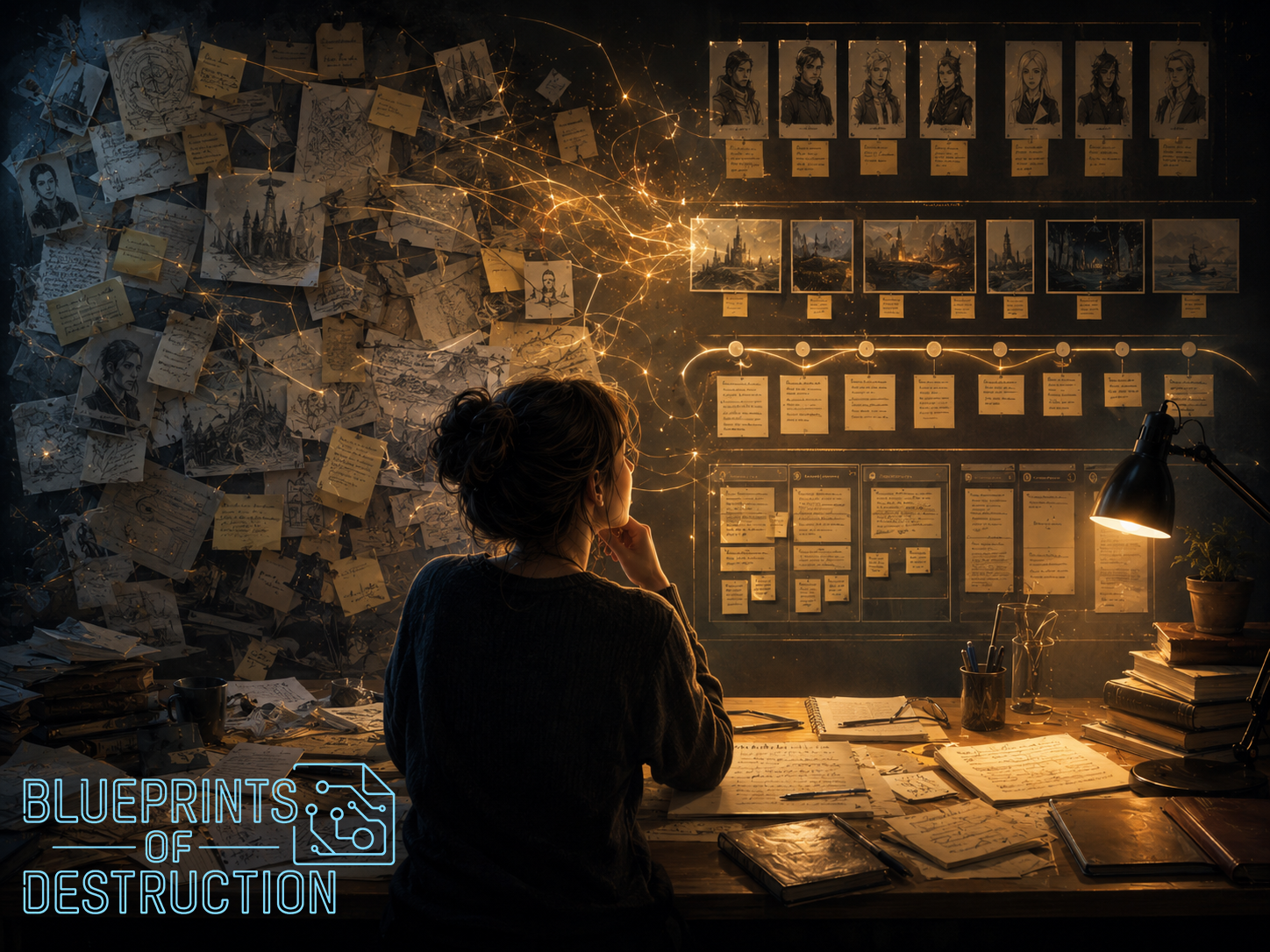
Even experienced writers still brainstorm. An important part in the writing process is about getting your words out of your head and into a format where you can more easily organize them.
Frank and Lucy have a series of notebooks they lovingly refer to as Storystorm that keeps all of their ideas safe, even if they are only half-formed.
Research
Research helps you make more informed storytelling decisions. If your story involves a castle, a court case, a medical injury, a spaceship, or a governmental system, it is a good idea to know what you are working with. You do not need to become an expert in every single element of your story, but it is a good idea to have enough information that your story feels grounded and realistic.
This step is not about replacing imagination. It is a tool to give your imagination a stronger cornerstone to build on.
Planning
Planning is not about removing all the surprise from your story. It is about giving yourself a path to follow so you are not wandering around in circles forever.
A plan might be as simple as figuring out:
- Who the story is about
- What the main character wants
- What stands in the main character's way
- Where the story takes place
- How the story begins
- What kind of ending the story is moving toward
The Outline
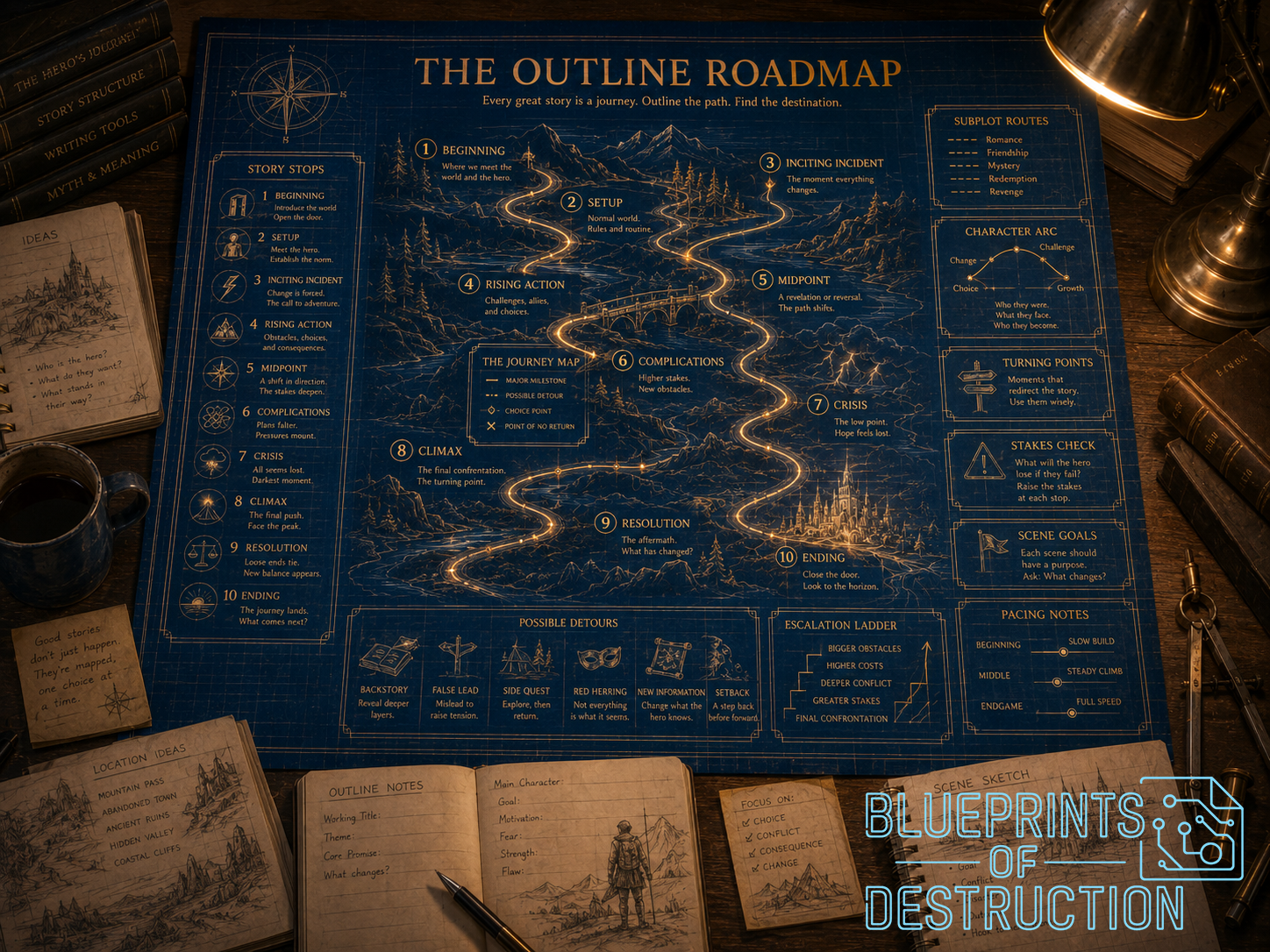
An outline is simply a roadmap. It does not have to be complicated. It is just a tool to show your where the story might go next.
Some writers outline every chapter. Others write only about the major turning points. Either approach can work. The goal is not to trap the story. The goal is to give yourself enough direction that you can keep moving through the story.
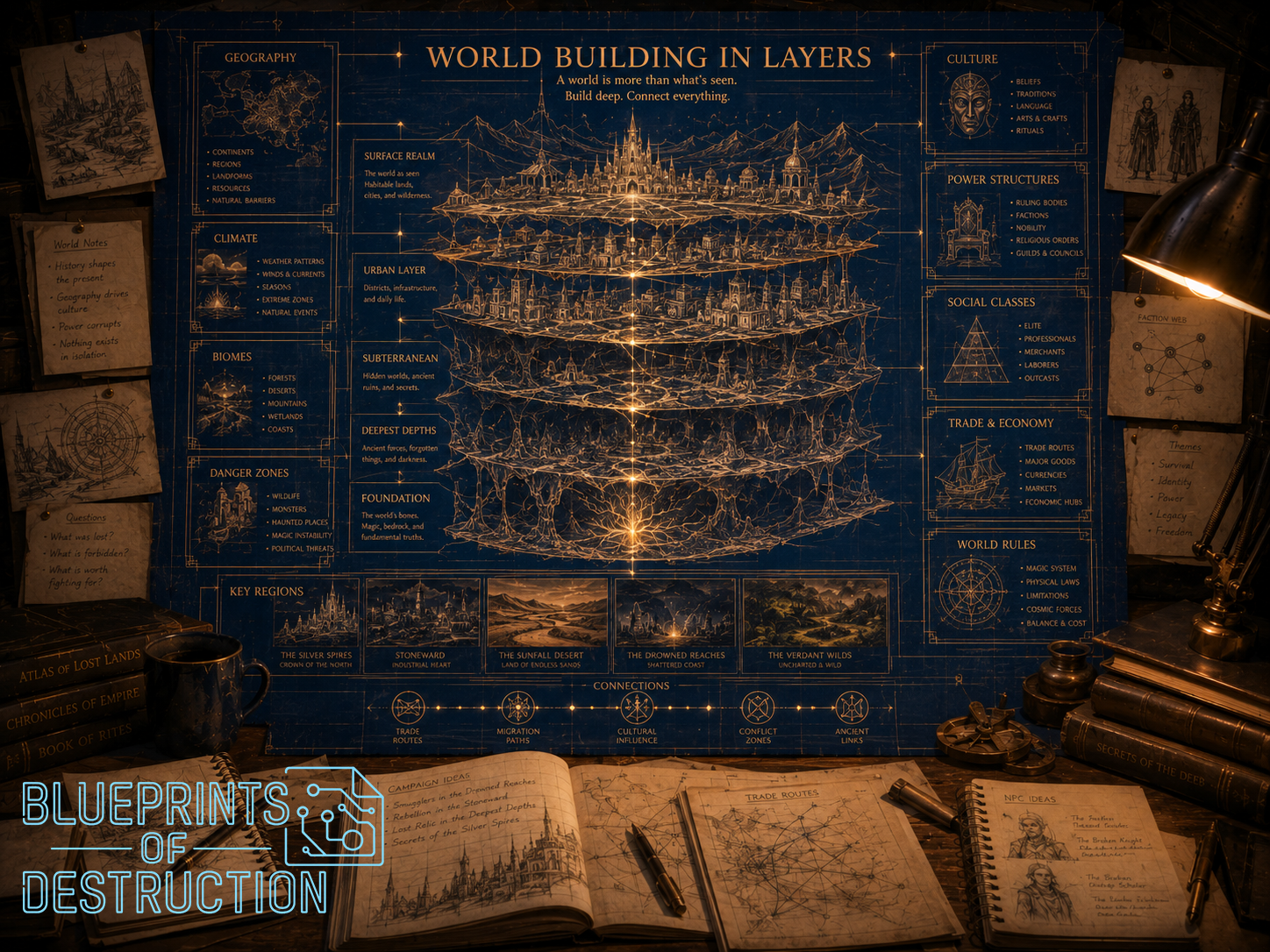
Worldbuilding
Worldbuilding is not only for fantasy and sci-fi stories. Every story has a world behind it. Every setting needs rules, whether it is a small-town romance, a courtroom drama, or a superhero story.
Consistency matters. If your story teaches the reader that magic has limits, those limits should not disappear just because the protagonist needs to win. Breaking your own rules with no explanation can make the story less believable.
Readers do not need to know every rule, but you, as the writer, should understand the basics. What is normal for your world? What is forbidden? Who has power? What happens when someone breaks the rules?
Character Profiles
Character profiles help you understand who is moving through the story. A useful profile has more than just hair and eye color, and what a character wears. It should also include what the character wants. what they fear, what they believe, and what kind of pressure would force them to change.
PhranqenLu use a character profile they call a Character Motivations Diagram (CMD).
Writing
At some point, planning needs to become writing. The first draft does not have to be beautiful. In fact, it almost never is. It only needs to exist. A messy draft can be reworked and shaped. A blank page cannot.
Story Elements
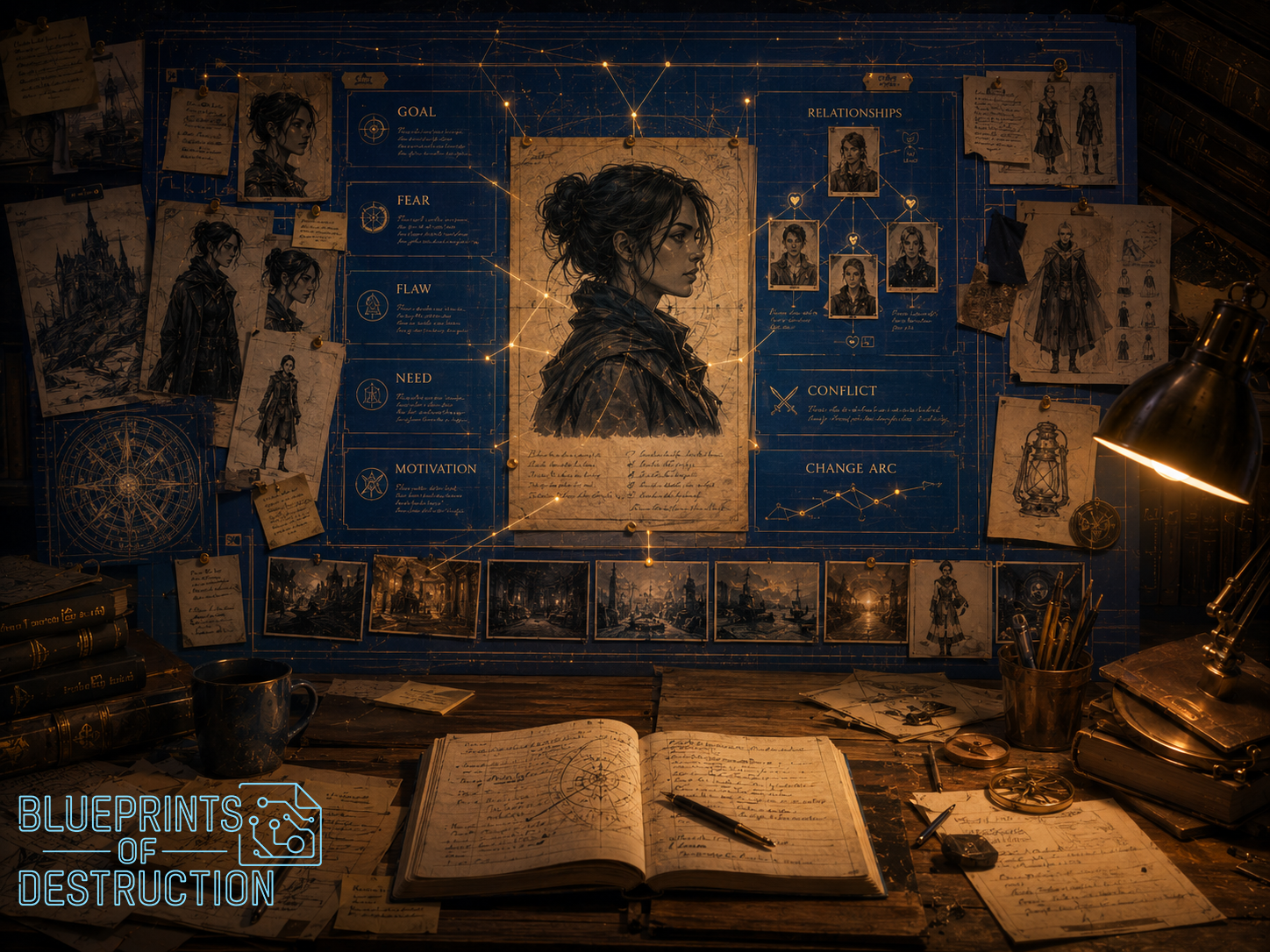
Most stories are built from a few basic pieces:
- Character: Who is the story about?
- Goal: What does the character want?
- Conflict: What stands in the character's way?
- Setting: Where does the story happen?
- Theme: What is the deeper message the story is circling?
- Tone: What does the story feel like?
- Change: How are things different by the end?
Decide How the Story Will Be Told
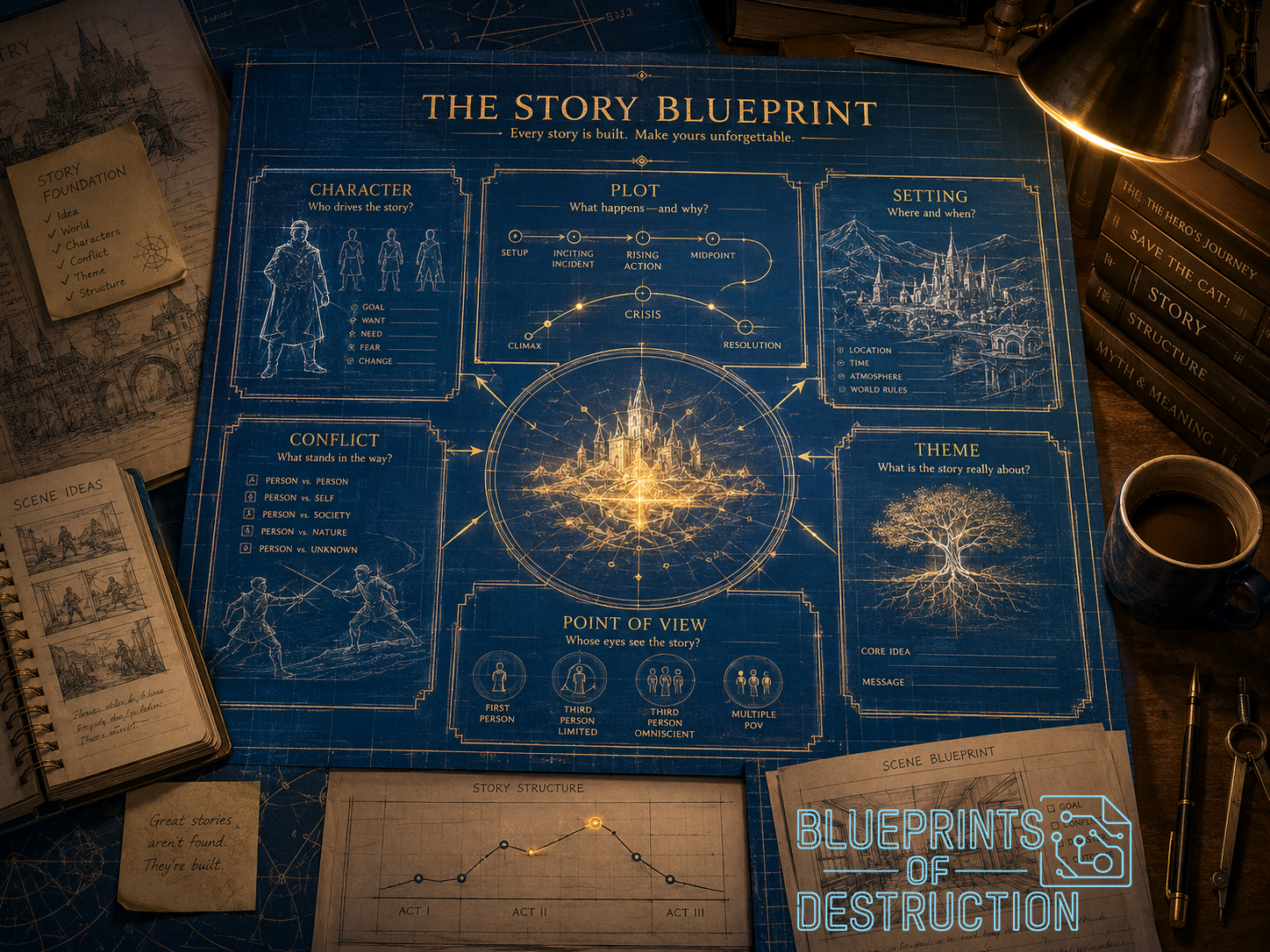
Once you, as the writer, know what happens in your story, you still need to decide how to convey that to the reader. Will your story be first or third person? Will the tone of the story be funny, humorous, strange, or sharp? Will the dialogue carry most of the emotion, or will the descriptions?
Each choice that you make inside your narrative will define how the reader experiences your story.
Revision and Feedback
Drafting helps you get your story out. Revision helps you refine your storytelling so that it tells the reader exactly what you want it to. Revision is the process that helps the story become more clear.
Does conflict grow? Do the characters make the choices you need them to? Does the ending feel rewarding?
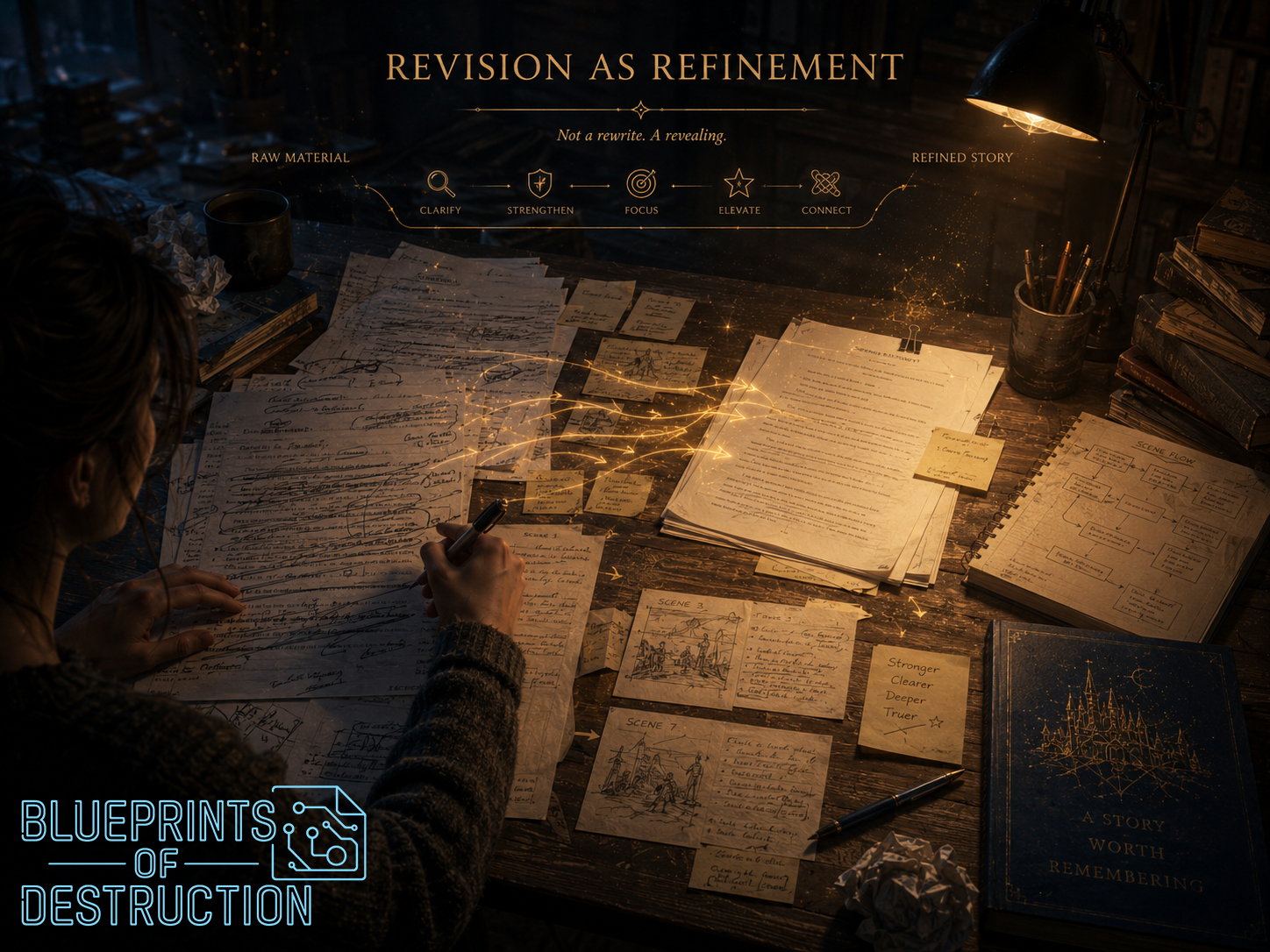
Feedback can help with revision because other readers may notice things you missed. That does not mean every suggestion is correct. It just means that you have a fresh perspective on your work.
Stories are not built all at once. So start small. Pick one idea. Ask one question. Follow one character into a problem.
The story does not have to be perfect. It just has to begin.
