How to Start a Story When You Don't Know Where to Begin
Using Randomization to Find Your First Idea
Randomization is a foundational, creative engine you can use to figure out how to tell a story. It is something that can help break writer's block, uncover hidden storytelling patterns, and generate meaningful constraints for characters, plots, and worldbuilding as a whole.
Behind every story, worldbuilding sets the stage for your narrative to play out.
Worldbuilding through randomization is about problem-solving. Even if those problems are self-generated, given enough time (and a bit of thinking outside of the box), those issues can be resolved. But in order to solve problems, you must first know how to begin a story.
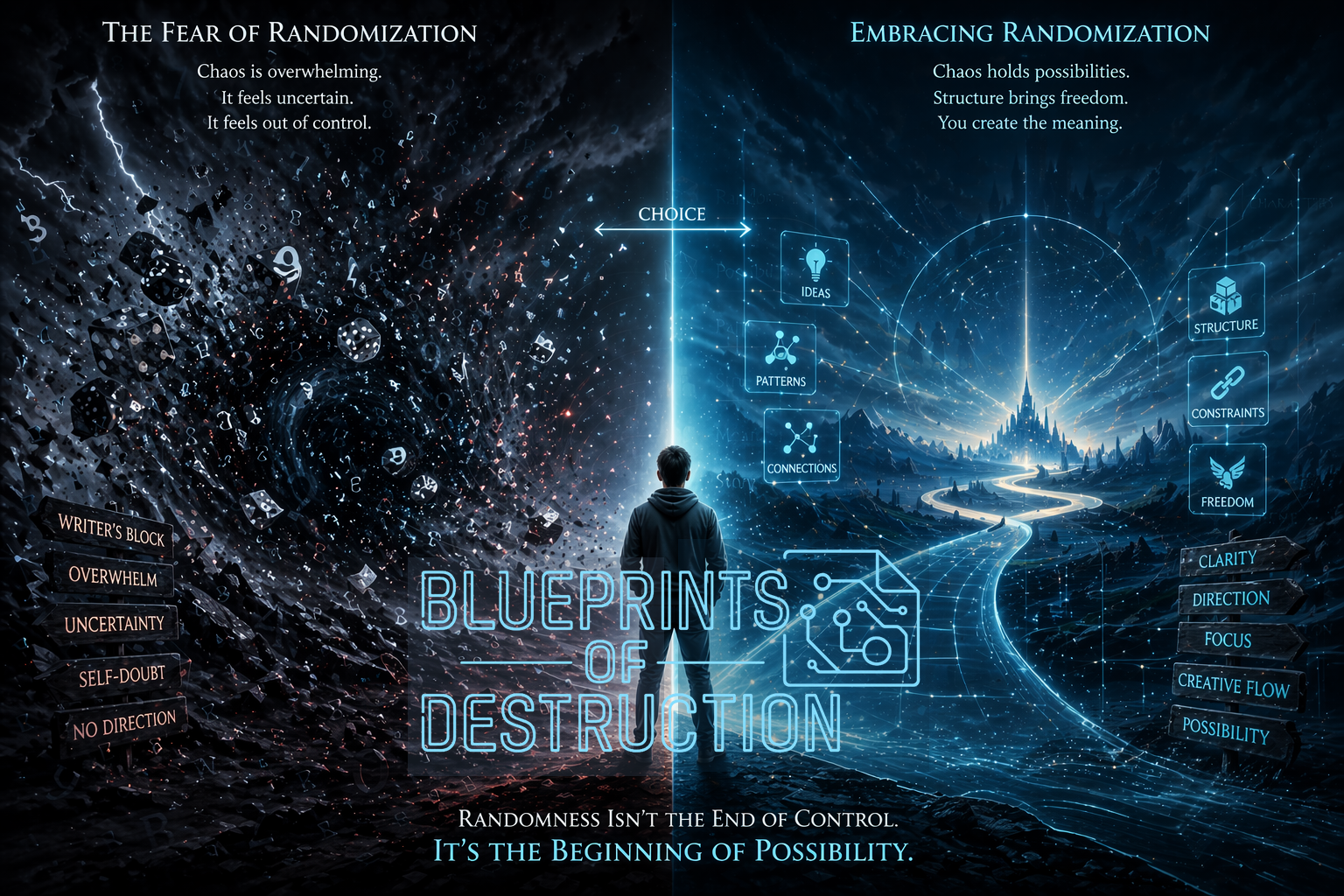
Overcoming the Fear of Randomization
Randomization isn't about replacing creativity with chaos. It is about introducing new ideas and forcing yourself to think outside of your natural patterns. It is a device that gives you freedom through constraints.
How Can Randomization Help with Story Writing?
Randomization can be a tool that helps you figure out how pieces of your narrative puzzle fit together. Once you do that, you may find that your story takes twists and turns that are more exciting than you could have dreamed up on your own.
Randomization works so well for storytelling because creativity is allowed to thrive when your brain has something to react to. It is a resource that allows you to put something on the page and not just bypass writer's block, but perhaps conquer it altogether.
How does someone use randomization in their storytelling? First, let's clarify what randomization is.
What is Randomization?
According to Merriam-Webster, randomization is: controlled distribution usually of given tests, factors, samplings, treatments, or units so as to simulate random or chance distribution and yield unbiased data from which a generalized conclusion can be drawn.
Randomization, when applied to writing, is about generating raw information then taking that data and transforming it into a usable resource.
It isn't about gathering random numbers and hoping that something useful comes of them. It is about using them to help you generate ideas you would have otherwise not thought of on your own.
This isn't to say that randomization takes the creative reins of your narrative. As the author, you maintain final authority. If data doesn't fit, it is okay to disregard it. However, sometimes the data that seems the most unusable sparks some of the best creativity.
Why Randomization Works for Story Development
Randomization holds many benefits, especially when figuring out how to begin a story.
- Randomization breaks creative loops:
It can help break away from tropes, cultures, or character types, especially in larger series or where there are many characters. - Randomization helps create friction:
Stories are born through tension, and randomization is able to introduce conflict immediately.
- Randomization encourages discovery before planning:
This can be especially useful in early development or even when brainstorming. This is not to say that randomization overrides planning. Planning is still necessary, but randomization can help warm the water if you have cold feet!
Applying Randomization Across Different Elements
Characters
Randomization can influence a wide range of attributes and traits that characters carry. From developing personality with a Character Motivations Diagram (CMD), to creating lifespans, roles, or strengths and limitations.
Numbers don't define a character, but they can help pressure both the character and the author into creating someone truly captivating.
Plot
Plot can be affected by randomization in many ways. From generating conflict, introducing unexpected twists, or creating difficult challenges for your characters.
It is more than asking "what if" questions. It is about generating unique scenarios, then stepping into your characters' shoes to figure out how to navigate the new situations that randomization provides.
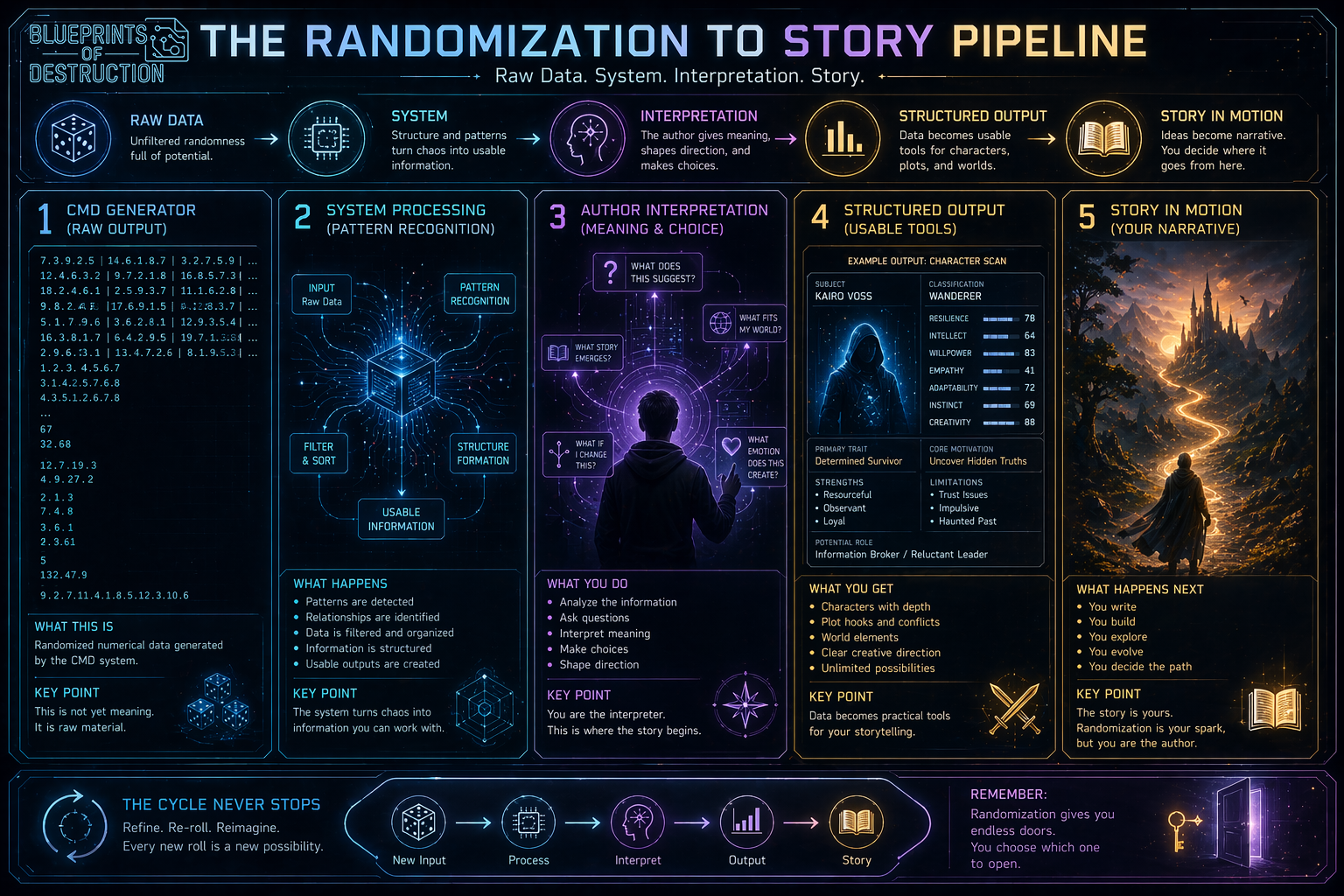
The Writer's Role
Randomization isn't about letting chance take over your storytelling. It is simply letting the random be the spark that ignites new ideas.
You, as the author, take the information and interpret it into meaningful points of reference for a character or story. This is where the real story is allowed to bloom. Simple numbers can transform your ideas into something surprising, and truly inspiring!
You still have final control of the outcome, but using randomization in storytelling allows for new inputs that otherwise may have never crossed your mind.
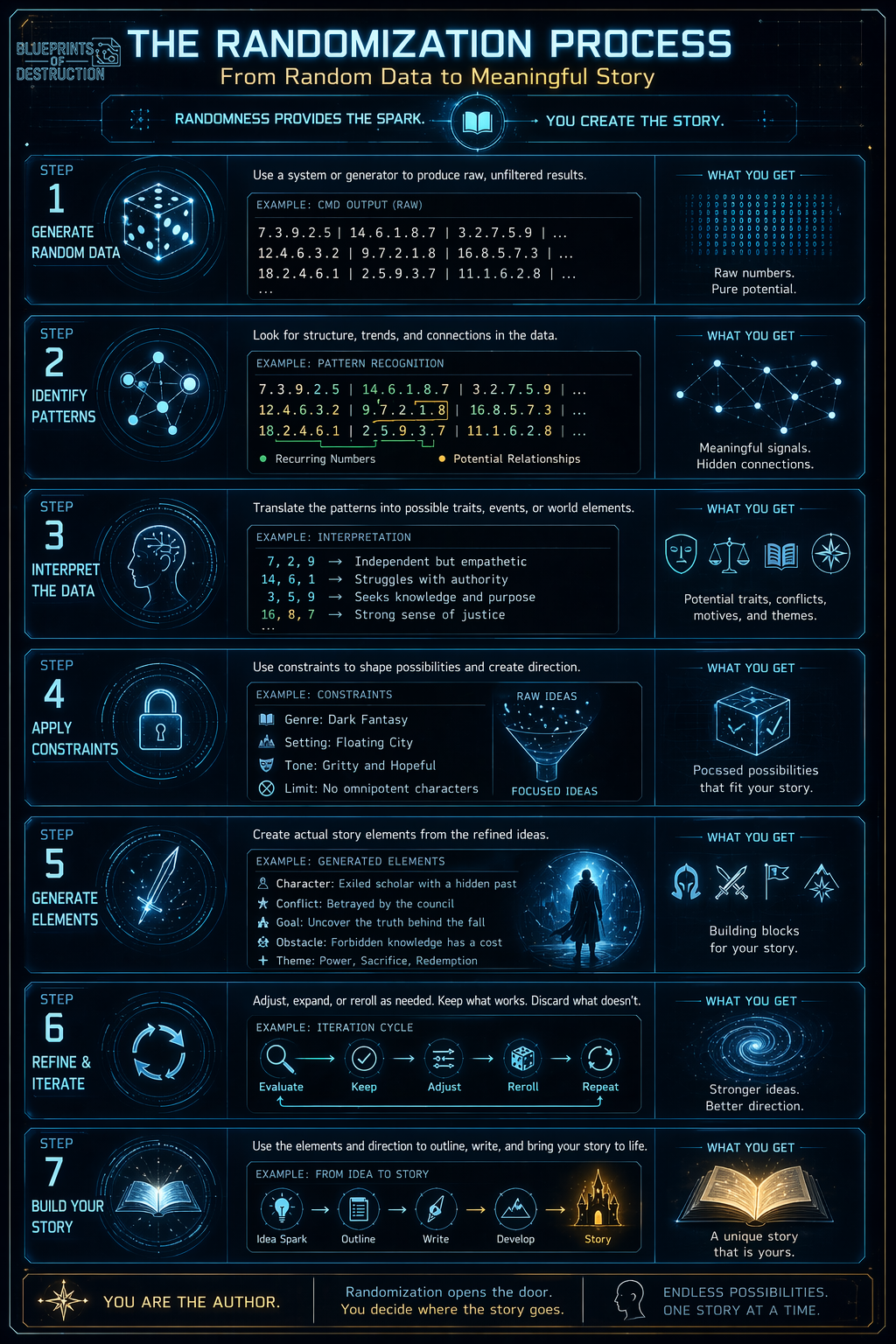
Using randomization is like becoming a detective for your own story. It allows you to see connections and explore "what if" outcomes, even if you never apply them to your narrative. It is about taking advantage of many alternative endings for your own story, and then choosing the outcome you like best.
You may find that randomization offers completely new outcomes that you like even better than the original plan you had for your story. You don't need to start with the perfect idea. You just need a place to begin. Randomization allows you to turn an empty page into a question waiting to be answered.
Through randomization, you give yourself permission to explore without pressure. Every number, result, or outcome is an invitation to test ideas, follow strange paths, and see where choices lead. Some answers will surprise you. Some will change you. Some may lead to ideas better than the ones you planned. Still others will show you how to begin a story.
Randomization helps turn curiosity into ideas, ideas into momentum, and momentum into storytelling. Randomization may even lead you down a path where you can unlock your inner author.
Are you feeling a little bit overwhelmed? Here are some resources to help you get started:
