Building a Counter-System
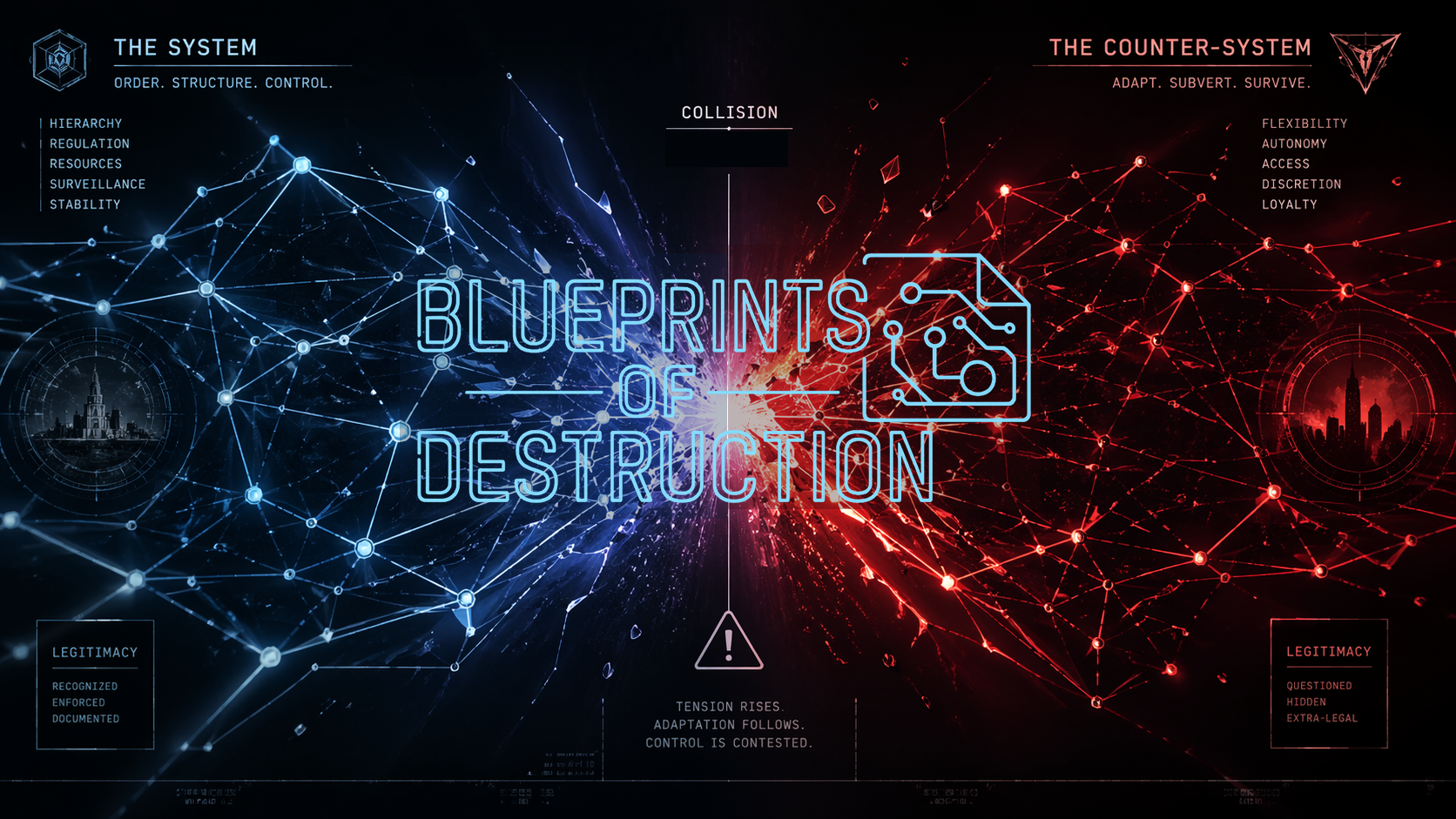
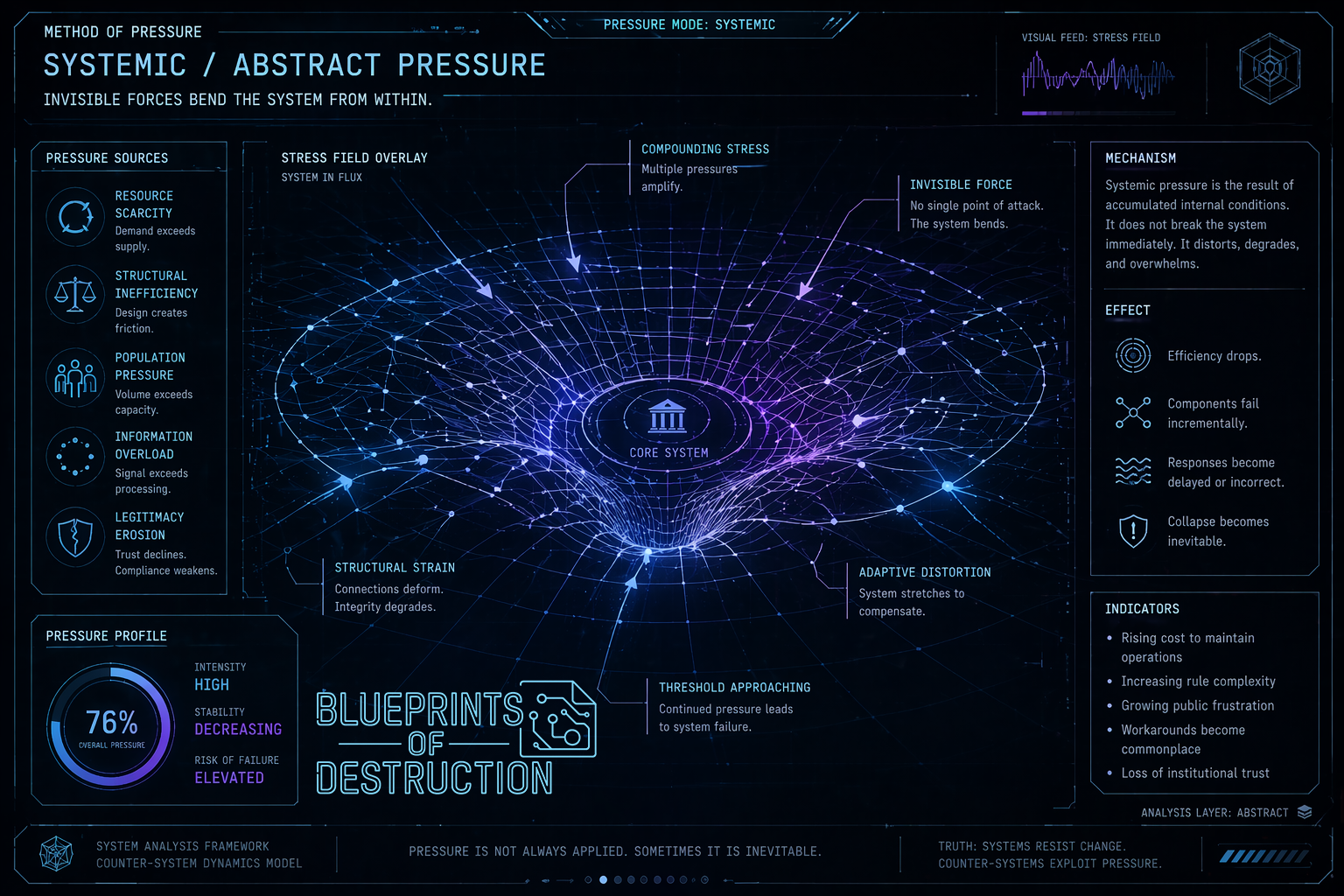
A counter-system is a structured force that exists specifically to resist, undermine, limit, or exploit another system. Where a primary system establishes order, access, or power, a counter-system introduces friction.
Counter-systems prevent a world from becoming static by introducing pressure. In well-done worldbuilding, systems never exist in isolation; they collide.
The following is a template you can use to create your own Counter-System.
1. Origin Pressure
What conditions caused this counter-system to emerge?
Was it scarcity, oppression, inefficiency, or collapse?
2. Primary System Failure
What primary system is this counter-system responding to? What gap, inefficiency, or pressure made it necessary? What failure created this system?
The purpose of this phase is to counter a primary system in function, not emotion. This point should answer, "What stopped working, and who paid the price?"
For example, the resulting counter-systems might be:
- Black markets
- Underground information networks
- Barter economies
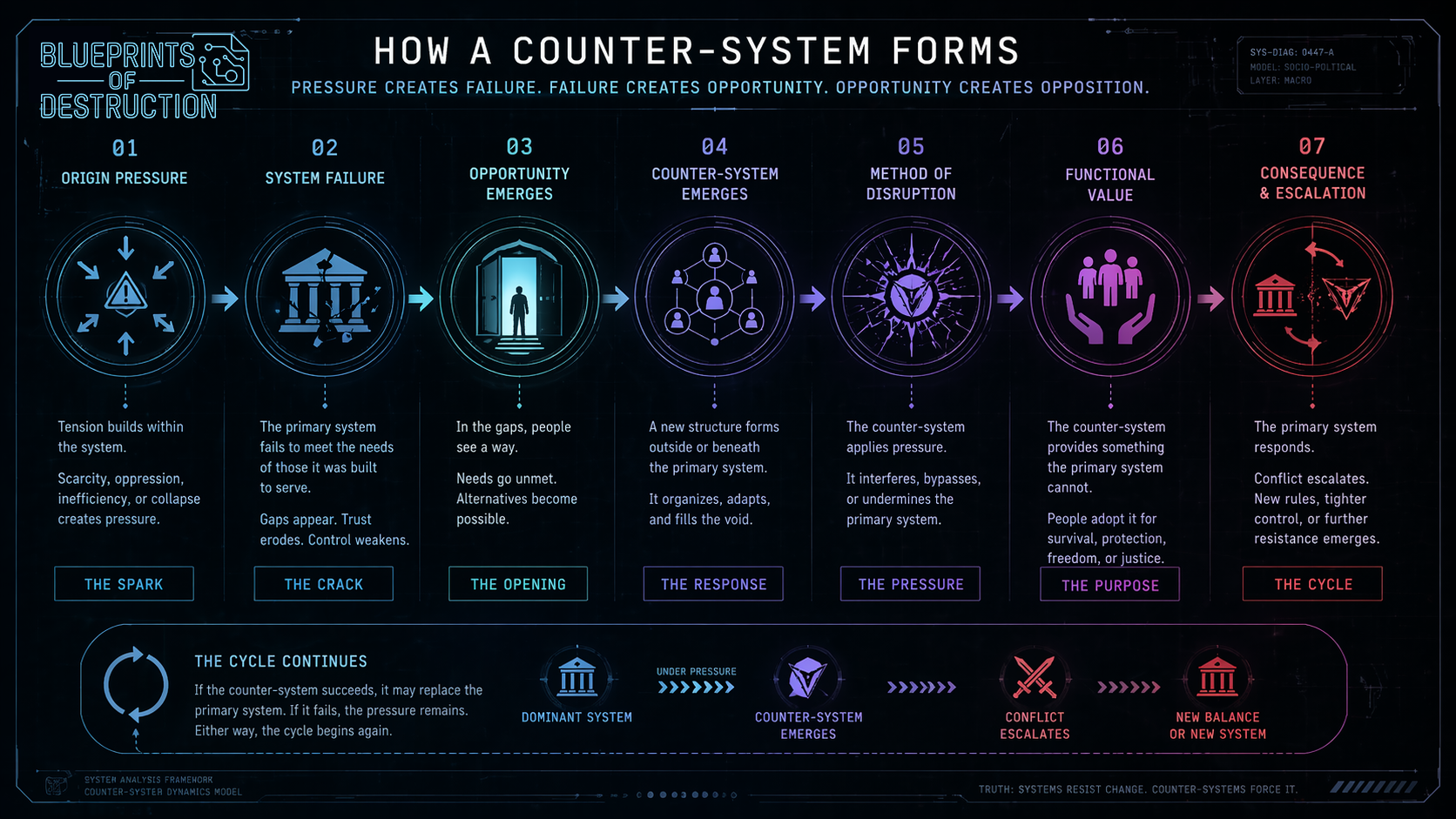
3. Method of Disruption
How does this counter-system apply pressure? How does it interfere with the primary system it is countering?
Examples of disruption might be:
- The interruption of supply chains in a sci-fi world
- The use of dark, "forbidden" magic in a fantasy world
- The removal of assets from circulation in a political drama
- The controlling of territory in a gritty war story
- The exploitation of legal loopholes in a legal thriller
- The undermining of legitimacy in the world of Qualx
The purpose of this phase is to establish the system as mechanical, not symbolic. This helps make it comparable to its rival system.
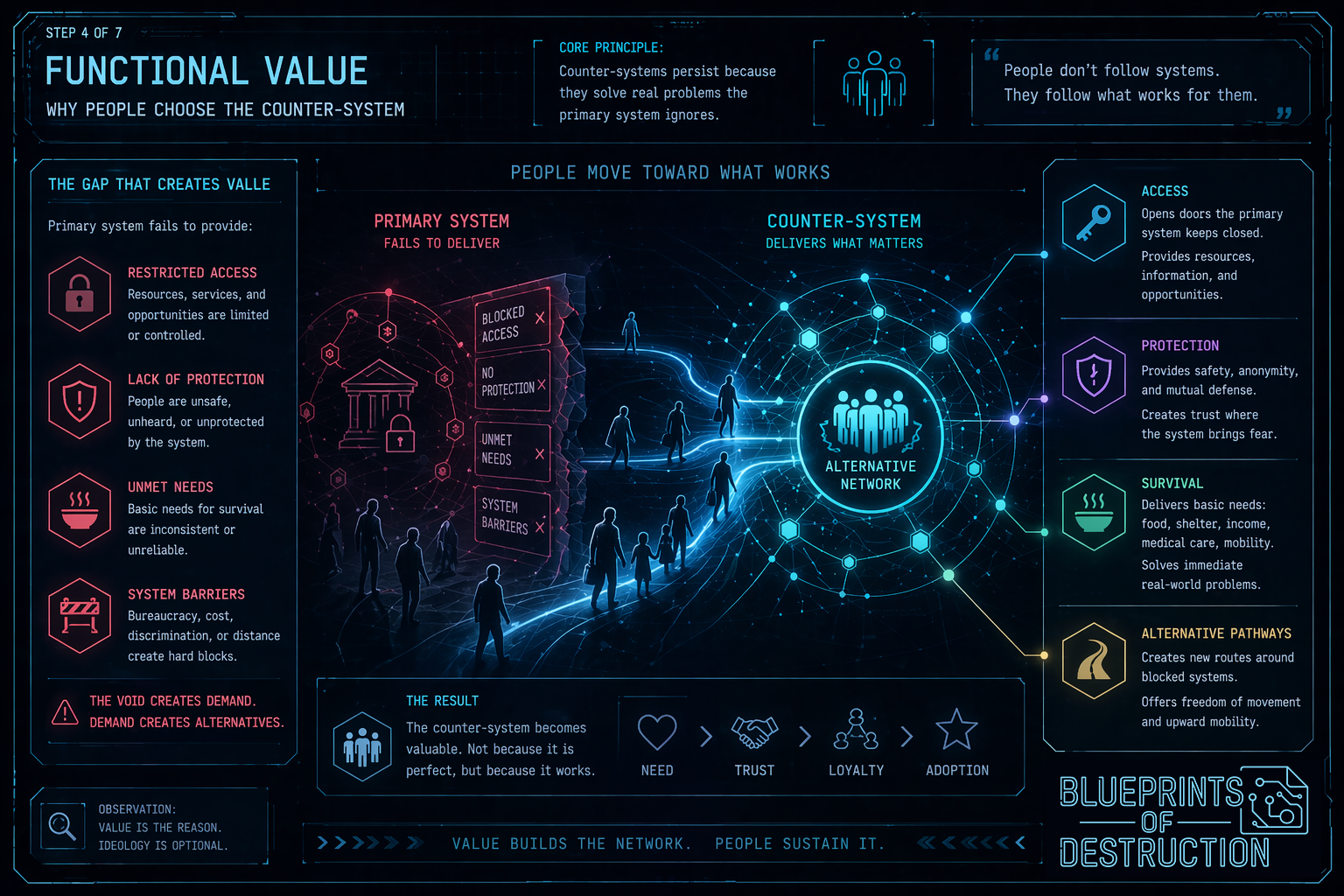
4. Functional Value
Why do people tolerate or support this counter-system? What does this system do that the primary system does not? What problem can it solve for ordinary people?
Examples of what this system offers might be: protection, access, freedom, survival, or justice.
This prevents the group from being "evil for evil's sake," as it explains this system's continued existence.
5. Price of Participation
What is the price of engaging with this counter-system? What does association with this system cost? What are the real and perceived benefits that make engaging with this system worthwhile for the character's in your story? What does involvement endanger?
The cost may be legal punishment, violence, loss of safety, moral compromise, or increased surveillance. The benefits might be power, access to the forbidden, money, prominence, or simply independence.
By adding risk and stakes, you can preserve the narrative tension even while the character's within the story are romanticizing the ideology. Give the reader, allowing them to decide, even if you are gently nudging them in one direction over the other.
6. Public Perception
How do different groups see this counter-system? How does society view it?
This includes the perspectives of supporters, pragmatists, exploiters, and opponents. This helps add realism even as it shows social fragmentation. It is important to know who benefits from this counter-system, who fears it, and who manipulates it.
7. Systemic Response
What happens because of this counter-system? How does the primary system react?
Possible outcomes could be: Increased enforcement, policy changes, escalation of control, or even new counter-counter systems.
- In a sci-fi world where the supply chains are interrupted, the response might be increased presence of automatons.
- In a fantasy world where forbidden magic is used, the response might be authorities outlawing all use of magic.
- In a political drama where assets are being removed, the response might be the blocking of motions in the senate.
- In a war story where one side unexpectedly gains control of a territory, the response might be the activation of a sleeper agent.
- In a legal thriller where the law is being exploited, the response might be a brilliant argument from the defense.
- In Qualx, where legitimacy is being undermined, the response is harsher enforcement, more strict access, and increased surveillance.
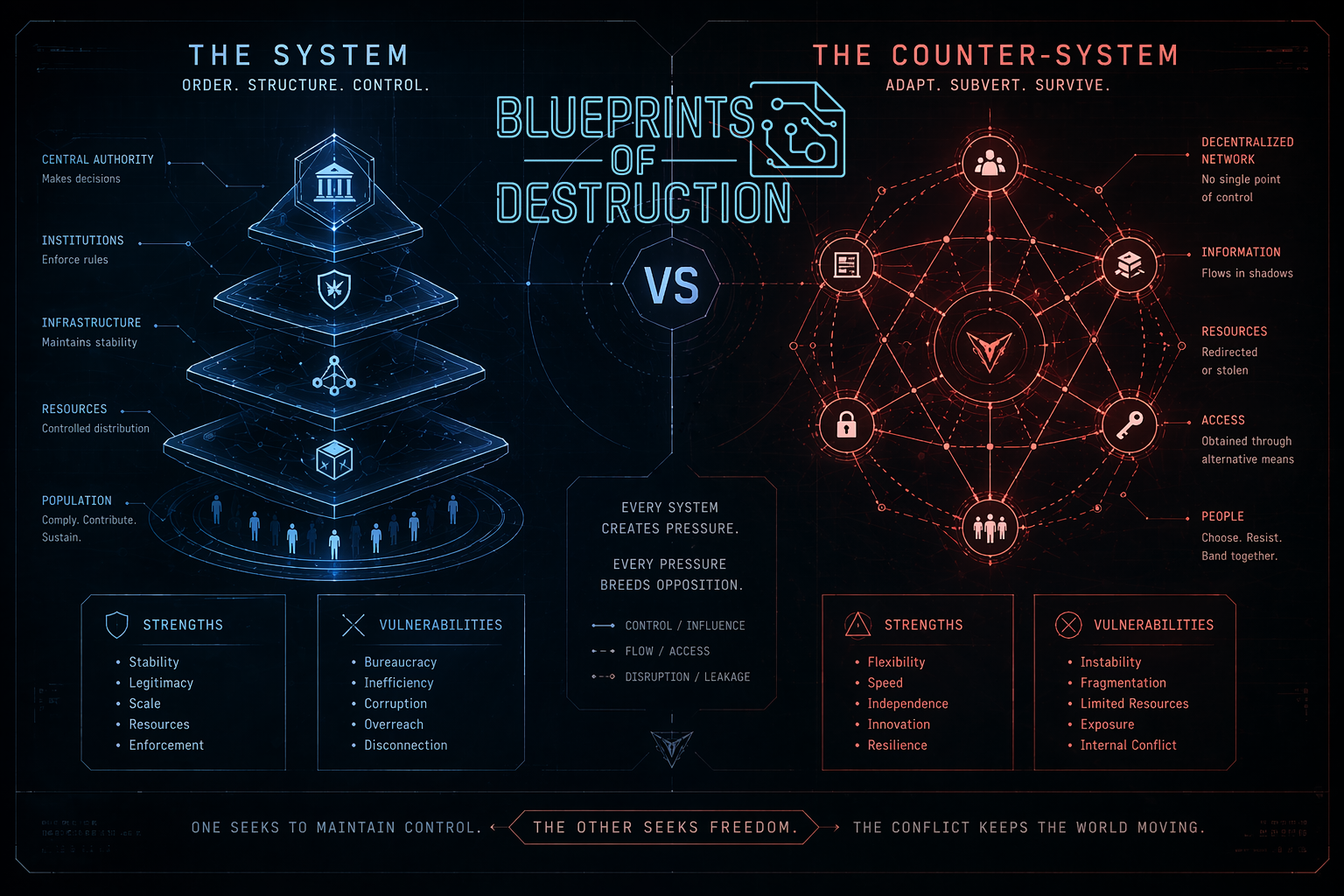
By using this kind of back-and-forth process, you can create reinforcing systems that respond to one another. This will help keep the world, and the stories found within it, dynamic, fresh, and exciting. It will help answer questions before they even arise: What pressure does the counter-system create upstream, and what natural responses will be used to drive the story?
8. Stability
What happens if the counter-system succeeds or fails?
Is there a point when this counter-system:
- Collapses?
- Replaces the primary system?
- Triggers systemic transformation?
These steps help to ensure that every counter system is reactive instead of random. It helps the system to have clear impact as it creates conflict. Determining stability also helps counter-systems to be a viable competing factor to the main system. Establishing in-world strife is crucial for reader understanding, worldbuilding, and keeping a consistent tone throughout your story.
Application within Blueprints of Destruction
Now that you have seen the general template, let's take a look at how this template applies to a few counter-systems within Qualx. A practical demonstration of how this is applied can help you to more easily figure out how to build a counter-system within your own world.
The Mob
- Counters: Bureaucratic failing
- Method: Territorial control, extrajudicial enforcement
- Provides: Order, speed, and protection
- Cost: Violence, corruption, and debt
- Perception: Protector/Criminals/Necessary evil
- Consequence: Weakens state legitimacy
- Hidden Truth: The Conglomerate relies on them more than it cares to admit
The Pirates
- Counters: Resource monopoly
- Method: Logistics disruption
- Provides: goods, passage, and relocation
- Cost: Lawlessness, instability
- Perception: Liberators/Smugglers/Threat
- Consequence: Insubordinate atmosphere within the population
- Hidden Truth: They inadvertently reinforce the system they oppose
The Uprising
- Counters: Muzh labor system
- Method: Asset removal, labor disruption
- Provides: Escape, freedom, and documentation
- Cost: Severe punishment, escalation of enforcement/enforcers
- Perception: Idealists/Pawns/Extremists
- Consequence: Social disruption and intensification of muzh treatment
- Hidden Truth: Their resistance strengthens the Conglomerate
Counter-systems are diagnostic tools. They reveal who the system fails, what resources are truly scarce, and what characters are willing to risk everything for. In some stories, the counter-system eventually becomes the next dominant system, completing the cycle.
When designing any system, ask:
- Who does the system push out?
- What is built in response?
- Where does consequence become unavoidable?
Interested in help building a counter-system? You might find the Counter-System Builder tool helpful!
