Character Goals and Motivation for Beginners
A character with a goal is a character with direction.
When a character wants something, and is moving toward their objective, they have a reason to act. When a character takes action, they react, struggle, choose, fail, and keep trying. That is what character motivation is all about.
Motivation is not just a character being "determined" or "ambitious." It is the reason behind their desire. It is why a character keeps going. It is why a character does not simply give up and walk away when their journey becomes difficult.
Determining Your Character's Goal
What is your character's goal? A character goal is whatever the character is trying to reach, gain, protect, escape, prove, fix, or understand.
For example, if a character's goal is to win a competition, the character might be looking for victory, recognition, or survival. If a character's goal is to hide the truth, they may want protection, control, or a way to avoid something.
When a character has a goal, they are able to move in a focused direction.
Determining Your Character's Motivation
A character's motivation is the reason the goal matters to them.
For example, if a character's goal is to defeat the villain. The reason behind their goal is because the villain destroyed the only place they ever felt safe.
If the goal is the destination, the motivation is the engine that keeps them moving toward it.
Goals Can Make Characters Easier to Write
A distinct goal for your character can help answer a few important questions to help determine how your character might choose, act, or respond. The questions that help clarify character motivation might include:
- What would this character do next?
- What choice would this character make?
- What would this character refuse to do?
- What would tempt this character?
- What would break this character?
- What would force this character to change?
When a character has a clear goal, scenes can be easier to build because the character is no longer floating through the story. The character transitions from a passive bystander into someone trying to accomplish something.
Internal Goals Vs. External Goals
Internal goals and external goals serve different purposes, even though they often work together.
The external goal is what the character physically wants to accomplish. The external goal is what usually drives the plot and the greater story arc.
The internal goal is what the character needs on an emotional or spiritual level, and is what drives the character arc.
For example, if a character's external goal is to win the throne, their internal goal might be learning that leadership is about service, not control.
Weak Goals vs. Strong Goals

A strong goal is a clear goal. When a character has a solid, clear goal, it is easier to challenge them and introduce conflict into the story.
Weak goals tend to be vague:
- This character wants to be happy.
- This character wants a better life.
- This character wants things to change.
You might find it challenging to build significant conflict around goals like these. If, instead, you are able to make them more specific, you might find that it is easier to create interesting plot points and pivotal moments.
Stronger goals might be:
- My character wants to escape their current social status before they get too comfortable.
- My character wants to earn enough money to save their family.
- My character wants to prove their brother was falsely accused.
The Strongest Goals Create Pressure
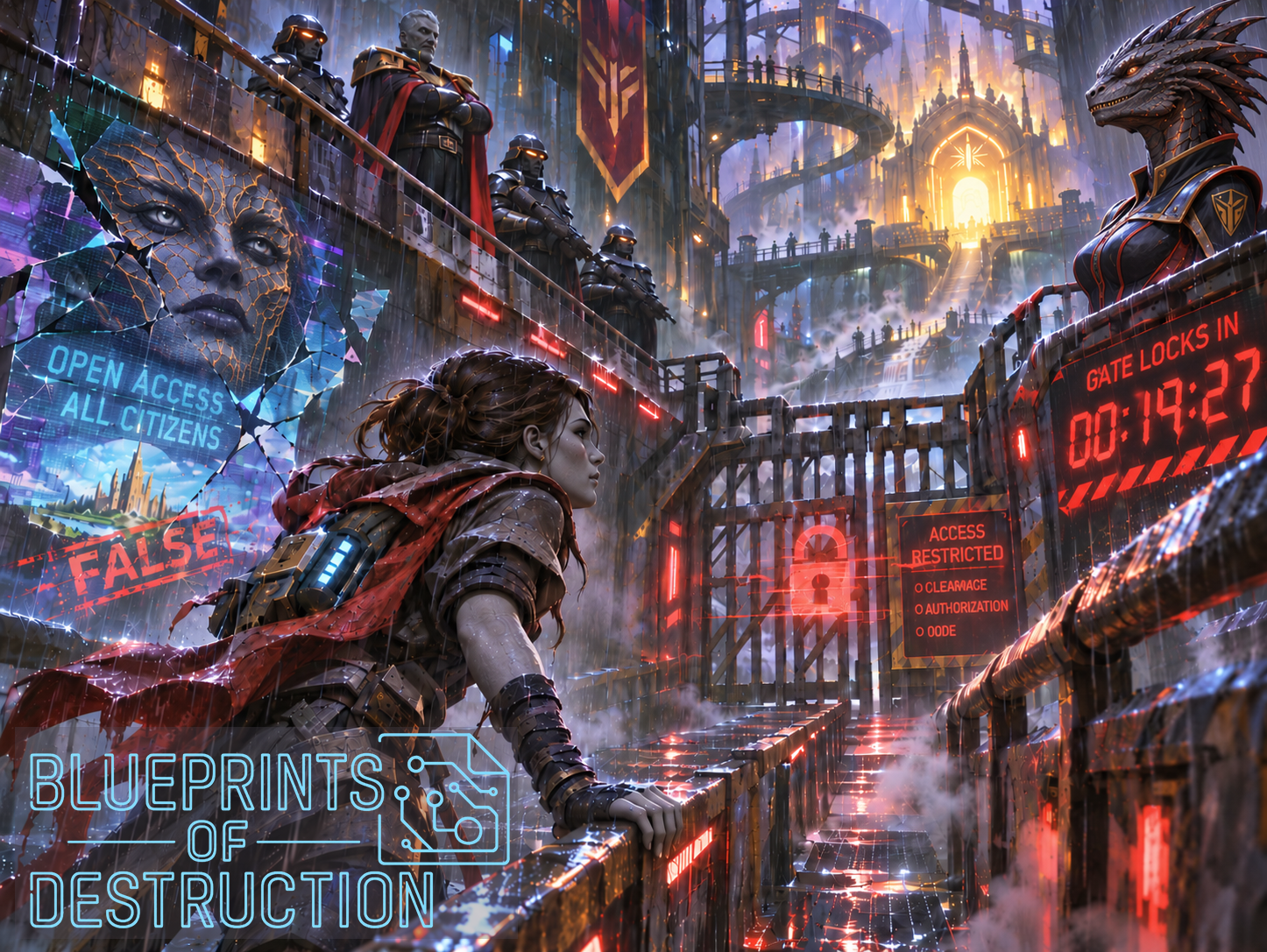
Pressure and conflict are where a story starts to move. A goal without any pressure is just a wish. A goal with pressure becomes story.
Pressure can be built when an obstacle comes between a character and their goal. Obstacles might be:
- A villain
- A law
- A family or societal expectation
- A lie
- A fear
- A moral boundary
- A character's own flaw
- A ticking clock
When something stands in a character's way, the story becomes interesting. When the character finally achieves their goal, the reader is also able to find a character's victory more rewarding.
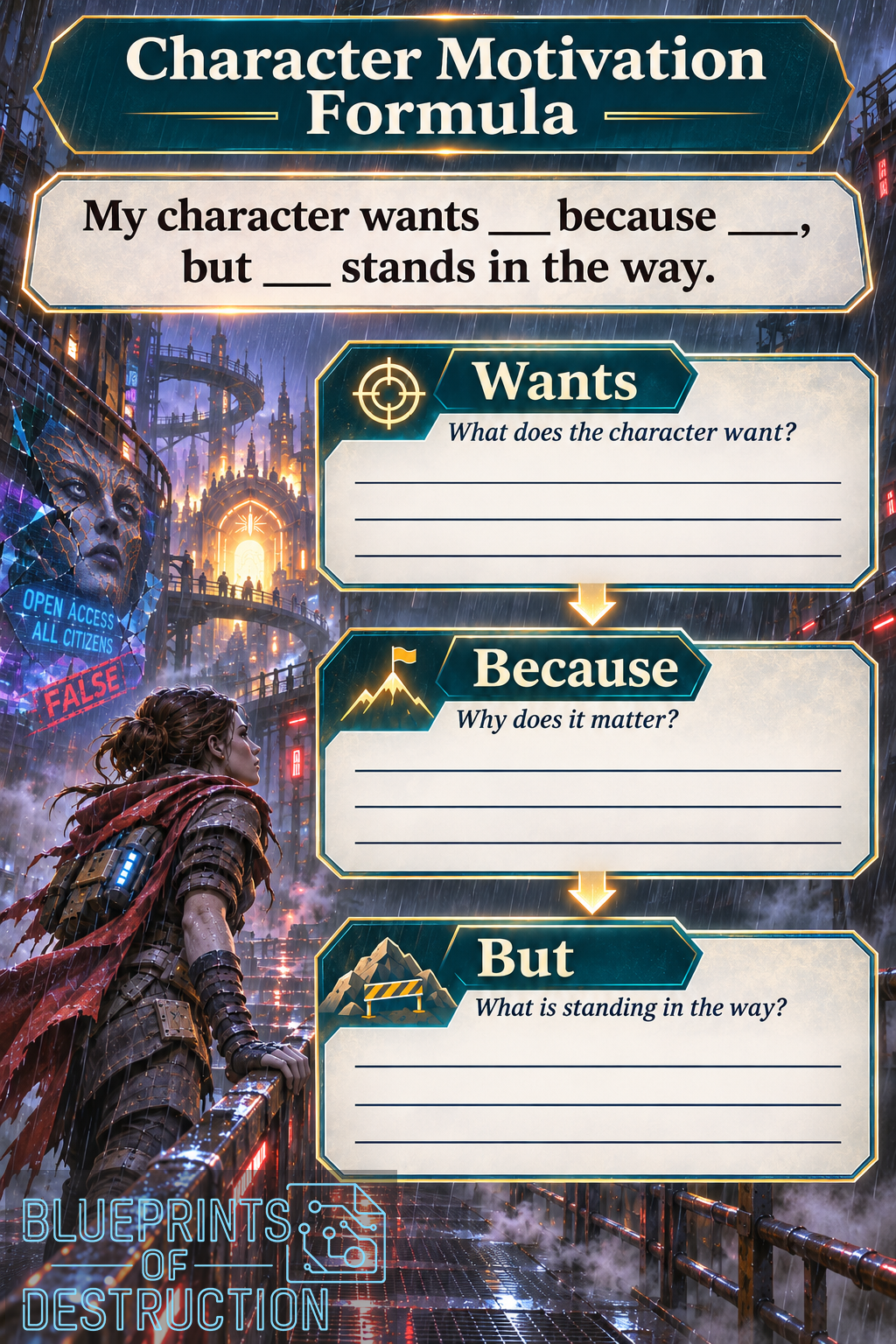
A Simple Motivation Formula
My character wants because , but __ stands in the way.
Examples could be:
My character wants [to expose the truth] because [the public has been lied to] but [revealing the truth could destroy everything they know and love].
My character wants [to leave the city] because [they believe freedom exists beyond the walls,] but [their entire existence is a lie, and there is nothing beyond the walls.]
Giving Your Character A Solid Motivation
Start with a goal. Ask why it matters. Then, put something in the way. This simple pattern can turn a flat character into someone who makes choices, faces consequences, and carries the story forward.
A character does not need to know everything about him or herself at the beginning of the story. In fact, in some of the best stories, the characters do not. All your character needs is to want something. Once they have enough motivation to start moving, they can begin to take shape and transform into the character their story creates.
