How to Use This Website
Welcome to Blueprints of Destruction, a website filled with writing lessons, worldbuilding ideas, creative tools, worksheets, generators, story questions, and glimpses into the world of Qualx.
It can seem like there is a lot to explore.
There is.
But you do not need to explore everything in one day.
You do not need to read every page, complete every worksheet, understand every system, or follow one exact path.
You only need somewhere to begin.
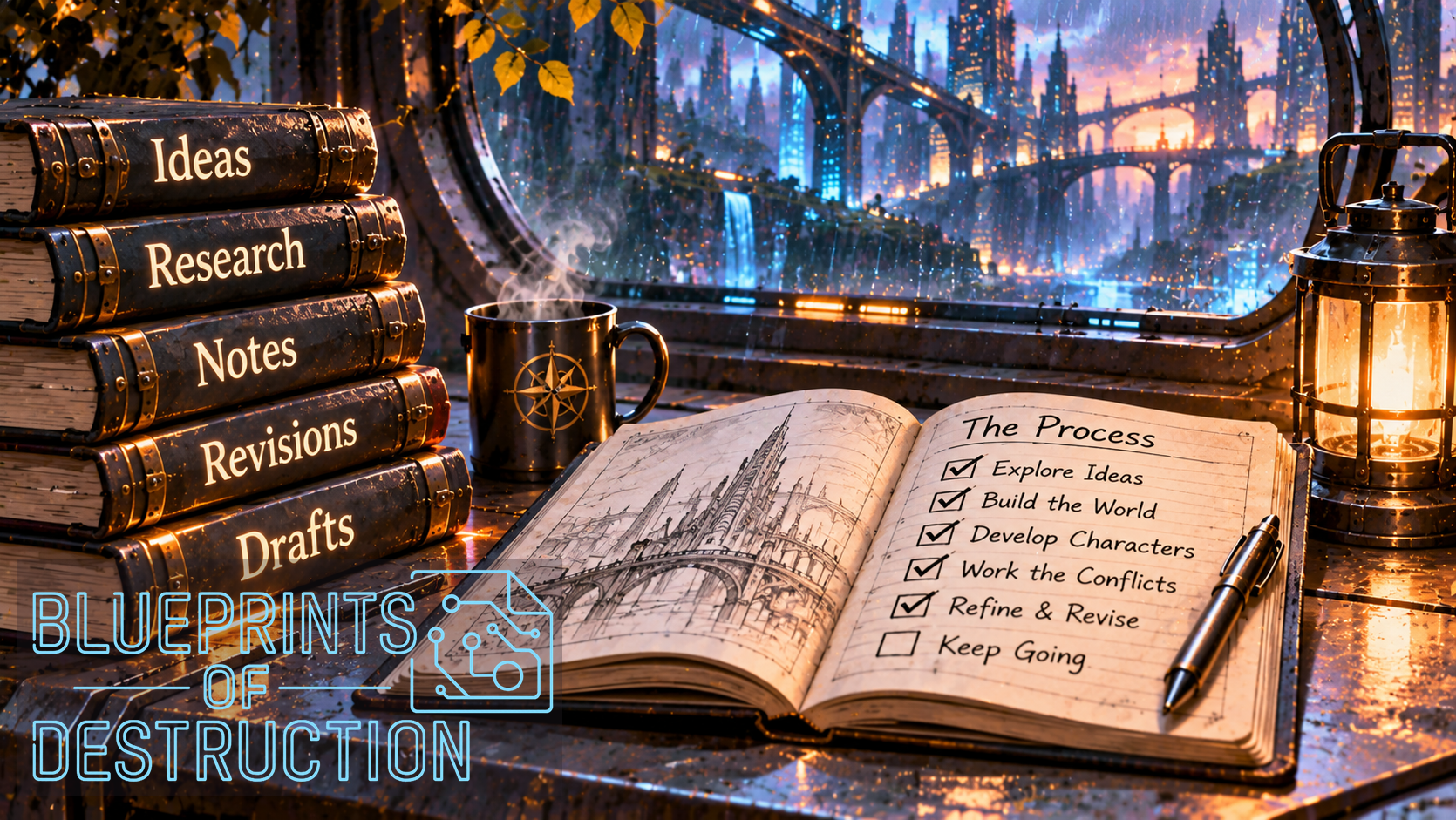
Start Here
The Start Here section is the best place to begin.
These pages are designed to help you find your footing, especially when you are:
- Beginning a new story
- Returning to writing after a long break
- Unsure of what your story needs
- Overwhelmed by too many ideas
- Discouraged by unfinished work
- Curious about what you might create
Start with whichever page feels closest to what you need right now. You are not choosing a permanent path. You are only choosing your next step.
This Is Not a Course You Can Fall Behind In
Blueprints of Destruction is not arranged like a class with required lessons, tests, or deadlines.
You do not have to read every page in order. You do not have to master one subject before exploring another. You do not have to finish every exercise.
Some visitors may begin with character development. Others may start with worldbuilding, conflict, scene structure, governments, technology, theme, or a random generator that gives them an idea they were not expecting.
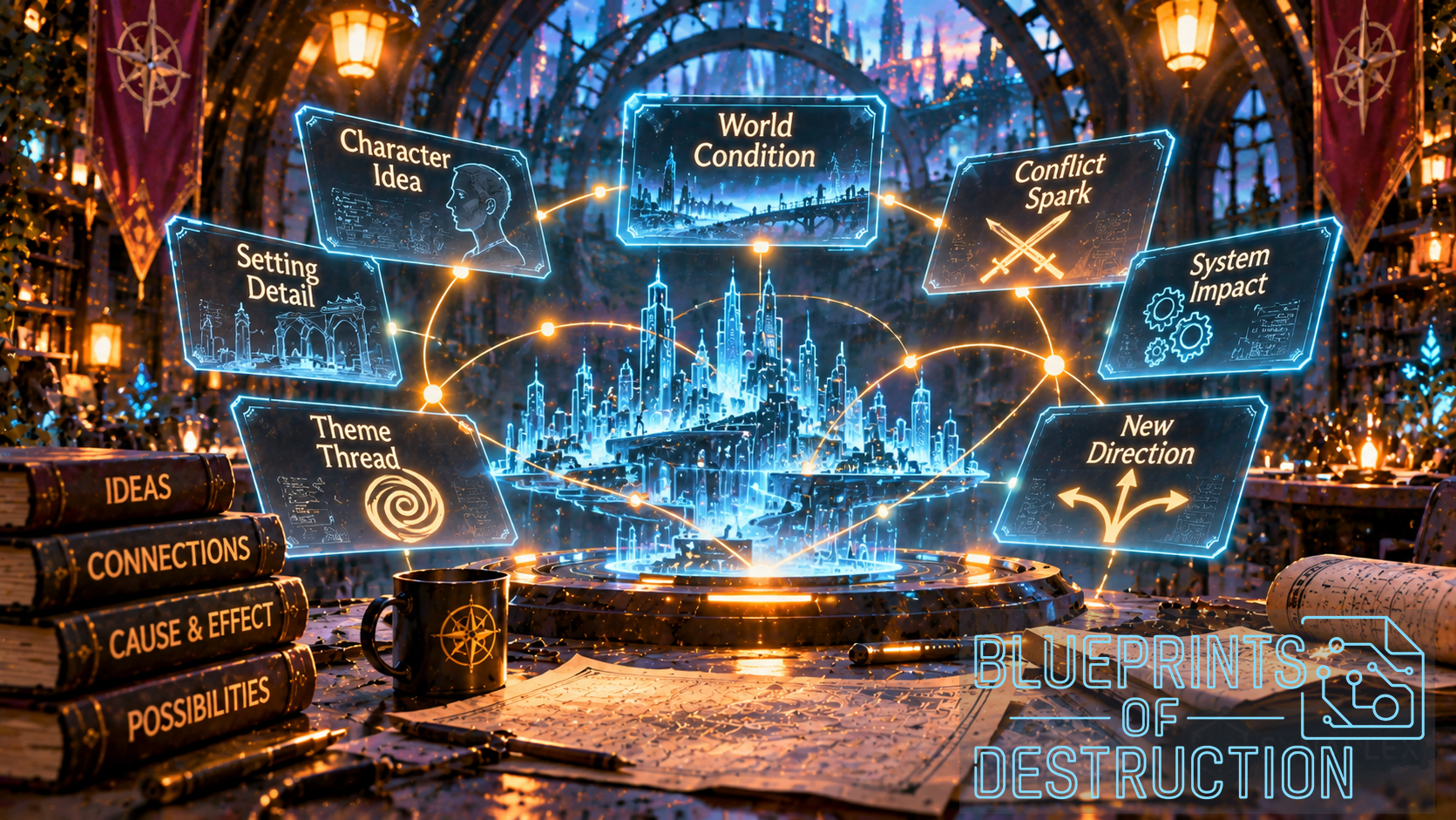
Think of this site less like a textbook and more like a workshop filled with different tables.
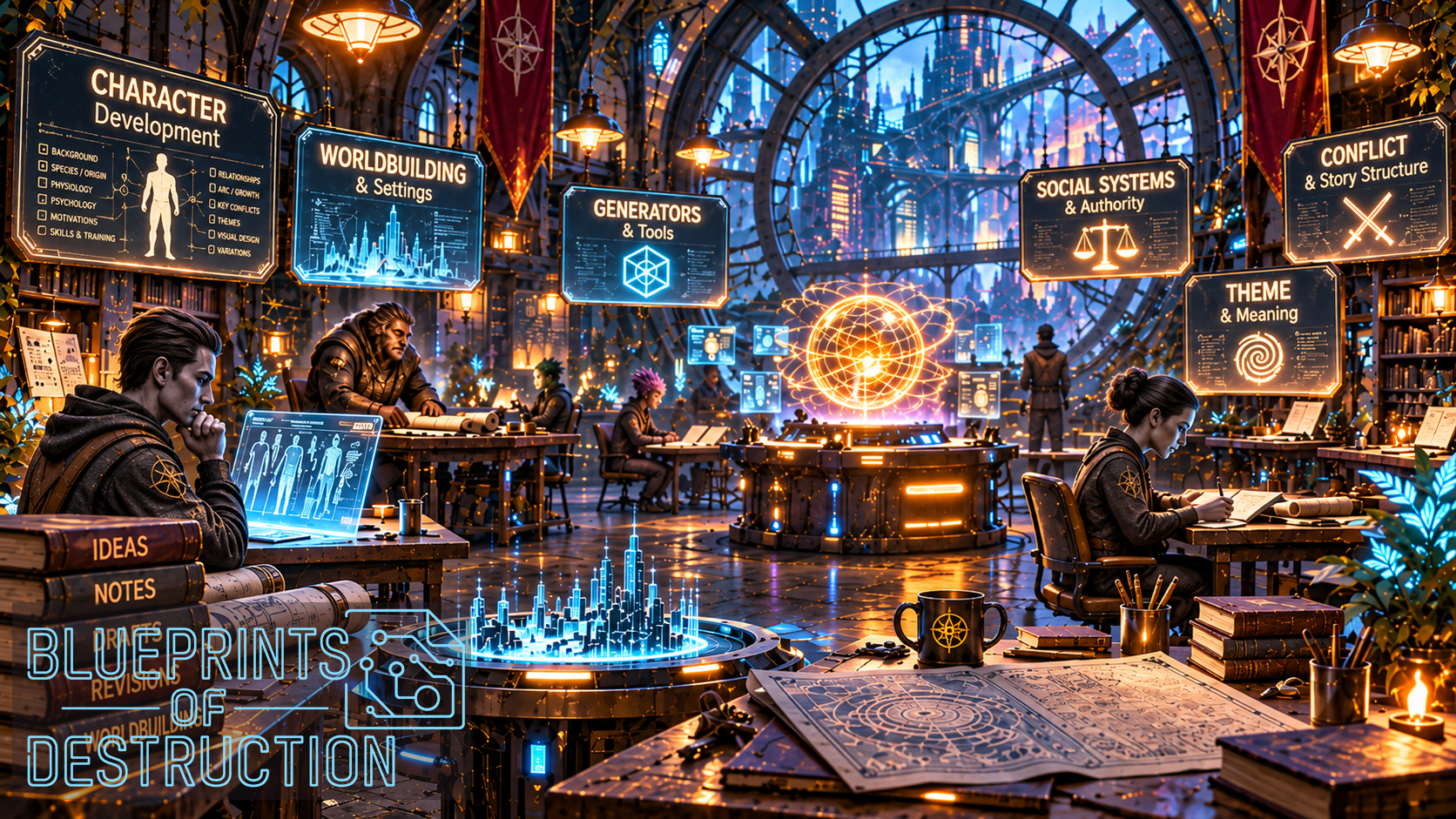
At one table, you might examine a character. At another, you might build a government. Across the room, a generator might hand you a strange combination of ideas and ask you to put them together.
Further in, the world of Qualx may show you what these same principles look like when they are used inside a developing story world.
Follow the Problem, Not the Menu
You do not need to ask:
"What page am I supposed to read next?"
Instead, a better question might be:
"What am I trying to understand?"
Perhaps your character feels flat. Perhaps your world has many details but no pressure. Perhaps you have a conflict, but it does not seem strong enough to carry a story. Perhaps you know what happens, but not why it matters.
Perhaps you have no idea what to write and simply want something interesting to work with.
The menus and directories can help you find pages connected to your current challenge. You can explore one subject deeply or gather one useful idea and return to your story.
The goal is not to mindlessly consume the information on the website. The goal is to make something of your own.
Use the Teaching Pages to Understand
The teaching pages explain the ideas beneath storytelling and worldbuilding. They can help you understand subjects such as:
- Character behavior
- Internal and external conflict
- Scene structure
- Theme
- Social systems
- Political authority
- Military power
- Technology
- Information control
- Religion
- Economics
- The pressures that shape fictional worlds
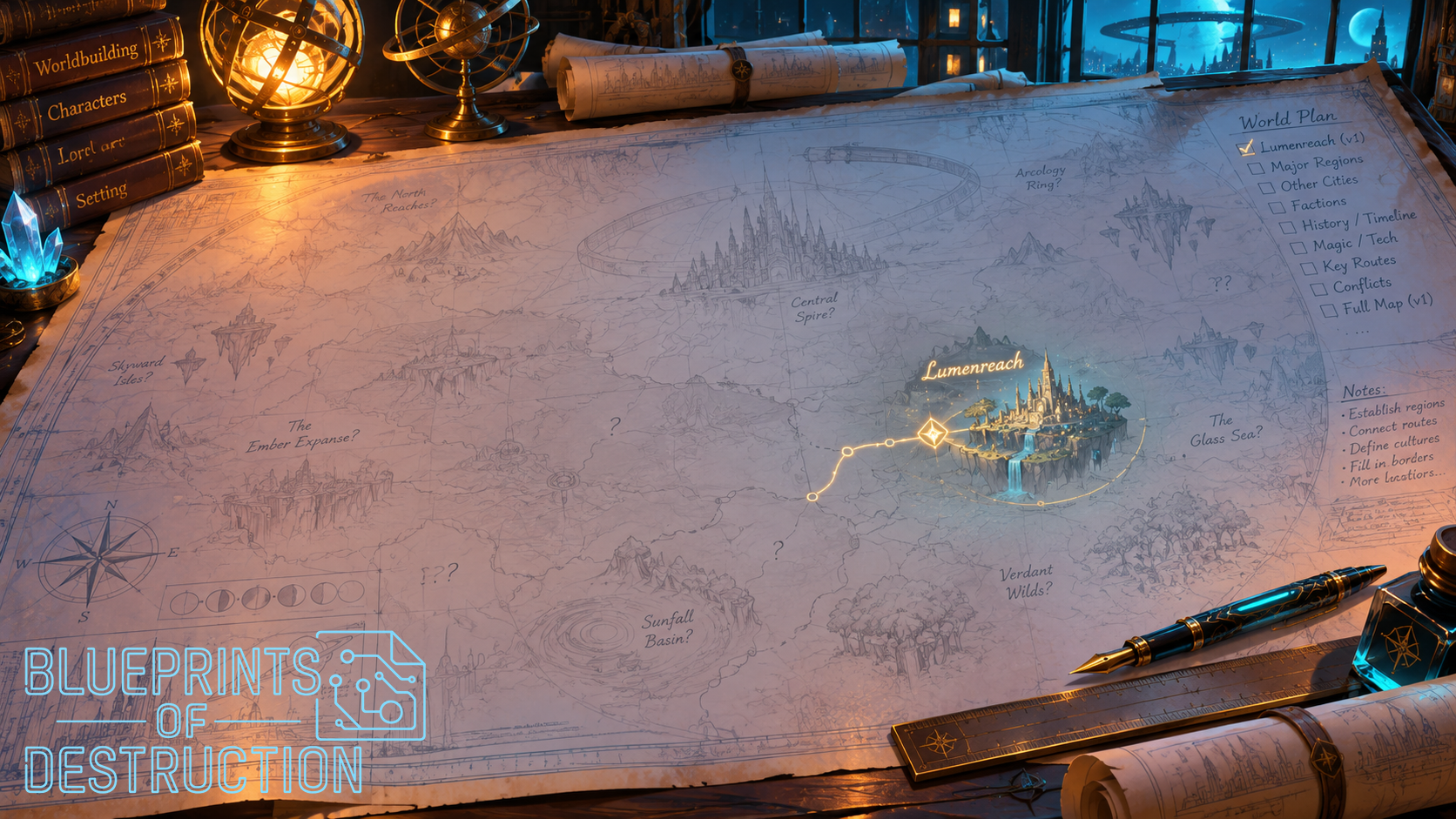
You may read an entire page, or you may find a single section that changes how you see your story.
One useful idea is enough to make the visit worthwhile.
Use the Tools to Experiment
The tools and generators are places to test possibilities. They are not machines that write your story for you. They are designed to give you material to react to.
A result may fit your story immediately. It may need to be adjusted. It may be completely wrong but inspire a much better idea.
That is still a successful result.
You can keep what helps, change what almost helps, combine several results, or discard everything except the one detail that caught your attention.
Creative tools work best when you treat their results as invitations rather than instructions.
Use the Worksheets to Slow Down
The worksheets are useful when an idea needs more attention. They can help you record decisions, compare possibilities, uncover contradictions, and ask questions you may not have considered yet.
You do not have to fill in every blank.
You do not need to force an answer before you are ready. An unanswered question is not a failure. Sometimes it is the most useful discovery on the page.
It shows where your story is still waiting for development.
Use Qualx as an Example, Not a Requirement

Throughout the website, you may encounter lore, characters, species, institutions, locations, and events from Qualx, the story world behind Blueprints of Destruction.
Qualx is used to demonstrate how worldbuilding ideas can connect, overlap, create pressure, and produce consequences.
You do not need to know the lore before using the lessons. You do not need to read every Qualx page. You do not need to build a world that resembles it. Qualx is simply one example of the process, not the only possible result.
Your world's setting may be ordinary, peaceful, ancient, contemporary, magical, realistic, hopeful, terrifying, or wonderfully strange.
The worldbuilding principles here are meant to help you build your world, not replace it.
Wander When You Want To
Sometimes you will arrive with a specific question. Sometimes you will simply want to explore. Both approaches are welcome.
Follow an interesting link. Try a tool with no plan. Read about a subject you have never considered. Open a page because the title sounds unusual.
Creativity is not always a straight road. Usually, it is not. Sometimes the unexpected detour is where the story reveals itself most clearly.
There are directories and navigation tools available when you want a clearer path, but you are also allowed to wander. This is a large website because stories are large. You are not expected to see everything at once.
Return as Your Story Changes
The same page may help you differently at different stages of your project. A character page may inspire someone new during early planning. Later, it may help you repair a weak motivation. During revision, that same page may reveal why an important decision does not feel believable.
You may return to a worksheet and discover that your answers have changed. That does not mean your earlier work was wasted. It means your story has grown.
Take What Helps
You are allowed to disagree with a suggestion. You are allowed to adapt an exercise. You are allowed to combine several ideas into something new. You are allowed to leave a page unfinished. You are allowed to write in a different order than someone else.
Allow yourself to build slowly.
No tool, worksheet, lesson, or method will understand your story better than you (even if you haven't completely discovered it yet). This is true regardless of how long it takes you to uncover that knowledge for yourself.
This website is intended to support your ideas, not replace them.
Your Next Step
Begin with the Start Here pages. Choose the one that feels most useful today. Read until you find a question, an idea, or an exercise that gives you somewhere to move.
Then take that next step!
It does not have to be enormous. Name one character. Define one conflict. Describe one place. Answer one question. Change one scene. Write one paragraph.
A story does not have to arrive all at once. It only has to begin.
So begin the process of revealing your story, and see what waits for you within its pages.
