Scene Structure for Beginners: How to Build Story Moments That Work
A scene is more than an occasion where something happens. A scene is a focused story moment where a character wants something, meets resistance, then leaves changed in some way.
What is a Scene?
A scene is a single moment within the story. It usually follows a single character inside of a single situation. In that focused situation, the character wants something, faces some kind of pressure, and the scene ends with a result that changes the direction of the story.
A good scene does not need to be big, dramatic, or complicated. It only needs to move the story forward.
The Scene Model
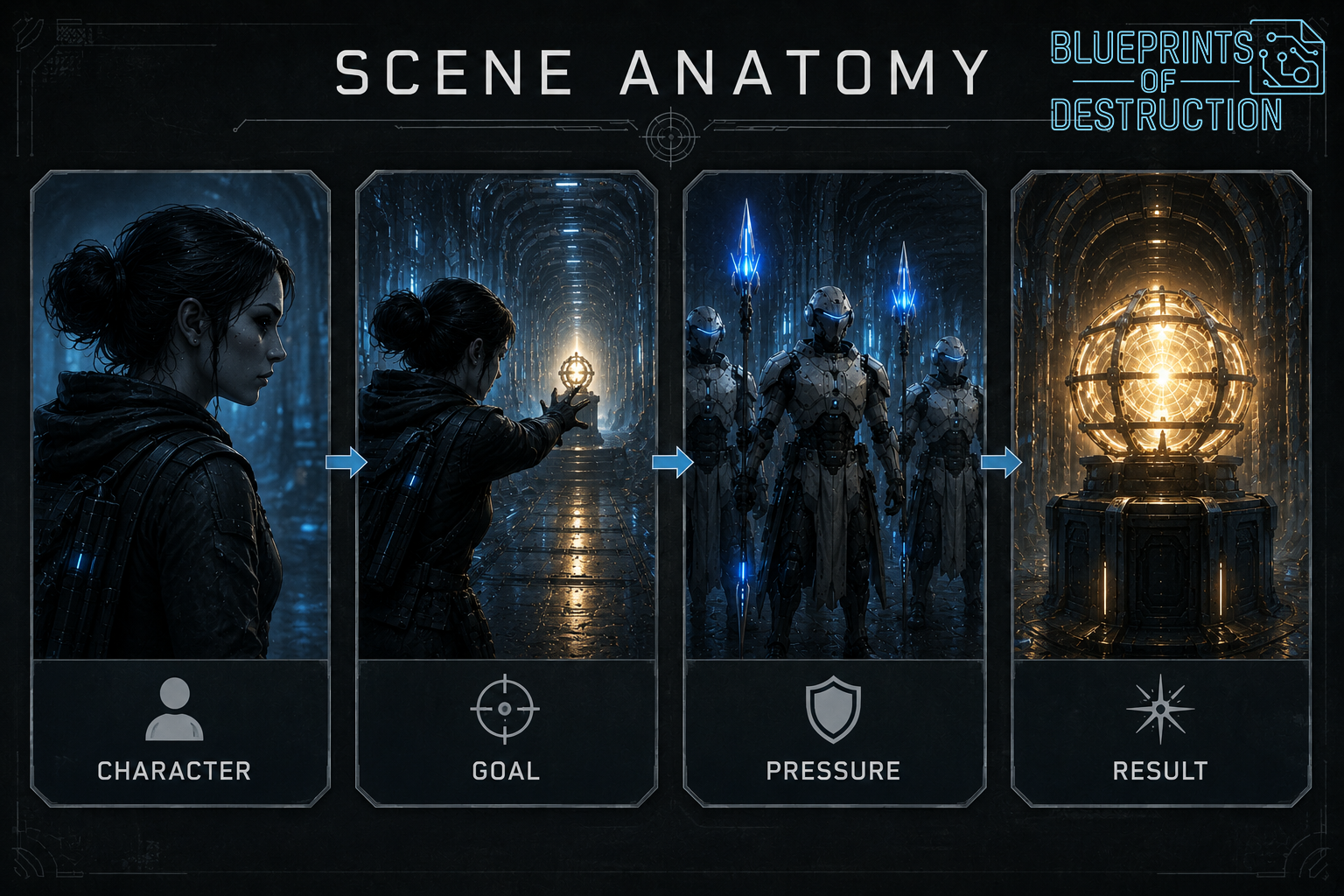
Scene = Character + Goal + Pressure + Result
- Character: Who are we following?
- Goal: What do they want right now?
- Pressure: What makes that difficult?
- Result: What changes by the end?
The Four-Part Beginner Scene Model
Part 1: The Want
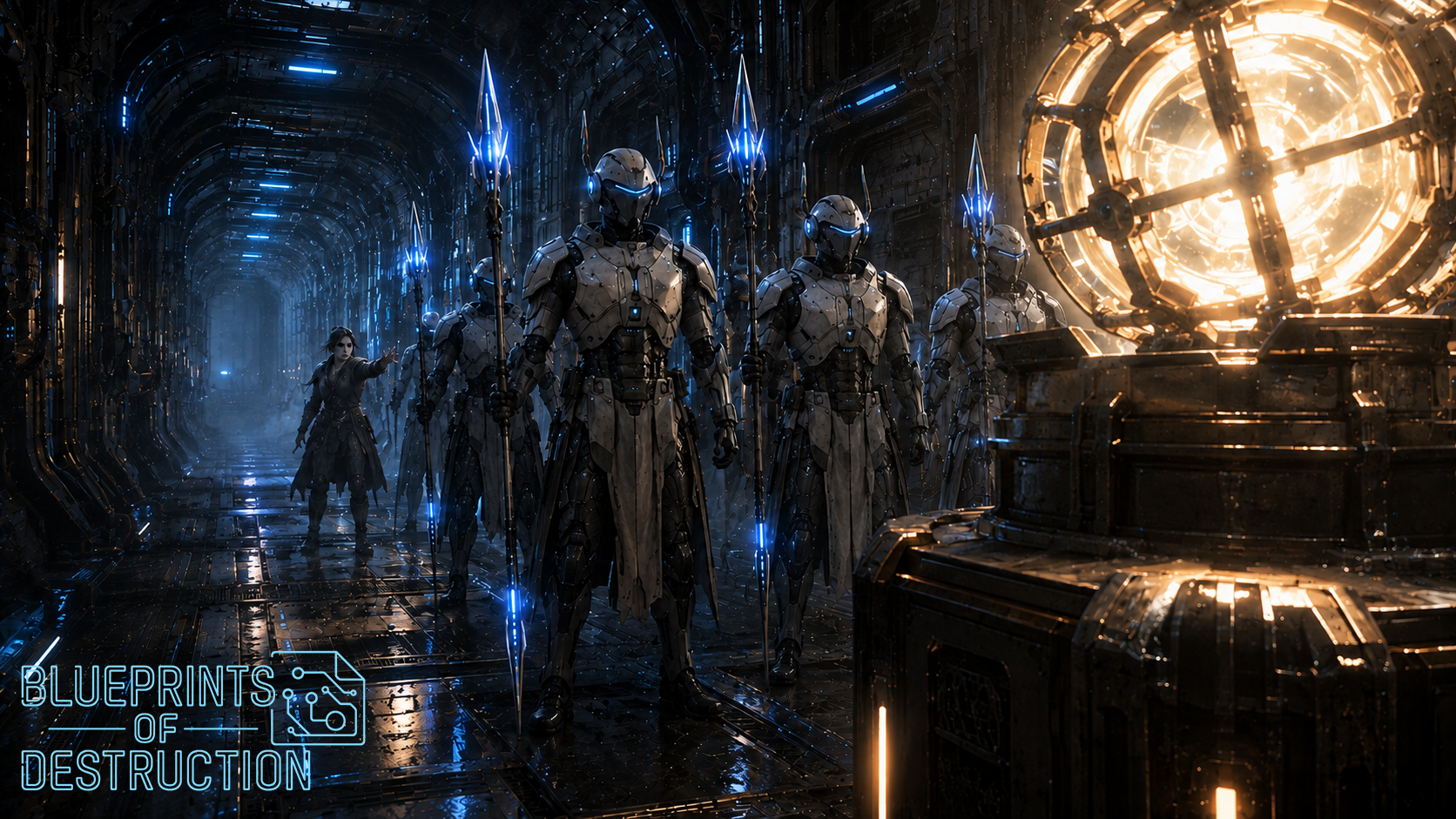
Every scene begins with desire. The character should be reaching for something, even if it is small. The reader needs to know where the character is, what is happening, and what the character wants.
Main Question: What is your character trying to prove, hide, get, or understand?
Part 2: The Resistance
Without resistance, the scene becomes a description instead of a story moment. Something needs to push against the character. This could be another person, a danger, a secret, a misunderstanding, a fear, a deadline, or a difficult choice.
Main Question: What makes reaching your character's goal difficult?
Part 3: The Shift
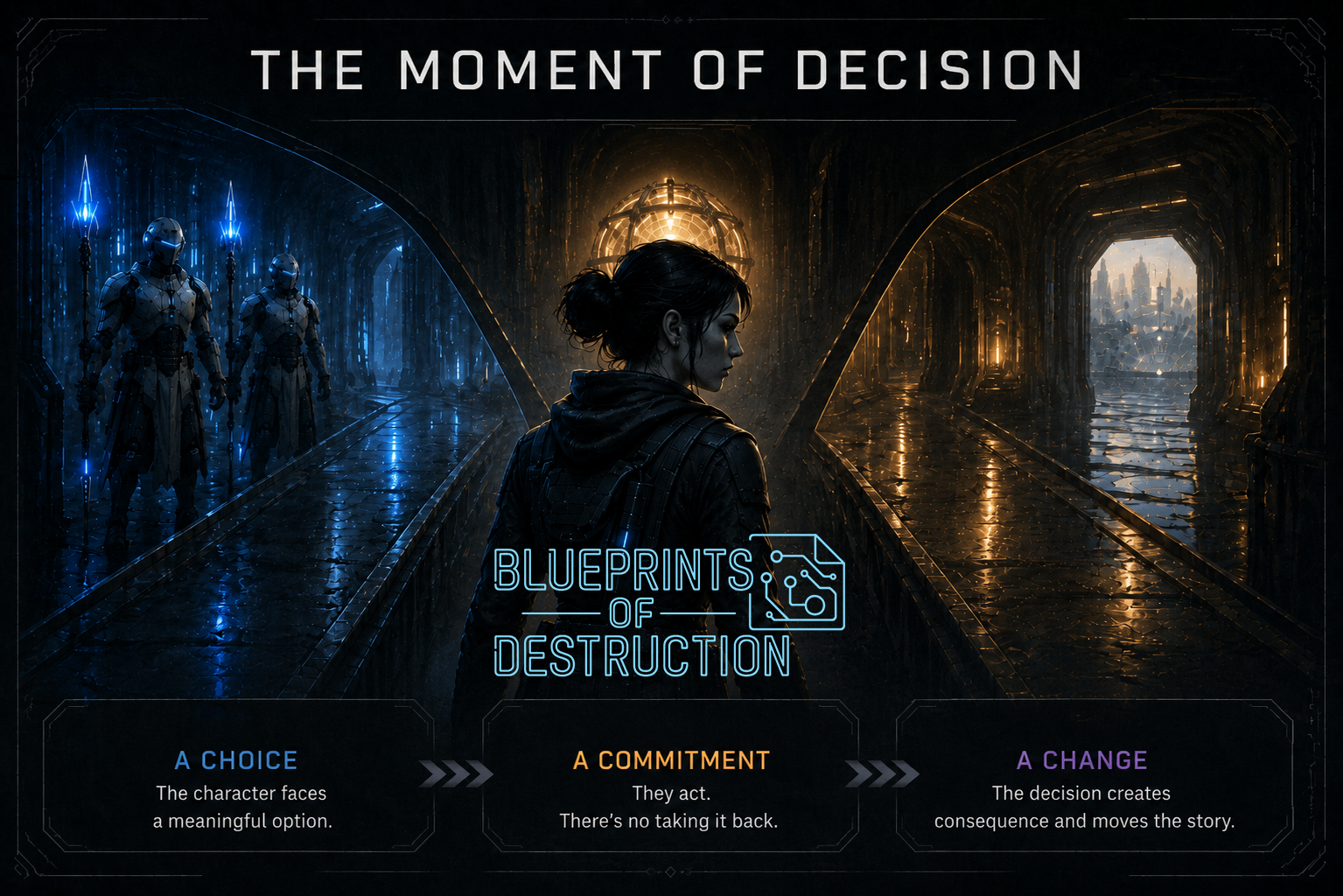
This is where the scene pivots. Perhaps new information appears, or the character makes a choice. The conflict may intensify. This change may be emotional, physical, relational, or informational.
Main Question: What changes before the scene ends?
Part 4: The Aftermath
The scene ends with a new situation. The character may win, lose, or learn something. They might make a mistake, find a clue, damage a relationship, or step deeper into trouble. The story should not be in the same exact place after the scene ends.
Main Question: What is different now?
Scene Versus Summary
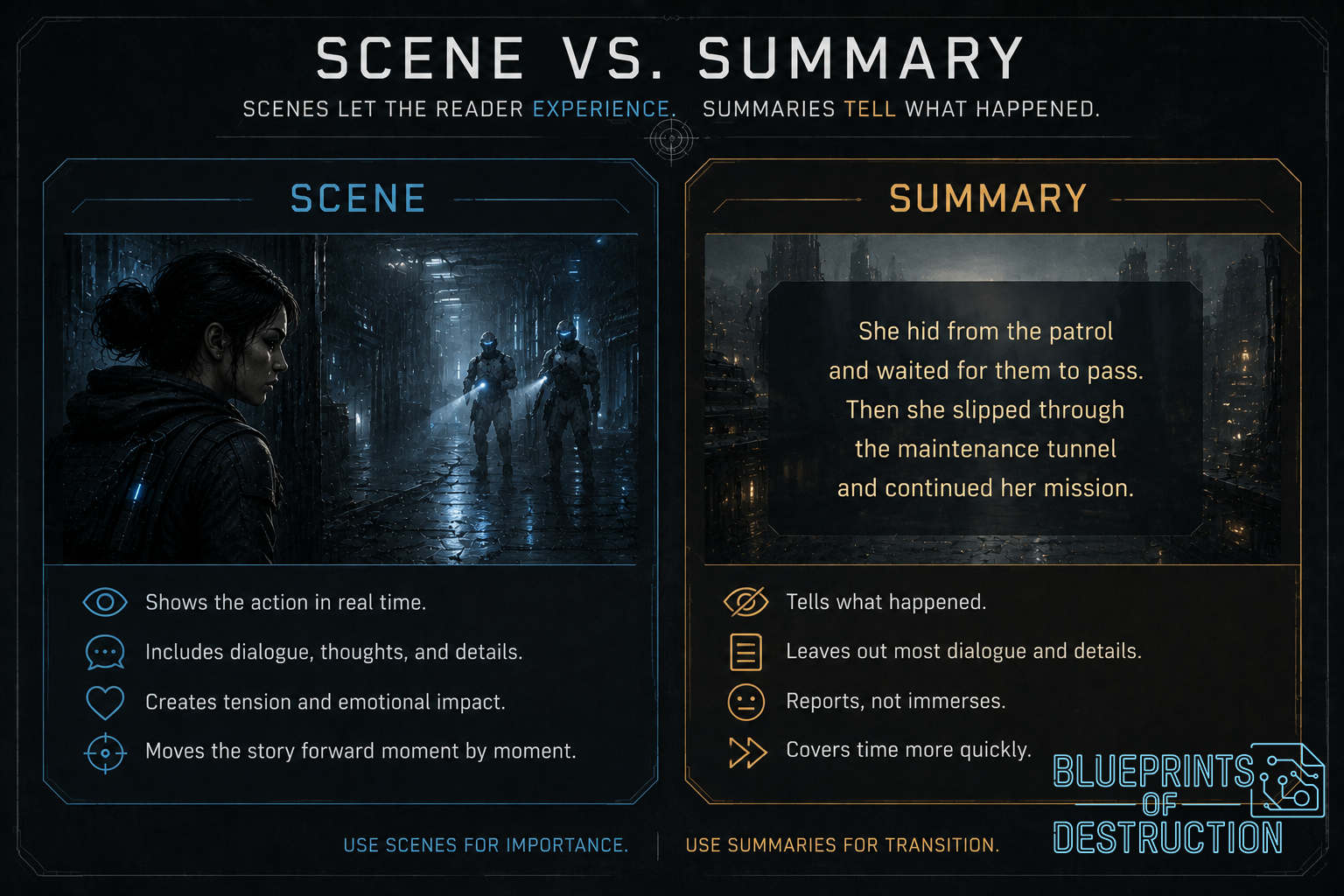
Just because something important happens inside of a story does not necessarily mean that it needs to be a scene. Sometimes a reader needs to experience a moment closely. Other times, the reader only needs to understand that time has passed, something has happened, or a situation has changed. These differences help you, as the author, control the pacing of your story.
A scene slows the story down because it lets the reader experience the moment as it is happening.
A summary speeds everything up. It lets let the reader know what has happened without giving them every detail.
For example, instead of writing:
Gagle argued with Ona and decided to leave.
This argument could be written as a scene. The reader would get to be in the room as the argument is happening. They would hear what Gagle says, see Ona's reaction and feel the pressure build. They would understand why Gagle chose to leave.
A summary would only tell the reader that Gagle left abruptly. It would not let the reader experience why he made that choice.
Why Use Summary?
Summary is useful when the information matters, but the reader does not necessarily need to experience the entire moment at this point in the story.
Use a summary when:
- Time passes.
- A routine repeats.
- The details are not emotionally important.
- The reader only needs basic information.
- You need to connect one important scene to another.
- You want to avoid slowing down a story too much.
- You need to intentionally withhold information from the reader.
Both scenes and summaries are useful. A story only made of scenes can feel slow. A story made up only of summaries can feel distant. Part of good pacing is knowing when to zoom in and when to zoom out.
A Good Beginner's Rule
If the moment changes the character, a relationship, a danger level, or the direction of the story, it probably deserves to be a scene. If the event only connects two important moments, explains background information, or moves time forward, it should most likely be a summary.
Scene and summary are not conflicting resources. They are just two different tools; two different perspectives. A scene creates experience, a summary creates movement. Learning how to do both will result in strong storytelling.
Common Mistakes
Scene writing can feel confusing at first because it has to accomplish many things at once. A scene may need to show action, reveal character, create movement, balance motivation, all while keeping the reader interested.
The good news is that most problems within a scene come from a few simple issues. Once you know what to look for, scenes become much easier to fix.
Mistake 1: Nothing Changes
One of the most common beginner mistakes is writing a scene where events happen, but nothing truly changes.
A strong scene should create some kind of change. The change can be small, like a character realizing their friend is hiding something. The change can be big, like discovering that their friend is a killer. The change does not need to be dramatic, but it does need to matter.
Before finishing a scene, ask yourself:
"What is different now that this scene has ended?"
If the answer is "nothing," you may need to rethink the scene or give it a clearer purpose. Sometimes, all you need to do is zoom out and make the scene a summary.
Mistake 2: The Character Has No Goal
A scene is strengthened when the character wants something inside that exact moment. The goal does not have to be huge, only specific. The character might want to get an answer, escape, hide their fear, impress someone, avoid a question, or find something that is missing.
A character with no goal can result in a scene that feels loose or unfocused.
Ask yourself:
What does my character want right now?
Not in the whole story, not for their whole life. Right now, in this moment.
Mistake 3: Missing or Weak Resistance
If the character has a clear goal for the moment but achieves it too easily, the scene may feel flat. Resistance is what adds pressure.
Resistance can come from many places:
- Another character who refuses to cooperate.
- The environment creating danger.
- A character who is afraid.
- A secret.
- Time that is running out.
- A character that wants something they think is out of reach.
Ask Yourself:
What would make my character's goal difficult?
Then incorporate the answer into the scene.
Mistake 4: Overexplaining
Sometimes writers try to explain the meaning of a scene while the scene is actively happening. This might include what a character feels, a character's backstory, the theme, or why a moment matters.
A scene often becomes stronger when the reader can see the pressure through action, dialogue, body language, and choices.
Can the reader understand what your scene is trying to accomplish by what the character does, says, notices, or chooses? Instead of telling the reader that a character is nervous, show that they are nervous through their body language, action, and dialogue.
Mistake 5: A Scene Starting Too Early
Sometimes scenes begin before the important moment has actually started.
The character wakes up, gets dressed, walks somewhere, enters the room, and greets everyone. Only then does the important information begin.
Starting too early can make a scene feel slow before it has a chance to begin. Look for the first moment tension appears. Consider starting there.
Mistake 6: A Scene Ending Too Late
Just like scenes can start too early, they can end long after the important change has already happened. Once the decision is made, the secret is revealed, the threat arrives, or the emotional turn lands, a scene may not need more information.
Ending too late can weaken the impact.
Has the main change of the scene already happened? If the answer is yes, you may want to consider ending the scene soon after that change.
Mistake 7: The Scene Does Not Connect to the Larger Story
A scene can be well written, but still feel out of place. If there is a moment that does not affect the character, the conflict, the relationship, the mystery, the theme, or the next event, the reader may wonder why it is there. Each scene does not need to advance the main plot directly, but it should contribute something.
What does this scene do for the story? A scene might reveal character, build tension, change a relationship, create or answer a question, raise the stakes, or prepare the reader for what comes next.
Scene Checklist
- Who is the scene following?
- What does the character want right now?
- What makes that difficult?
- What changes during the scene?
- What does the reader know, feel, or expect afterward that they did not before?
- Why does this scene matter?
If you are able to answer these questions, you are well on your way to a solid scene with a good foundation.
The goal of writing a scene is not to write something perfect on the first try. The goal is to understand what the moment is doing for the narrative as a whole. Once you know what the character wants, what stands in the way, and what changes by the end, you have the foundation of a working story moment.
If you are still struggling with writing a scene, especially if it is an opening scene, the Opening Scene Structure for Beginners might give you the guidance you are looking for.
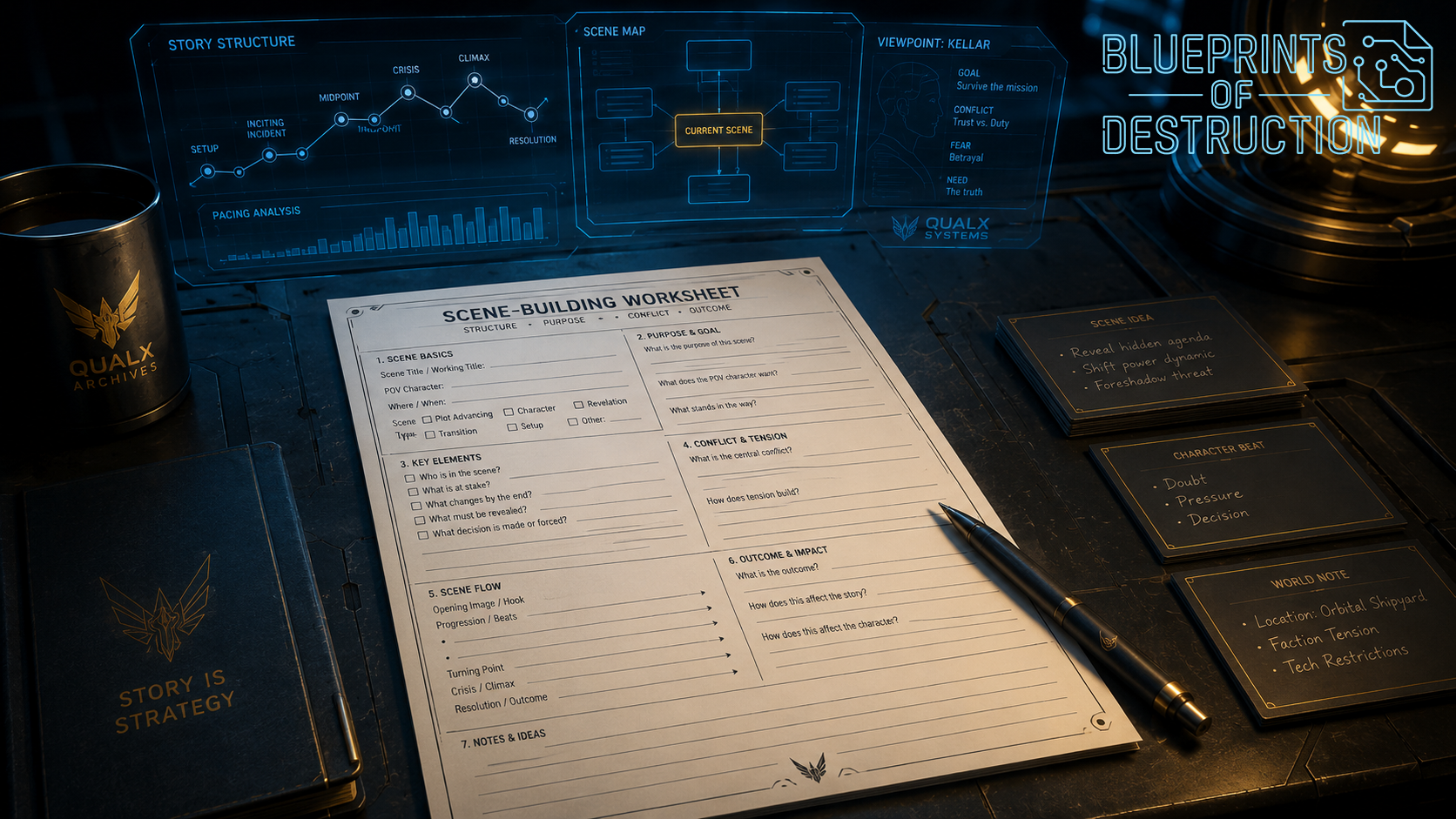
So grab a scene writing workspace and start working on your next story moment!