What to Do When You Want to Write but Feel Overwhelmed
So, you want to write. Perhaps you have a scene, a character, a world, a question, a feeling, or a scenario that keeps tugging at the back of your mind.
But the moment you sit down, everything suddenly feels too big.
There are too many characters. Too many choices. Too many possible directions. Too many things you do not know yet. Too many moving parts. Instead of feeling excited, you feel stuck before you have even started.
If that sounds familiar, you are not broken, lazy, or "bad at writing."
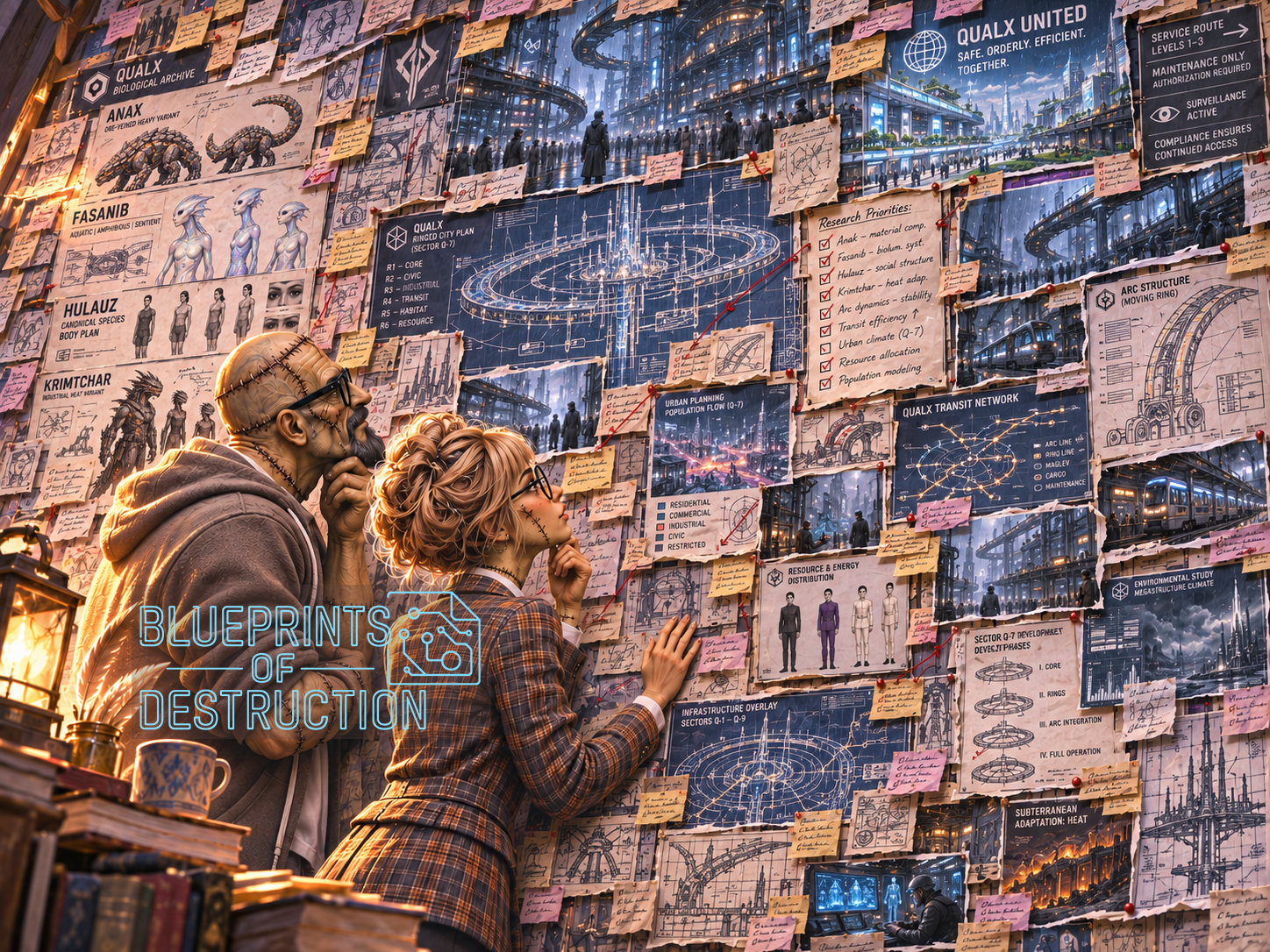
You may simply be standing too close to the world you are creating.
Why Writing Can Sometimes Feel So Big
There are many reasons why writing can feel like an impossible task at times. Perhaps you are trying to solve the entire book all at once. You might be comparing your messy beginning to someone else's finished work. You may think you need the plot, theme, ending, characters, and entire world flawlessly built before you can write the story.
In many cases, overwhelm happens because our brains treat "start writing" as a command to "solve the entire story." That is not the truth.
A story exists in pieces, not in order.
The entire story does not need to be worked out with every t crossed and every i dotted. The blank page before you is not a test; it is the doorway through which you can step into your world and explore it.
Your First Job Is Not to Finish the Story
The first job in writing is not to complete the perfect first chapter. It is not to build the whole world. It isn't even to know the ending.
The first job is to create a small piece of the story that did not exist before.
Ways you could accomplish this include:
- Write one question.
- Describe one image.
- Describe one character.
- Write a line of dialogue.
- Describe one problem.
- Make a messy list.
- Write what you know so far.
- Write what you do not know yet.
Start Smaller Than You Think You Should
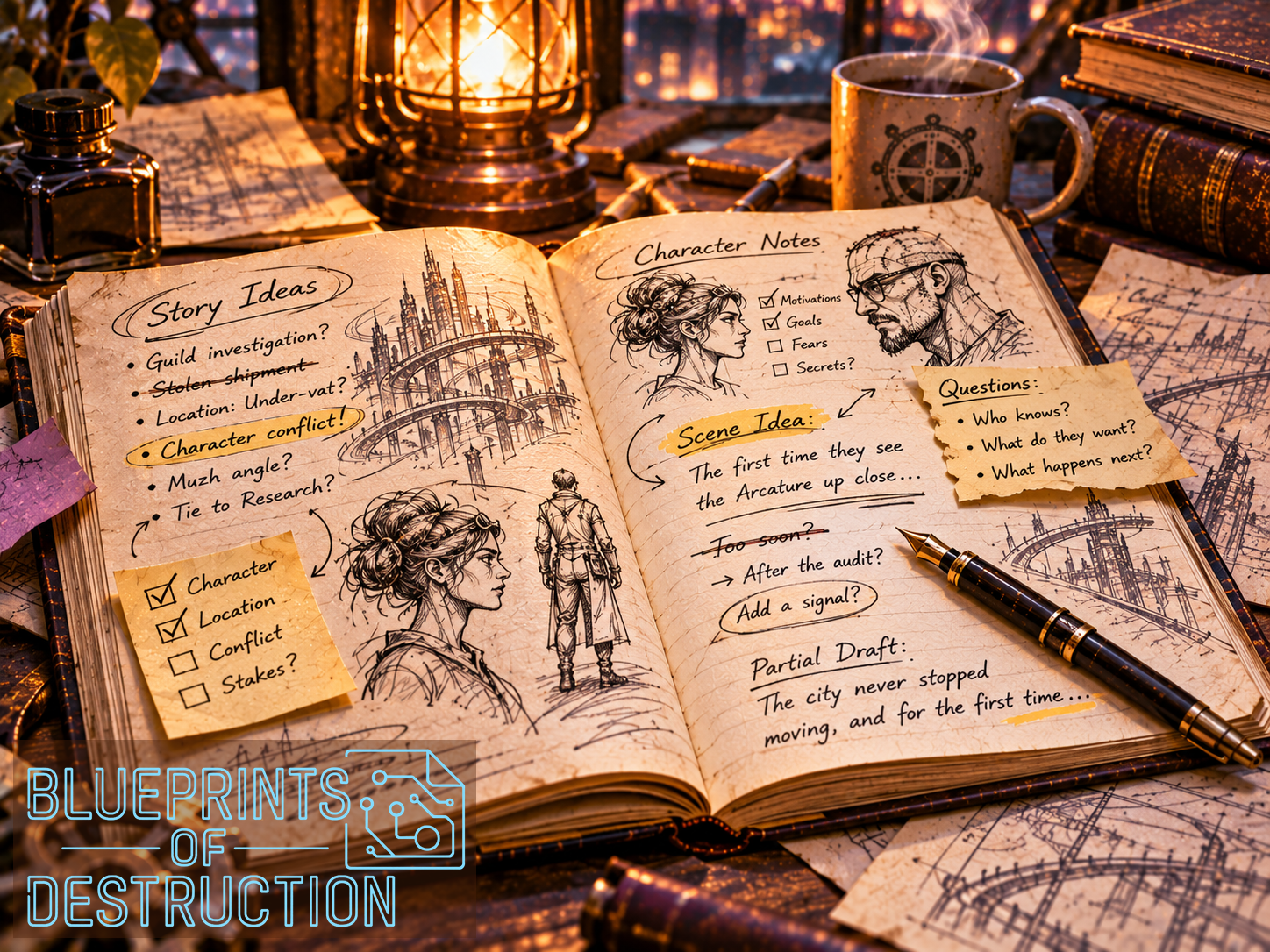
In some cases, a writer has a grand world with even grander adventures inside, but beginning to craft such a large adventure can feel like a huge task. Instead, start much smaller than you think you should.
A simple starting method:
- Write one sentence about the idea.
- Write one thing you know.
- Write one thing you wonder.
- Write one thing that could go wrong.
- Stop before it becomes too much.
For example:
Idea: A city that can move.
I know: People live inside it.
I wonder: Why does it need to move?
Something that could go wrong: Something dangerous is coming, but the city cannot move out of the way.
Lower the Pressure
A writer may feel overwhelmed because they expect their first attempt to be good. When the writing isn't good, it can feel demoralizing, as though the writer is doing something "wrong."
But a first draft isn't supposed to be polished. It needs to be useful. Early writing does not need to be beautiful. It just needs to give you material you can work with.
Choose the Door That Feels Easiest to Open
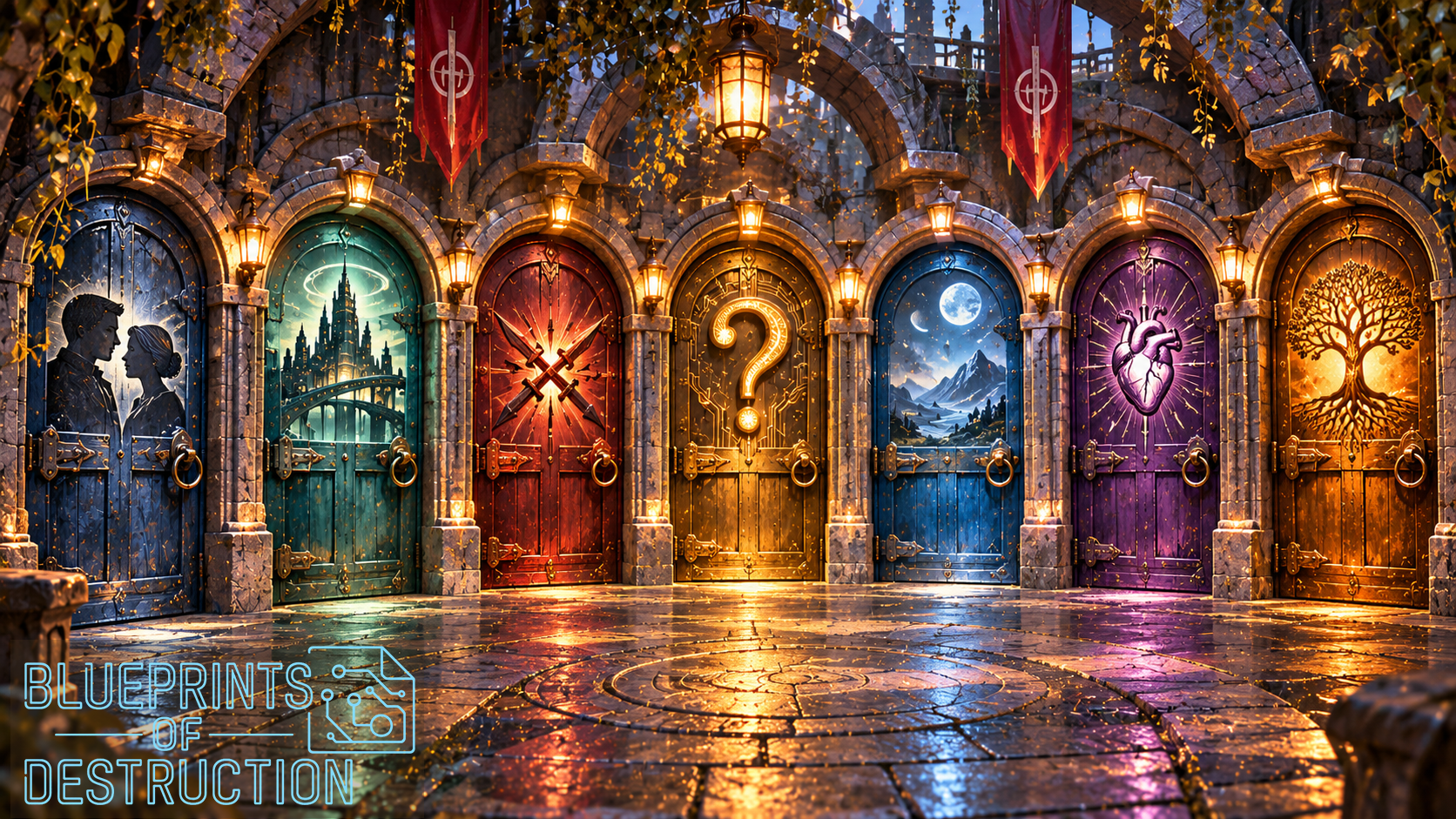
Different writers enter stories in different ways. A way into your own story might be through:
- A Character Door: Who is this story about?
- A World Door: Where does this happen?
- A Problem Door: What is going wrong?
- A Question Door: What am I curious about?
- An Image Door: What scene, place, or moment do I see?
- An Emotion Door: What feeling am I trying to capture?
- A Theme Door: What pattern or truth keeps showing up?
A Five-Minute Starting Exercise
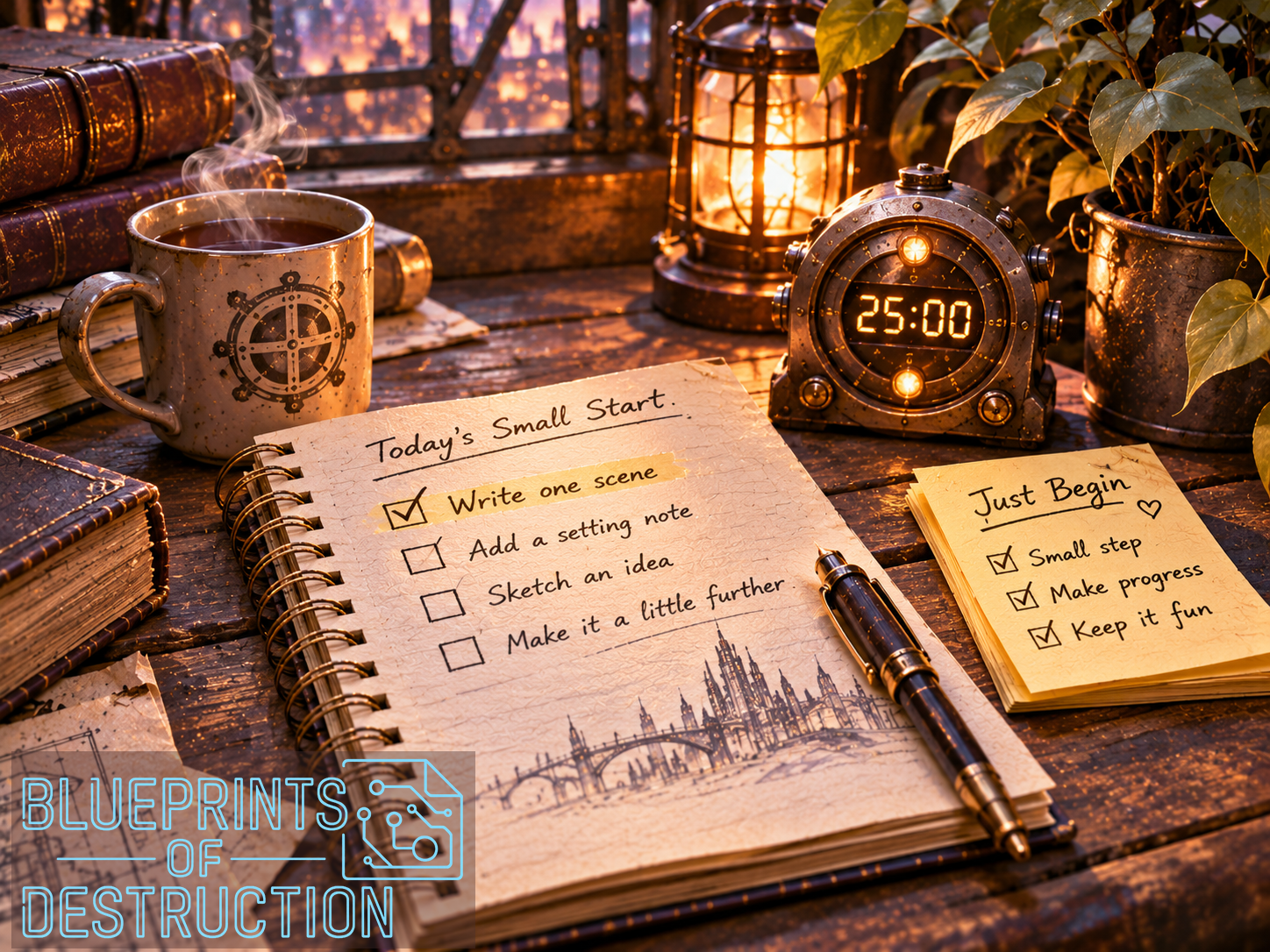
One way to fight overwhelm is to make creativity more accessible to yourself. A simple way to do this is to give yourself a short, timed window.
Set a timer for five minutes and answer only these three questions:
- What is one thing I know about this story?
- What is one thing I do not know yet?
- What is one thing that interests me enough to keep exploring?
Do not organize the answers. Do not make them sound good. Do not worry if they contradict each other. The goal is not to produce a finished idea. The goal is to give your mind something it can work with.
Begin Small
When an idea feels like it is just too much, the solution is not always to push through the problem like a juggernaut. Sometimes the solution is to slow down and make the problem more manageable.
Writing does not have to begin with confidence. Sometimes it begins with a moment of confusion, a sentence you do not like, a question you cannot answer, or a scribbled note that only makes sense to you.
That is still writing.
You do not have to start with the story as one enormous chunk. You can break it into tiny pieces: one character, one question, one problem, or one snapshot.
The path does not have to be clear before you take the first step. Sometimes you must take a leap into the dark and let your ideas catch you.
So, go! Take that first step. Write something, no matter how big or small, and get one word closer to unleashing your inner author.
