Building Worlds
Building Worlds: Understanding Consequences
Consequences are what turn worldbuilding into a story. Systems push characters forward by creating pressure, pain, and risk.
Building worlds becomes more than just establishing how the world works. It becomes a dance between system and character and how each affects the other. Understanding your world means understanding it's consequences and how they can affect the narrative.
Complex systems offer a vehicle for the story to take place inside even as it pushes characters through the story.
Life Rights as a Story Engine
Unjust systems give both the readers and characters something to fight for or against. A "fair system" is a recipe for a boring narrative.
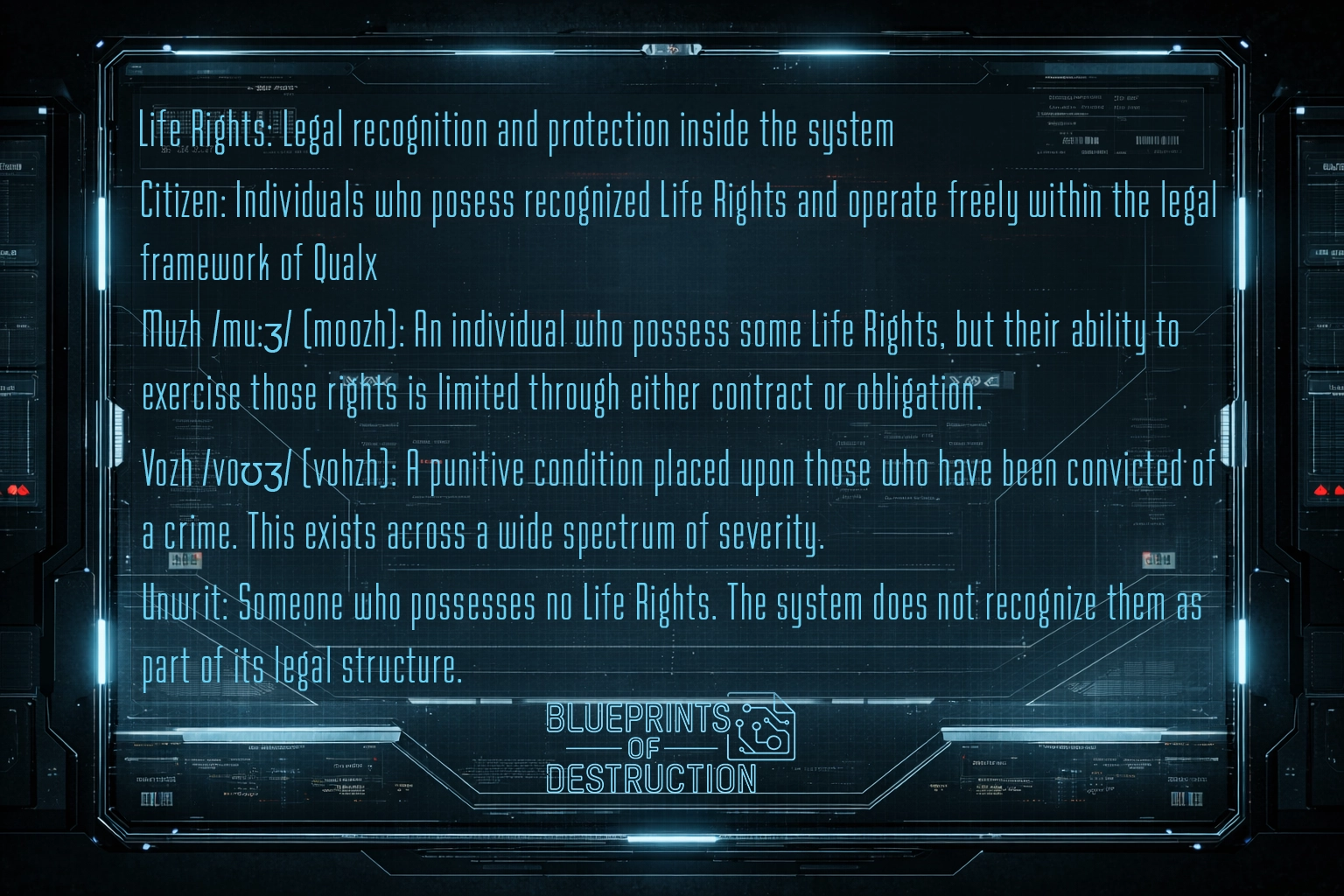
Life Rights are the Conglomerate's system for legal belonging. It is how the world of Qualx determines protection, status, and access. In Qualx, while Life Rights provide great benefit to those that posses them, they can also be a tool to pressure characters through the powerful social implications that surround Life Rights.
Revoking Life Rights, whether permanently or temporarily, is a way that Qualx itself pushes characters and changes the outcome of the storyline.
Punishment for Crime
While building worlds, it is important to not only establish motivations, but to also establish repercussions if a character fails.
In the world of Blueprints of Destruction, not all crimes are created equal. Let's look at stealing as an example. The difference between taking something like supplies would carry a very different sentence than stealing information.
Crimes of Survival
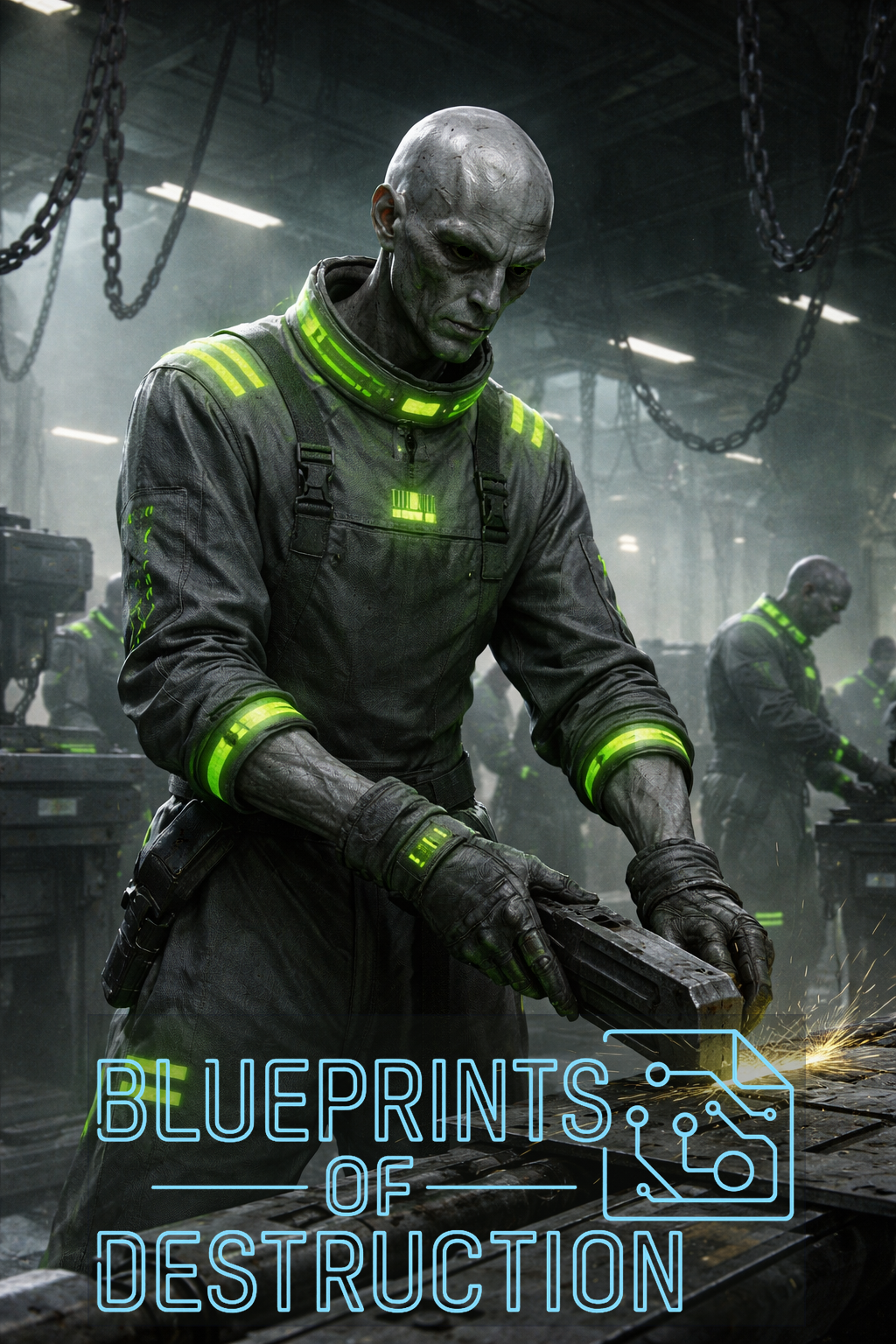
If caught stealing goods, even in a case where there are multiple offenses, the consequences might be nothing more than a slap on the wrist. A small fine for first-time offenders, and perhaps two weeks of Conglomerate service for repeat offenders. If an individual is clearly a serial offender, they may be demoted to Vozh status temporarily.
The Conglomerate recognizes that stealing is technically illegal. In practice, however, the system itself also understands the unwritten necessity that some elements of society have no choice but to steal in order to survive. These considerations carry weight when determining the final outcome for those who are found guilty.
Crimes of Systemic Threat
If caught stealing information, however, the penalties are much harsher. Any individual caught going after information automatically becomes a vozh. While the stealing of information can be disguised as petty thievery, the very act of taking information is something the Conglomerate ties to the most nefarious of motivations. Thus, the punishment is swift and severe.
A hungry dock worker might steal food and pay a small fine.
A data clerk who steals vital Guild records may lose everything.
Information threatens systems in ways that stolen goods never can. Knowledge spreads. It exposes weaknesses. It threatens the very foundations. Because of this, the Conglomerate treats information theft not as petty crime, but as a direct threat to order and efficiency.
Trading Life Rights
Crime is not the only way someone can lose their Life Rights.
In Qualx, Life Rights can be used as a form of currency. Some people trade them as collateral when they take on large debts, take risky ventures, or make dangerous deals.
Some of the wealthiest individuals in Qualx built their power by collecting the Life Rights of others.
For desperate individuals this kind of bargain can feel like the only real option. While the system does not force them to make the trade, it does make sure that the consequences are enforced.
Deals like this happen every day in Qualx.
When Life Rights Become Collateral
The dim room smelled of oil and oxidation. A layer of filth covered every surface, illuminated by a single dim light hung above the table.
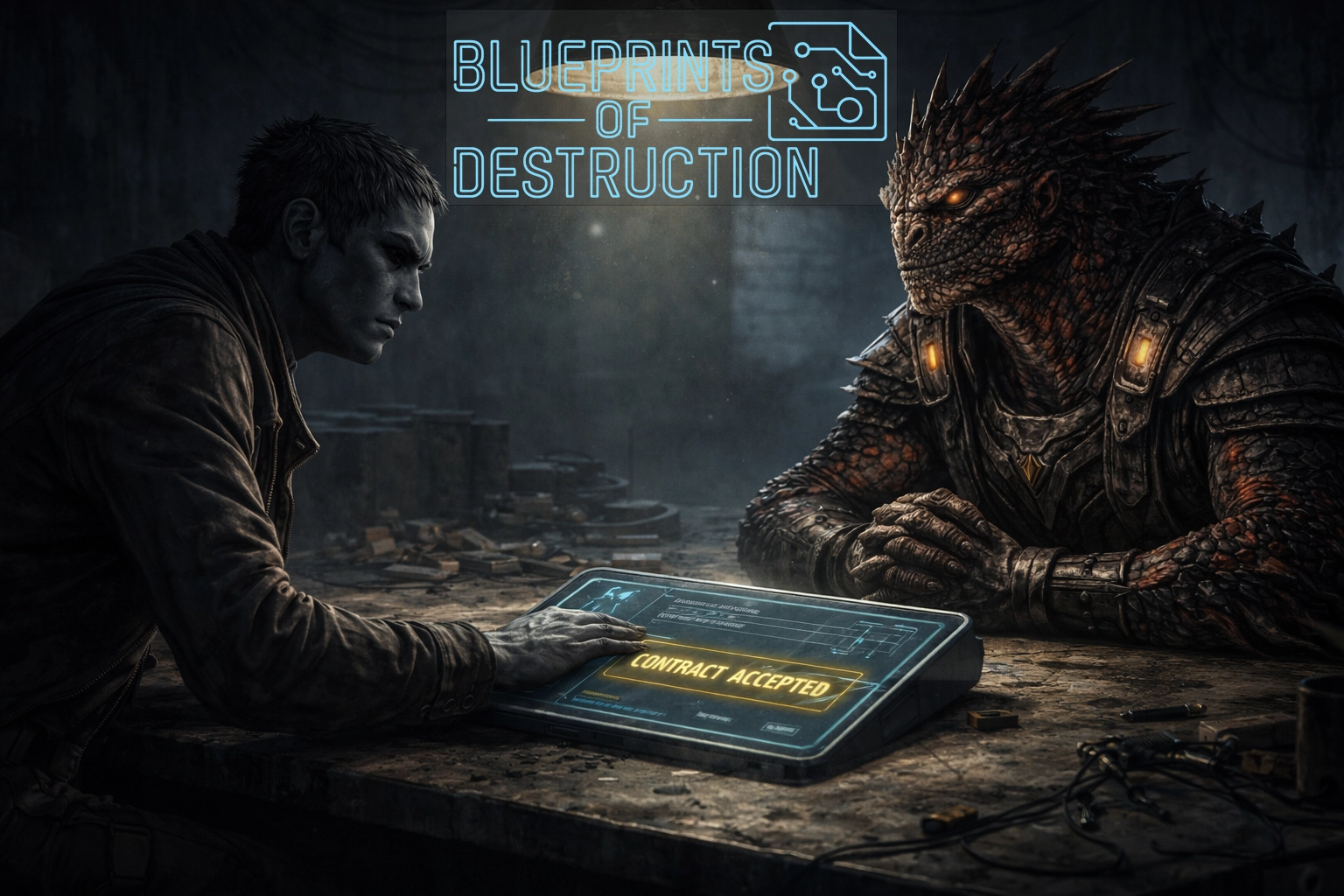
Tilon took a seat. Jakan Tiras was already seated across from him.
On the table rested a synaplex slate, glowing a faint blue, the color dampened by dirt. On it, the readout displayed,
Molodah, Tilon
Access Level 3
Status: Active
"You understand the terms?" the broker asked. The edge in Jakan's voice made Tilon fight back a shiver.
Tilon nodded, a drip of sweat sliding down his back.
"If the shipment fails," the broker continued, "Your Rights transfer to us. Completely."
Tilon studied the debris on the table. His sister needed ganites. The job paid enough to continue treatments for months, and to pay for food on top of that for the both of them.
Without this job, she wouldn't last a month.
"And if the shipment succeeds?" Tilon asked as he desperately tried to keep the nervous tremble out of his voice.
Jakan tapped the screen and it flickered as the readout changed.
"You keep your Life Rights," a spiteful grin spread across his face, "and you leave with the biggest balance in your account you have ever seen. All it takes is your signature."
Tilon knew the risk. If he failed, he would wake up one day with even less than he had now. No protection. No status. No place in the city. No medicine for his sister.
Just another unwrit in a mass of unwashed bodies.
Jakan slid the slate across the table.
Tilon stared at the gently glowing panel.
Slowly, he pressed his palm onto the surface. The screen changed from blue to a flashing yellow.
CONTRACT ACCEPTED
Suspension Vs Stripping
Suspension (Temporary)
A suspension of Life Rights may be enacted for minor crimes. These are crimes that don't call for complete removal of rights because they are trivial. This suspension demotes an individual to muzh status, but would not set their Life Rights completely into vozh status. This suspension can last anywhere from weeks to years.
However, vozh status can also be temporary. It is more severe than a suspension because the assets that the individuals possess are taken and auctioned, usually to the highest bidder.
Stripping (Permanent)
A heinous crime, like the taking of a citizen's life or the illegal reclamation of Life Rights usually is met with a permanent and complete stripping of rights. Actions like these are met with the maximum judgment and the harshest of punishments if the perpetrator is found guilty.
Why Consequences Matter
Losing Life Rights does not only change a person's legal status, it changes how society sees them. Former friends may turn away. Doors of opportunity close, even as protections vanish overnight.
In Qualx, punishment is not just about justice. It is about control.
These consequences are how characters are pushed to move and grow. How they change, or refuse to improve. Systems, consequences, and pressure are how a story is created.
Consequences through your worlds systems are about justifying inherent cruelties and establishing them as necessary for these systems to function.

Building Worlds Through Meaning
Imagine waking up one day and finding out your place in life has disappeared. Your family is gone, someone else lives in your home, and your job no longer has a record you ever worked there.
The devastation might drive you to take extreme actions. This concept is the foundation on which character arcs are built.
When a system controls belonging itself, the fear of losing status becomes a weapon.
This is what Life Rights mean in Qualx. They are hope and safety. They are worth fighting for.
The Conglomerate uses Life Rights to guide behavior. Follow the rules, and you stay safe. Break them, and you pay. Sometimes with service. Sometimes with status. Sometimes with life itself. The system works because individuals are afraid to lose what they have earned.
While you are building worlds, ask yourself one key question:
"What do characters in my world fear losing the most?"
Whatever the answer is, that is where your story truly begins.
Life Rights Table of Contents:
How to Write Better Stories with Complex Systems
Build Your Own World by Expanding Complex Systems
How to World Build Through Lore
Exploring What is World Building With Tiers and Rights
Make Your Own World by Breaking Concepts Down
Using Worldbuilding Ideas to Create Intricate Systems
Creating an Imperfect System with Tips for Worldbuilding
Building Worlds With Consequences
How Life Rights can be Acquisitioned
