How to Build a Story Step-by-Step
Stories are not found all at once. They are built piece by piece. Many new writers get stuck because they think a story has to arrive fully formed. They wait for the perfect character, the perfect plot, and the perfect ending. A story begins with a simple idea. When you give the idea a character, a goal, a problem, and a reason to keep moving, the story can start to take shape.
This guide is intended to help walk you through how to build a story step-by-step, from the first idea to a basic structure you can use when you begin writing.
Step 1: The Spark
The first step in writing a story is finding a small idea that interests you. This might be:
- A character
- A place
- A problem
- A question
- A conflict
- A "what if" situation
An example might be:
"What if a character discovers that everything they believe is wrong?"
At this stage, your idea does not need to be complete. It only needs to be interesting enough to explore.
Step 2: The Main Character
Once you have an idea, you need to choose who the story will be about. The main character is the person the reader follows through the problem. This character does not have to be perfect. In fact, it is usually better if they are not perfect.
A good main character has strengths, weaknesses, fears, desires, and something they need to learn.
A story becomes stronger when a character is not just watching events happen, but is personally affected by them. Ask yourself:
- Who is this story about?
- What do they want?
- What are they afraid of?
- What mistakes are available for them to make?
- Why should the reader care about them?
Step 3: The Problem
A story is pushed forward by trouble. The problem is the issue or event that interrupts the character's normal life. Without a problem, the story has no reason to move forward.
This problem can be internal, external, or both. An external problem, like a war, a dangerous enemy, or a family member disappearing, is something that happens outside the character. An internal problem like fear, pride, or a mistrust of others is an issue happening inside the character.
The best stories use both.
Step 4: The Goal
Once the problem appears, the character needs something to pursue. This goal gives the story direction. It helps the reader understand what the character is trying to do and why the next scene matters. Examples of character goals might be to:
- Escape
- Find the truth
- Save someone
- Prove themselves
- Protect their home
- Undo a mistake
Step 5: The Obstacles
Obstacles are the forces, problems, or choices that stand in the way of the goal. These obstacles can come from enemies, society, nature, family, laws, secrets, fear, weakness, or bad choices. If the character gets what they want too easily, the story either ends up feeling dull or ends too quickly.
To develop stronger obstacles, ask:
- What would make the goal difficult?
- Who wants the character to fail?
- What does the character misunderstand?
- What weakness or flaw makes the problem worse?
- What price will the character have to pay?
Obstacles create tension. Tension keeps the reader turning the pages.
Step 6: The Change
A story is not just about a sequence of events. It is also about what changes because of those events.
- A character may change.
- A relationship may change.
- A society may change.
- A character's understanding of themselves or the world around them may change.
- A reader's view of the world may change.
Change is how a story can become meaningful.
Questions that can help develop important change are:
- Who is this character at the beginning of the story?
- Who might this character become by the end of the story?
- What truth does this character need to face?
- What lie does this character believe?
- What choice will prove this character has changed?
Step 7: Building Toward the Climax
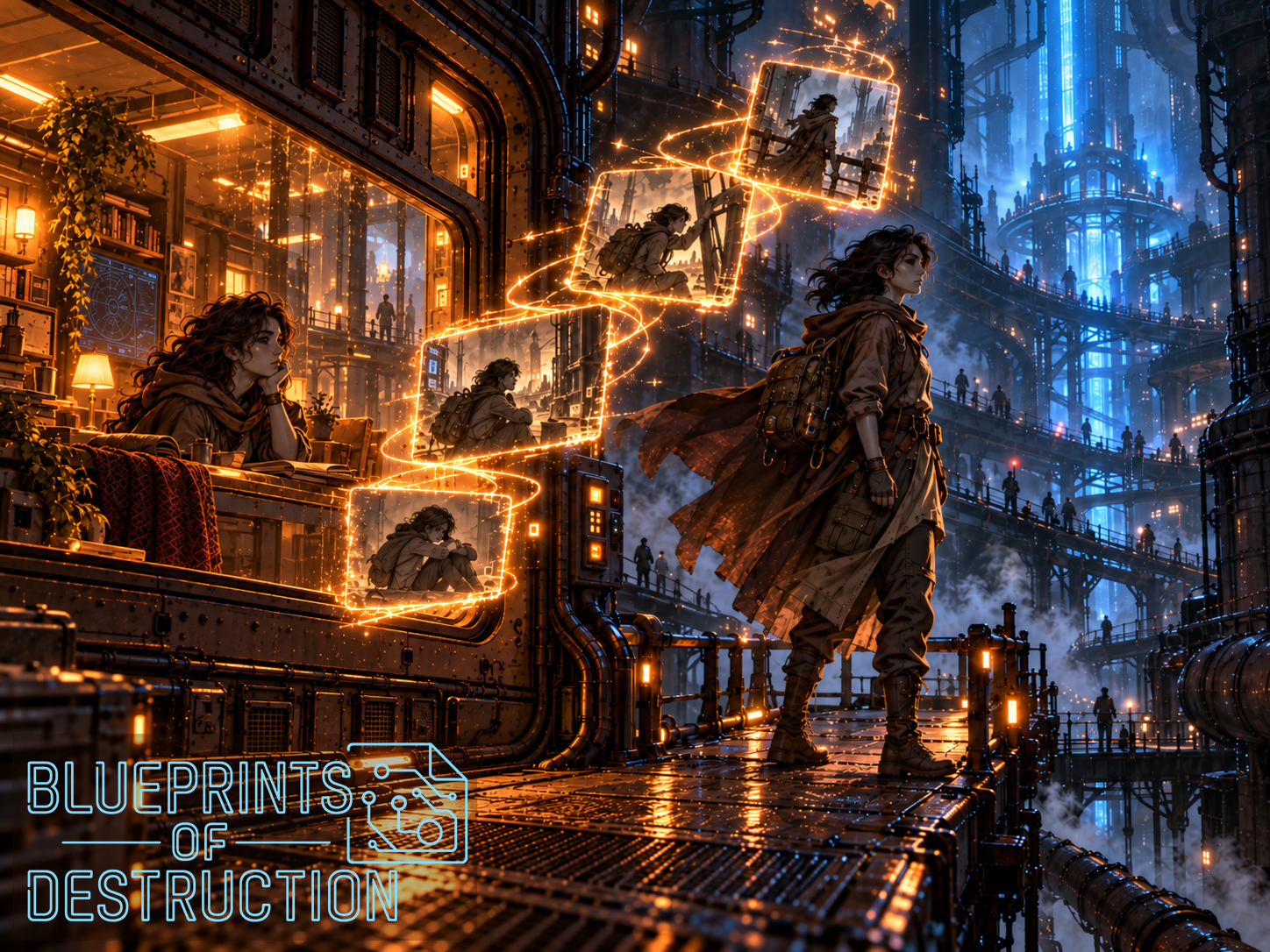
The climax should usually force the character to make a choice. This is the major turning point near the end of the story. It is where the character faces the central problem in its strongest form. A strong climax connects the story's main conflict, goal, weakness, and change together. Ideally, it should wrap them up.
Examples of climax choices might be:
- A selfish character must choose sacrifice.
- A dishonest character must choose to tell the truth.
- A loyal character must decide who deserves loyalty.
- A fearful character must step into danger.
The climax of a story often works best when it tests a character's weakness, not just their strength.
Step 8: The Ending
The ending shows the result of the character's choices. A strong ending gives the story a sense of completion, even if some questions remain open.
To determine the ending, it is helpful to ask:
- Did your character reach the goal?
- What did it cost?
- What changed?
- What stayed broken?
- What does the reader understand that they did not understand before?
An ending does not have to be happy in order to complete the story.
Step 9: Breaking the Story Into Scenes
Once all of the main components of a story are clear, you can begin to turn them into scenes. A scene is a smaller unit of a story where something happens. Each scene should move the story forward. Each scene should include:
- The setting of the scene
- What your character wants
- What gets in the way
- What choice your character makes
- What changes by the end of the scene
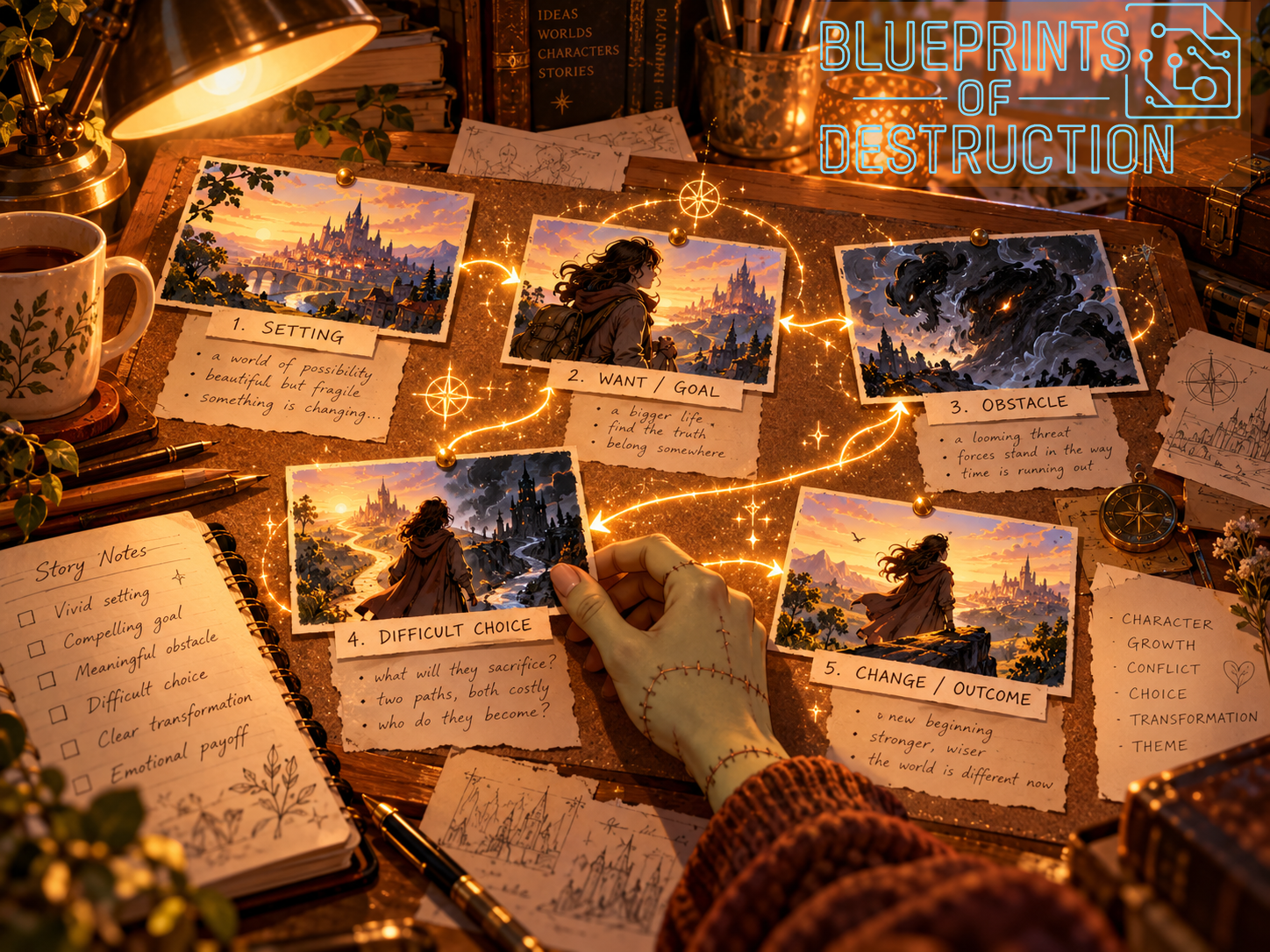
Instead of trying to write a whole book, focus on one scene at a time. This is how a story becomes writable.
A Simple Formula:
Character + Problem + Goal + Obstacles + Change = Scene
A Common Mistake: Trying to Build Everything at Once
New writers often try to create the entire story in one sitting. This can make the story feel overwhelming. Instead, a better approach is to build one layer at a time.
Start with the idea. Find the character. Identify the problem. After that, establish the goal and decide what gets in the way.
Mini Exercise: Build a Simple Story Plan
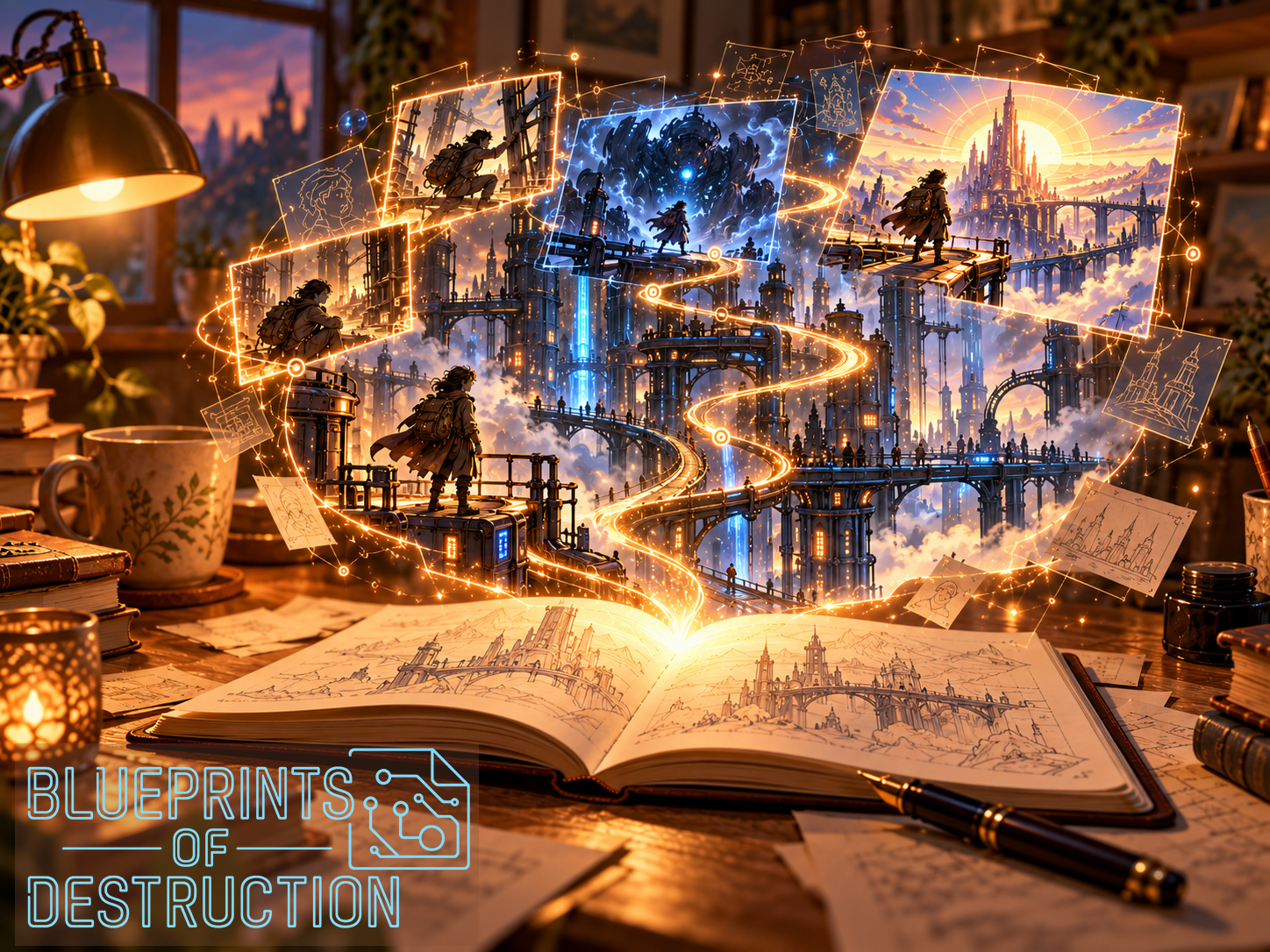
Make sure to answer these questions in your story notebook or document so your ideas stay in one place.
- Who is the story about?
- What does your character want?
- What problem interrupts your character's life?
- What stands in your character's way?
- What mistake might your character make?
- What choice will your character face near the end?
- What changes because of the story?
Every story begins with something small. A spark. A question. A character standing at the edge of a problem.
Step by step, that small beginning can become a structure you can actually write.
Start with the mini exercise above. Let the answers show you what your story is trying to become. Then take the next step: choose one scene and begin writing!
