- Home
- Step-by-Step Story Writing
- Make a World
Make a World
Fifteen Core Questions of Qualx (Collapsible)
Fifteen Core Questions of Qualx (Collapsible)
Structural and Foundational Questions
1. Founding Principle: What was the original purpose or event that led to the formation of Qualx's governing body?
2. Power Source: Who or what grants authority in Qualx? Is authority granted by the people, an inherited class, or divine mandate?
3. Political Hierarchy: Does Qualx have a single central government, or multiple autonomous city-states that operate under one banner?
4. Guilds and Governance: How does the Guild function within the overall government structure? What groups, arms of government, organizations, corporate entities, or separate power blocs interact? Who negotiates with whom?
5. Citizenship and Life Rights: How are Life Rights granted, suspended, revoked, or used as currency? And who has the authority to execute and activate these transactions?
Administrative and Legal Questions
6. Law Enforcement: Who enforces law and order in Qualx? Is it a police-like structure, a military force, mindless automatons, Guild-appointed agents, or is there something darker and more mysterious at play?
7. Judicial System: Who administers justice? Are there trials, arbitration councils, judges, natural disasters sent by gods, or Guild tribunals?
8. Economic Control: What serves as currency in Qualx? And is the economy state-run, Guild-driven, capitalist, resource-based, or is it some kind of hybrid system?
9. Territorial Management: How is land and resource distribution managed? Is there private ownership, state assignments, or a link between Life Rights and the acquisition of raw materials?
Cultural and Ideological Questions
10. Core Ideology: What is the prevailing philosophy or moral compass of the government or people? What mindset helps determine order, progress, control, or survival?
11. Religion and Power: Does religion have any role in Qualx? If so, is it used to legitimize or challenge authority?
12. Information Control: How is knowledge and communication regulated? Is it open and free, heavily censored, or filtered through some kind of in-story gatekeeper or censor?
Political Dynamics
13. Conflict and Rebellion: What forms of dissent exist? Are there underground movements, rival factions, sanctioned opposition, or is it a free-for-all?
14. Military Role: If there is an army? Is it a protector of the people, an enforcer of the regime, or is it fragmented and bureaucratically useless?
15. Foreign Relations: Does Qualx interact with other peoples, nations, or worlds, or is it isolated and self-contained?
Power Source: Who or what grants authority in Qualx: the people, an inherited class, divine mandate, or a technological system?
Finding where authority originates in your world is a key component in worldbuilding. A world's power source doesn't simply come from a rudimentary system with an arbitrary label. It comes from tracing exactly where pressure, dependency, and consequence lead.
Make a World Through Consequence
Put aside crowns, banners, and divinity for a moment. While titles may seem like they add a ton of depth to your story development, this is not how true authority is found. While official titles do add to the lore, a better question to find true power in your world is to ask: "Who has the power to punish disobedience?"
Tracing power can be quite simple. Authority is revealed through enforcement, not pomp and splendor.
Who has the ability to imprison, exile, remove resources, or declare an individual "outside the system" within your world?
True power lives where consequence is unavoidable.
Make a World Through Scarcity
A stable system of authority rests in the control of something scarce. This could be something physical like food, water, or land. It can also originate from something less tangible like citizenship or fate in the afterlife.
Whoever controls access to the scarce commodity can be the source of authority.
Make a World With Traced History
Authority often hides behind, or is caused by, historical justification. Ask yourself: "Why does this group or person rule?" Then ask "why?"
Do this again. Then one more time. Ask yourself "why" as many times as it takes to uncover the most fundamental source.
When the question "Why" no longer brings up new information, you have reached the question you are actually asking. The answer to your final "why" will reveal the true source of power in your world. Even if the citizens have mythologized the source of power, it is still functional as such.
Sometimes, there is no definable single ruler, but instead it is an entire system. In cases like this there are operators rather than sources.
Final Calibration
Before you lock your power system into place, it is a good idea to ask yourself a few things:
If this authority vanished overnight
- Would the world collapse?
- Would something else immediately take its place?
- Would people even notice?
If removing the system or individual causes chaos, it is a genuine source of power. If removing it changes nothing, it was only decorative and you might want to dig deeper into what your world's true power system is.
Authority is not who the characters in your story think is in charge. Real authority is what your world can not function without. Authority is about who or what is actually in charge.
Concept Applied to a System
In Qualx, three entities appear to hold the power to punish disobedience:
- The Grand Archon
- The Senate
- The Guild
The Senate fails to be the source of power because while it can make a ruling about discipline, it cannot enforce any of the consequences. It also is unable to override punishment mechanisms. So, while the Senate is a legitimizing organ and a procedural buffer, it can't be a true power source.
That leaves either the Guild or the Grand Archon as the final power source, as perceived by the citizens of Qualx. In practical application, however, the power source within Qualx is both the Guild and the Grand Archon.
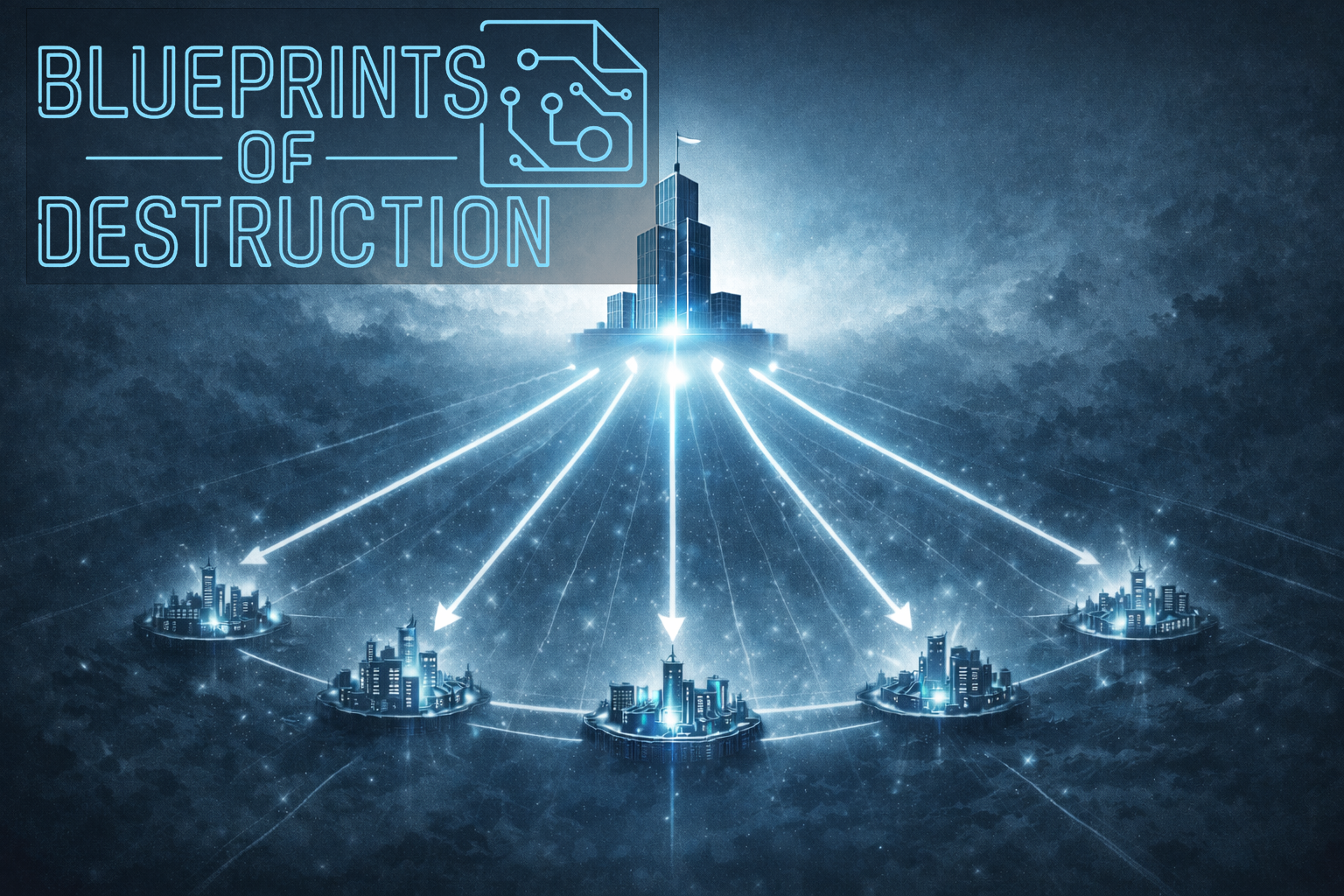
At first glance, this appears contradictory, but it is not. Both the Guild and the Grand Archon are power sources, but they are powers of different kinds. The Guild is the operational power source, but the Grand Archon is the sovereign power source. These two formidable power sources aren't redundant, instead they are layered.
What is the Distinction?
The question that needs to be asked in order to find out exactly how the power sources function is not: "Who has more power," but it should instead be: "Where does the power become unavoidable?" This simple question splits the power source on Qualx cleanly in two.
Unavoidability
The first half of determining exactly how the Guild functions as a power source is to look at the world from a character's point of view. Who do citizens interact with when the consequences are executed?
From arrests, to punishment, to labor reassignment, and even economic restriction, the Guild is the body that physically implements the verdicts.
This differentiates the Guild from the Grand Archon because even if the Grand Archon could do everything that the Guild does, it is not a necessity. The Guild makes authority real at the street level. The Guild is a true power source because it controls enforcement and consequences at the ground level.
A body, such as the Guild, who can enforce the law without needing constant authorization is never just an outlet of power. It is power.
Irreversible Authority
To figure out how the Grand Archon is a separate source of power, we need to apply an irreversibility test: "Who can do what no one else can do?"
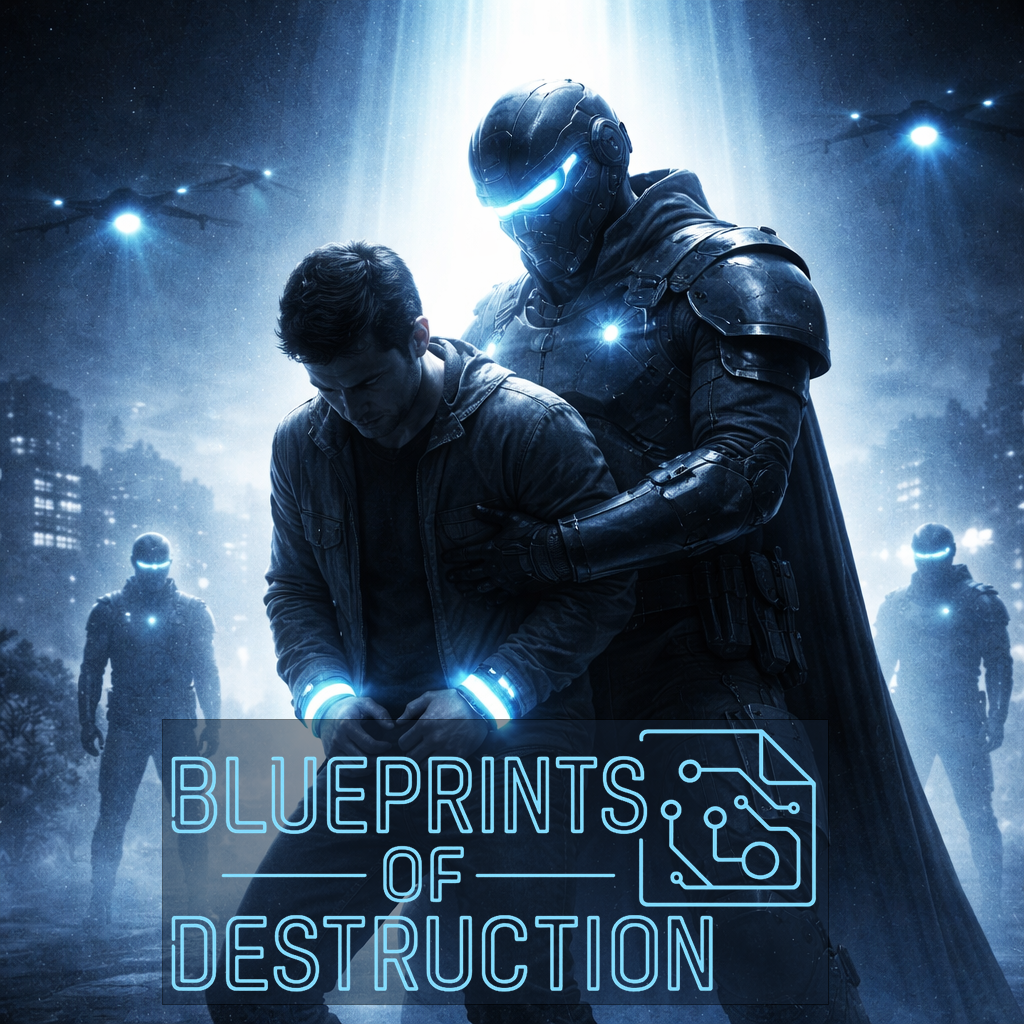
The Grand Archon is above the system. He can strip Life Rights with no appeal, override Guild decisions, and even command the Guild itself. When the Guild needs correction, the Grand Archon is the one who orders the change.
The Grand Archon is not above appeal. He is not beyond appeal. The Grand Archon transcends appeal.
This places him above enforcement as a sovereign source of power. The Grand Archon is the final authority on existence within the system. While the Senate is a liaison layer between the citizens and the Grand Archon, the Guild decides how the law is applied. The Grand Archon decides whether or not someone exists inside the law at all.
Power can exist at more than one layer without being diluted. The Guild is not powerful because the Grand Archon exists. The Grand Archon is so powerful because he rules inside of an already functional system.
Proving Power Sources
One of the ways to know if a power source is truly functional is to ask yourself how your world functions if you remove the power.
If the Grand Archon is removed, the Guild still makes arrests and can still enforce punishment. But the legitimacy of the system begins to fracture as long-term authority continues to destabilize. The power still continues, but the sovereignty fades away.
If you remove the Guild, the Grand Archon still retains theoretical authority, but enforcement collapses. The law becomes decorative and power changes from a formidable force to something that is merely symbolic.
Both failures are catastrophic to the larger system but in different ways. Both the Guild and the Grand Archon are strong power sources, but they occupy different spheres.
The symbiotic relationship between the Guild and the Grand Archon creates a power system where no one can safely rebel against the Guild or challenge the Grand Archon's authority.
This results in a world filled with authority that permeates totally through control with little accountability.
The Senate governs procedure.
The Guild governs consequence.
The Grand Archon governs existence.
While ironing out the wrinkles of your power system may seem like a daunting task, if you continue to develop it it will add nuance to your story that only comes from a well-built world.
