Plotting Development
Plotting is the process of using your world's rules, dangers, and systems to progress your plot through your characters' choices as you create a story.
When your setting drives plot, your story feels inevitable and immersive. Characters stop feeling like puppets forced into making unnatural choices by the author, and instead helps them feel like real beings reacting to a living world.
Setting is not just where stories happen, but can also be the cause that drives things to happen. It can be a powerful insight to worldbuilding that many writers might overlook. Setting can actively shape what a character wants, what they fear, the actions they take, or what characters must avoid.
Setting can be a driver of plot and conflict, and when you use it to progress these elements, it becomes a powerful tool rather than a simple, static backdrop.
Setting for Plot Development
Setting can act as a plot driver when it creates conditions that propel a story. A setting with scarce food, a poisonous atmosphere, unstable magic, or extreme weather can force characters into action. When these characters are maneuvered by the plot in this way, they aren't simply choosing their goals, but are instead thrust toward them.
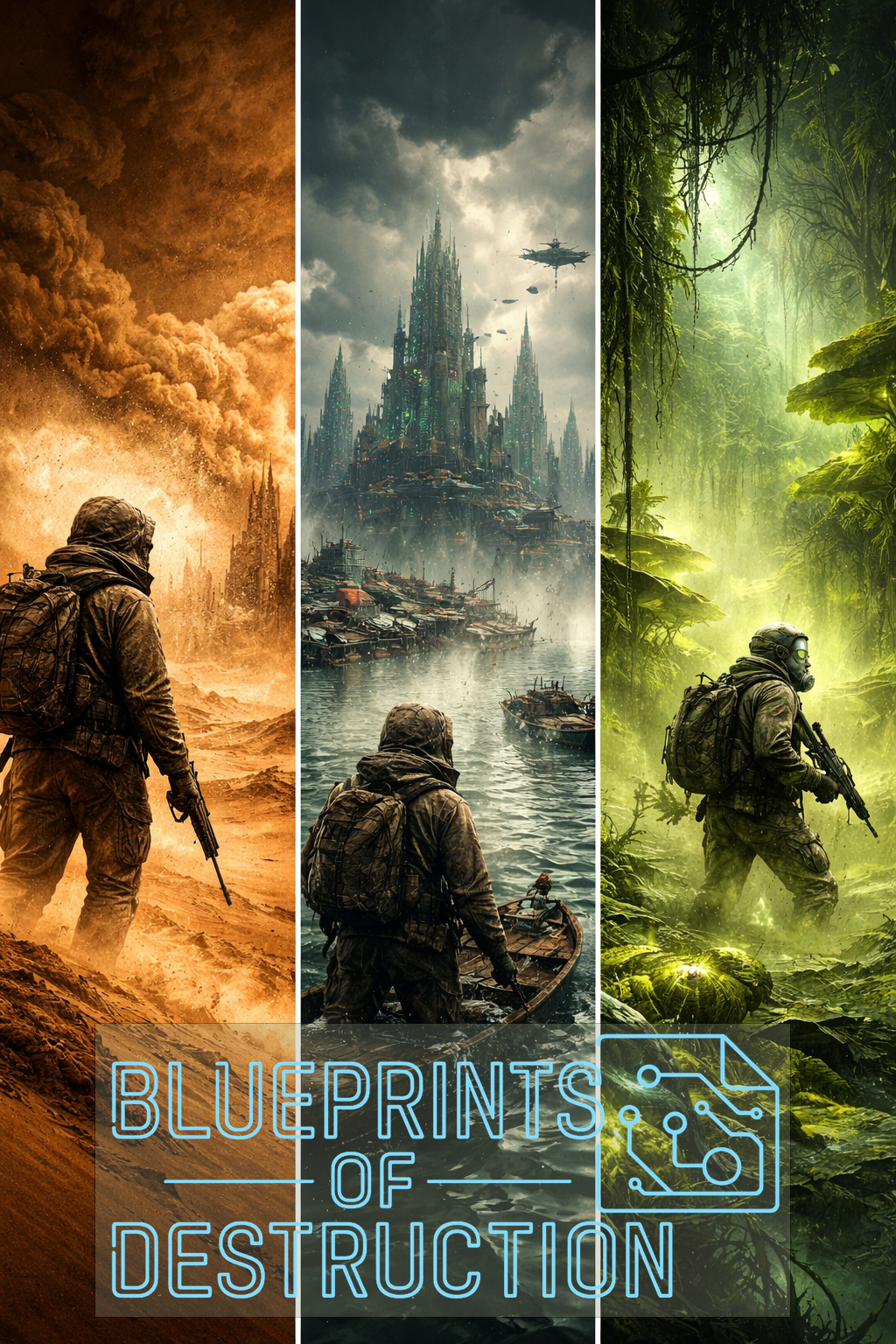
For example, a desert world would force the characters to seek water, trade routes, and control of wells. While on the other hand, a flooded world forces characters into floating settlements, piracy, and migration. In these cases, plot exists because survival demands it.
Within Qualx, a good example of a plot driven by setting is the system of Life Rights. A character without Life rights cannot legally work inside the greater system and can be hunted as food.
This means that without Life Rights, a character's goal of survival would be shaped by the setting, not personal choice.
Developing Plot with Conflict
Setting can create built-in opposition so that conflict can result naturally from the world itself. When there are limited resources, dangerous environments or social hierarchies, artificial drama never has to be forced unnaturally into the story.
If water is scarce, people might have to fight over wells. If magic is a corrupting power, characters either fear it or crave it. And as the case is in Qualx, if travel through the Flicker can be deadly then missions through it are risky.
In all of these examples, setting creates the tension. You, as the author, won't have to force clunky drama into your story if the world itself provides a real threat to your characters.
Unavoidable Stakes and How They Impact Plot Development
Great stories often ask: "What happens if the character fails?"
Setting can help answer that question.
In a frozen wasteland, failure is death by exposure. In a theocratic empire, failure is execution. In Qualx, failure may mean losing your Life Rights, a fate that means death to many. While death is certainly a risk in Qualx, it also allows for characters to be pressured in ways that advance the plot.
The stakes feel real because the world, and the complex systems established inside it, enforce risks and results in legitimate danger.
Plot Development as it Shapes Character Motivation
Characters do not desire things at random. They yearn for opportunities that the world would otherwise not offer to them. In this case, including scarcity as part of the plot drives a natural sense of urgency to the character and reader.
In a warzone, characters crave safety or victory. In a resource-rich, but socially controlled city, characters crave freedom.
Setting directly generates plot because it sets goals by determining what matters.
In Qualx, a character may desire acquiring a Flicker pilot suit, or they may long to buy their way out of muzh status. Either way, their motivation comes from the proffering hand of Qualx itself.
Once characters care deeply about something, the setting can step in and make it difficult for them to achieve it. The plot can then step in and be used as a tool to leverage a world's natural limitations to transform desire into struggle.
Struggle is what sits at the very heart of the plot.
Plot Development Through Limitations
If the stakes of a story aren't a great enough risk to the characters within it, setting will fail to drive the story. The danger provided by the setting needs to be severe enough that the characters can't ignore the issue. The setting needs to be able to impose constraints and compel the character to take action.
Perhaps physics itself prevents an easy solution, or geography stops their escape. The limitations that setting provides can corner a character into creativity through conflict. However, setting only drives plot effectively when it is applied consistently and thoughtfully.
Some common mistakes when using setting as a way to move the plot along:
- Treating the world as a mere decoration
- Solving problems conveniently
- Forgetting consequences
- Inconsistent rules
If you are able to avoid these common pitfalls, the danger that your characters are experiencing will have a greater chance to draw your readers in and keep them coming back for more.
Thematic Conflict
A world itself can embody the theme. In Blueprints of Destruction, the theme of: "who deserves to exist" is built into Life Rights. Exploitation is built into the very foundation of the quad-city. Power and dependency runs deep through the bowels of Qualx.
Setting drives plot when it:
- Forces survival
- Restricts choices
- Creates opposition
- Raises stakes
- Shapes motivation
- Reinforces theme
When theme and setting align, every plot movement reinforces your story's deeper meaning. The world itself becomes a metaphor made tangible.
A short formula you can use to determine how setting can affect your plot is:
WORLD + LIMITATION + MOTIVATION + ACTION + CONFLICT = PLOT
This equation shows how setting can create a story instead of simply accommodating it.
Through this, you can discover how your world can impose consequences as it drives plot and conflict because the world itself challenges the character.
When you can see your world as a source of story rather than a backdrop, you unlock one of the most powerful tools in storytelling, and you take another step closer to discovering your inner author!
Try this:
Write a sentence describing your world. Now ask yourself:
- What resource is scarce?
- What law restricts behavior?
- What danger forces action?
Choose one of these questions and write how it pushes your character into a decision.
Related Pages for Setting
Setting to Establish Laws and Internal Logic
Setting to Influence Pacing and Structure
Setting to Support Symbolic and Visual Storytelling
Setting as it Defines World Identity
Setting as it Intertwines with Plot
