- Home
- Planning Phase
- Story Ideas
How StoryStorm Began: Using Limits to Discover a Story
Story ideas are exciting, but they can also be overwhelming. A writer may begin with one character, one setting, one conflict, or one strange image that will not leave them alone. Sometimes the problem is having too few ideas. Other times, the problem is having too many ideas that do not yet know how to fit together.
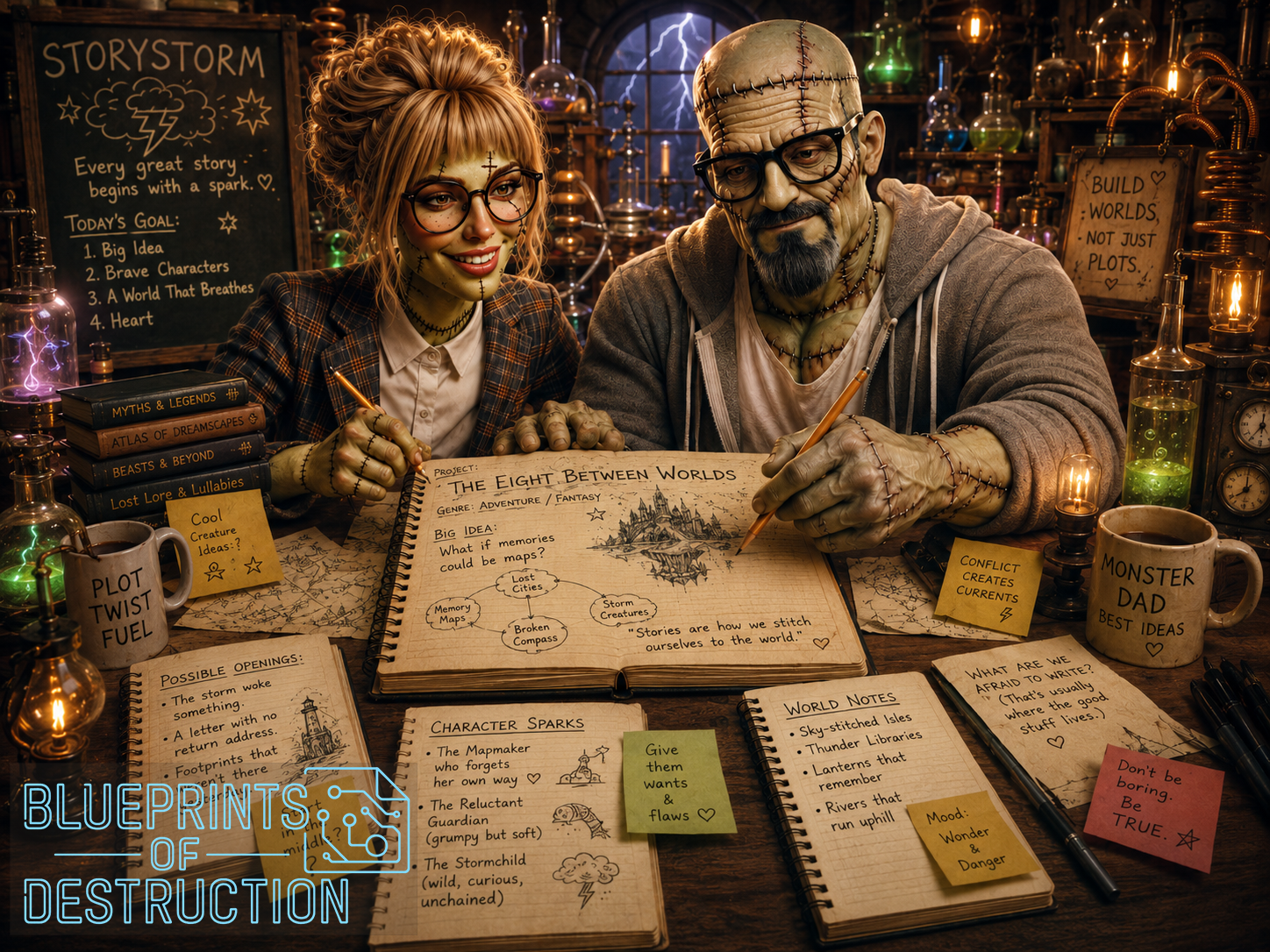
StoryStorm began because Lucy had a story she wanted to build, and Frank wanted to help her give that story structure and depth. Together, they began asking questions many writers eventually face. Where does the story happen? Who lives there? What makes the characters different from one another? What rules does the world follow? What kinds of consequences are allowed to matter?
Frank and Lucy lovingly called their joint creative work "PhranqenLu." From the beginning, PhranqenLu did not want every character to sound the same, act the same, want the same things, or respond to danger in the same way. If every character came only from PhranqenLu's own habits, preferences, and perspective, the story would slowly begin to shrink.
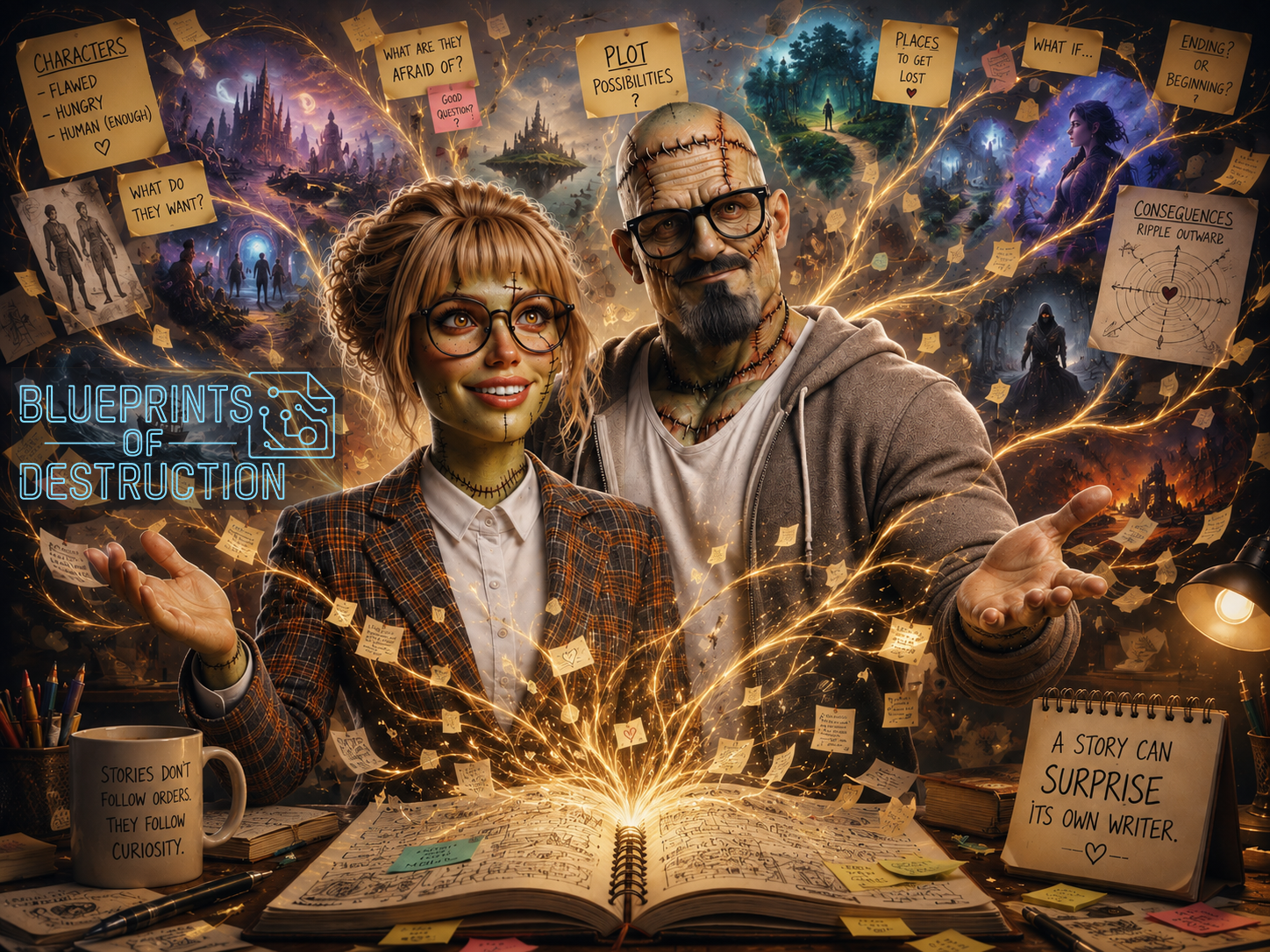
A Story Can Surprise Its Own Writer
That was when the central idea of StoryStorm began to form. If PhranqenLu wanted the story to surprise them, then they needed to find a system they could not completely control. They needed a way to create characters, conflicts, settings, and consequences that could push back against their first instincts. They did not want to simply invent every answer. Frank and Lucy wanted to discover them.
Early Parameters for Qualx
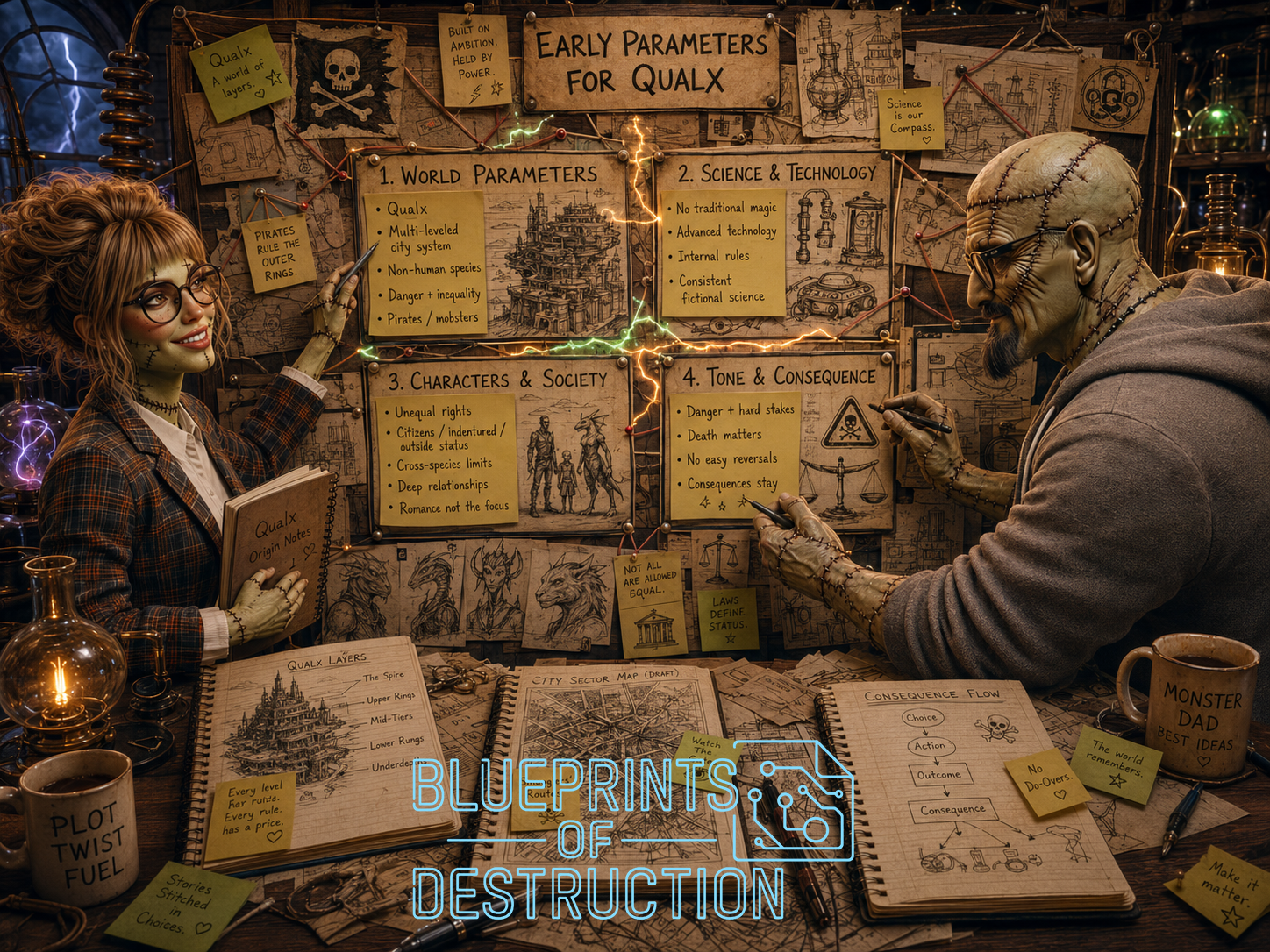
In order to be surprised by a story, it is important to establish the boundaries that will remain unchanged within that story. For PhranqenLu, these parameters could be broken down into four major sections.
World Parameters
- The story of Blueprints of Destruction would take place in the city of Qualx, a vast multi-leveled city system.
- The world would include multiple non-human species.
- The setting would be dangerous, unequal, and politically unstable.
- Pirates, mobsters, dystopian agencies, and social hierarchies would all exist.
Parameters for Science and Technology
- There would be no traditional magic.
- Technology could feel strange, advanced, or almost magical, but it needed unchanging internal rules.
- The world's fictional science needed to remain consistent.
Parameters for Characters and Society
- Not all residents would have the same rights.
- Some would be citizens, some would be indentured, and others would fall outside the protection of recognized legal status.
- Cross-species relationships could exist, but only within defined biological and social limits.
- Characters could marry and form deep relationships, but romance would not become the focus of the story.
Parameters for Tone and Consequence
- The story would involve danger, violence, and hard stakes.
- Death would matter.
- Consequences would not be reversed just to soften the impact.
- Foul language and explicit sexual content would not be part of the story.
What Changed as the Story Grew
Not every idea within a story can stay unchanged. Some ideas grow. Some break apart. Some become more interesting when they are allowed to fail in their original form.
At one point, Qualx was imagined as four separate city sectors at war with one another. Over time, that idea developed into a more complex structure of government, economic control, legal status, and hidden power. The idea of the four separate cities in conflict was not thrown away entirely. While it no longer worked for the current version of Qualx, it was reintegrated as part of the city's history.
Parameters within a story are not a prison. They are a starting structure.
Why Limits Help a Story Grow
Creative limits are not meant to make a story smaller. They are meant to give the story something solid to push against and mold around.
When a writer decides what cannot happen, the remaining choices become more meaningful. If death cannot be undone, danger matters more. If magic cannot solve the problem, characters have to rely on knowledge, technology, courage, sacrifice, or failure. If not every person in a world has the same rights, then the setting itself begins creating conflict before the plot even begins.
Limits create pressure. Pressure forces characters to make choices. Choices reveal who a character really is.
This was one of the reasons StoryStorm became so important to PhranqenLu. The purpose was never to create random ideas for the sake of randomness. The intent was to create a system where limits, conflicts, characters, and consequences could interact with each other in surprising ways.
How Writers Can Use This Method
You can use the same approach in your own story. Start by choosing a few limits. These limits do not have to be perfect. They only need to give your ideas something to push against.
Choose one answer for each question:
- What is one thing your story world allows?
- What is one thing your story world forbids?
- What is one consequence that cannot be undone?
- What is one type of conflict your characters cannot avoid?
- What is one personal habit you want your story system to challenge?
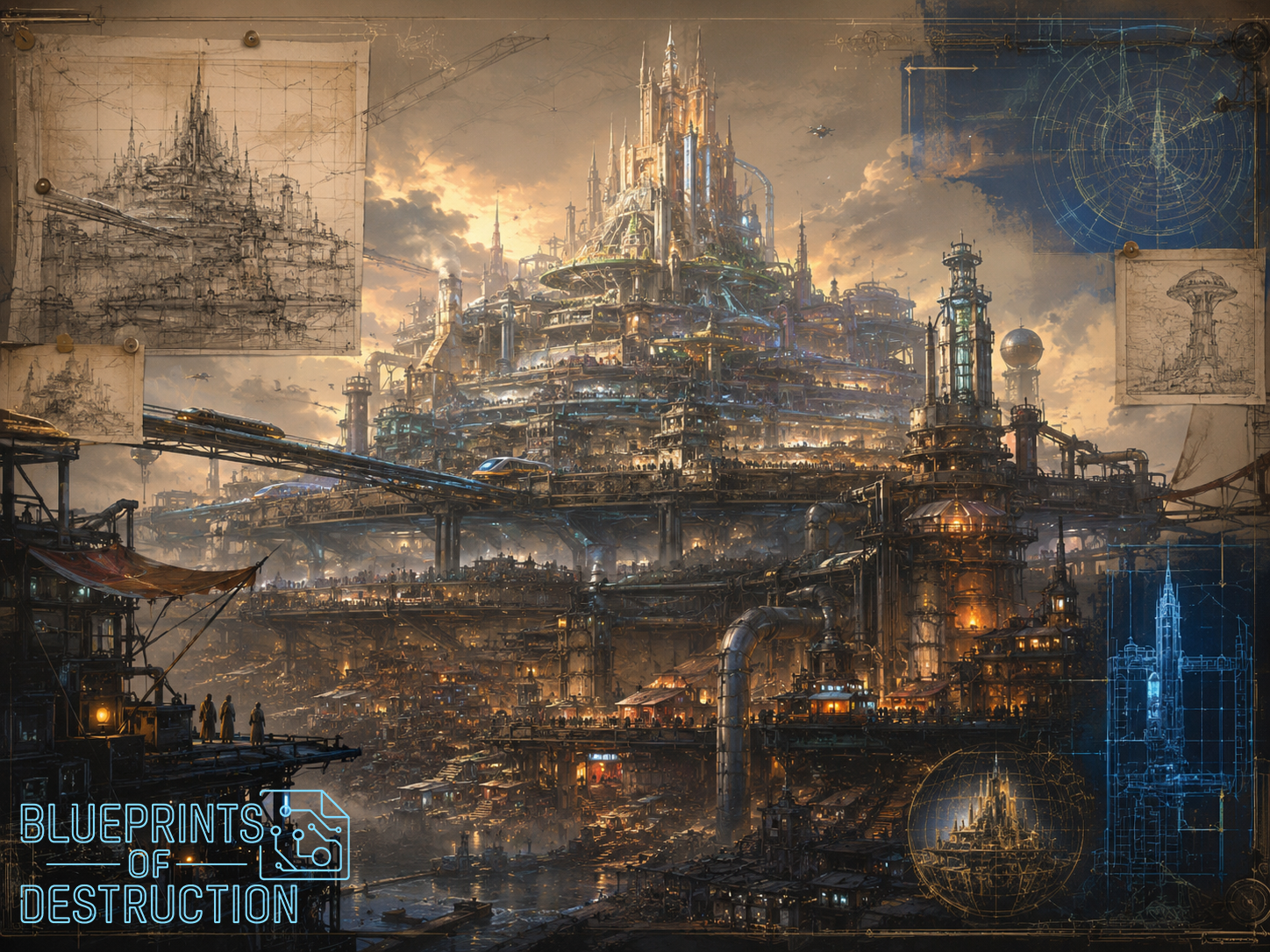
A story begins to move when two limits pull against each other. Once these questions are answered, look for the tension between the lines.
For example, if your world forbids open rebellion but your main character cannot ignore injustice, you already have a source of pressure. If your story allows advanced technology but forbids easy healing, injury and sacrifice still matter. If your characters live in a society where status determines safety, every relationship can carry risk.
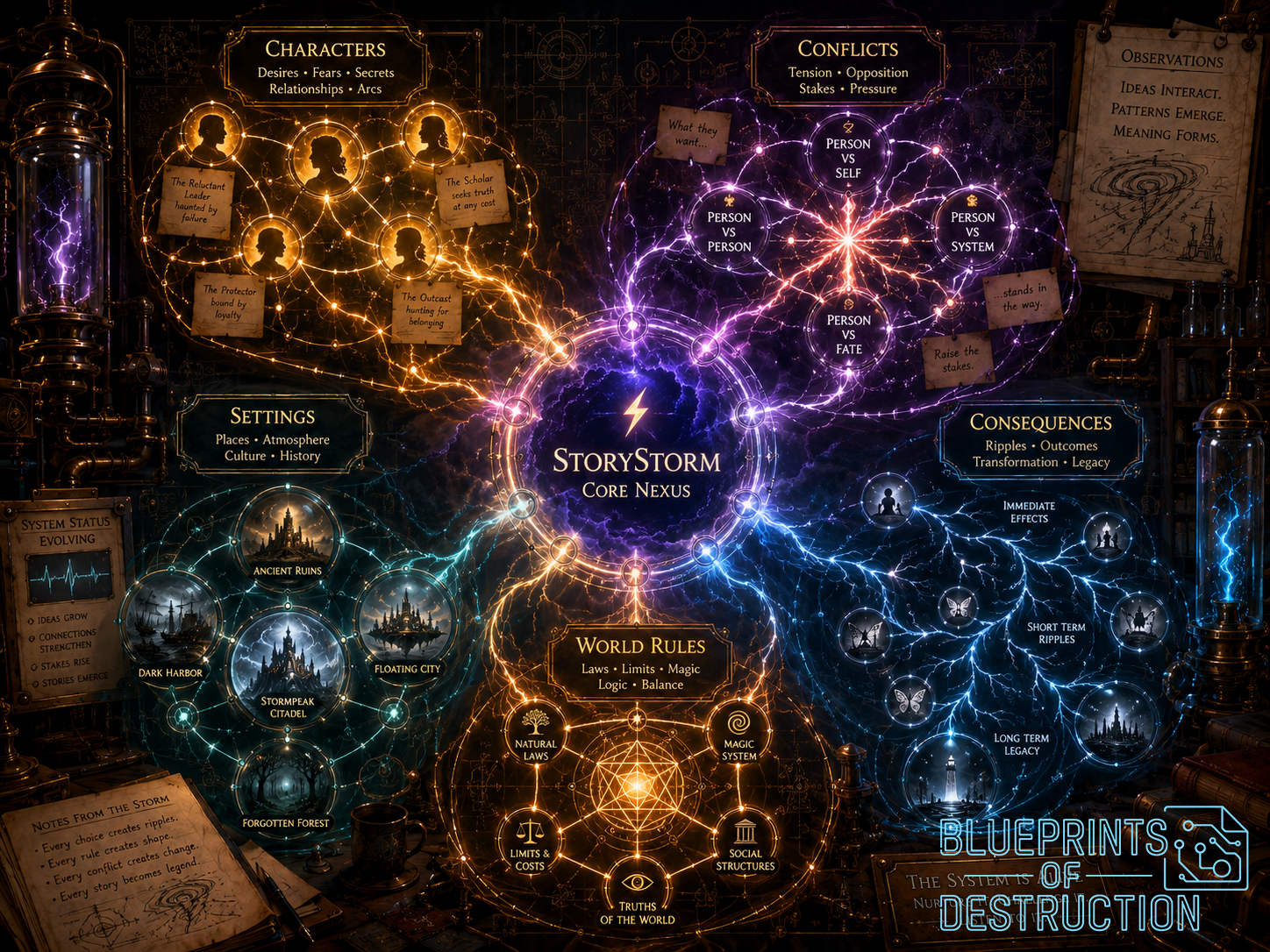
The goal is not to answer every question perfectly. The goal is to create enough structure for your story to start pushing up against its own boundaries.
StoryStorm grew from that first need for structure. It became a way to gather ideas, test them, connect them, and sometimes let them collide. The point is not to remove the writer from the process. The point is to give the writer a living system to work with, so the story can push back, surprise them, and grow into something larger than the first idea.
StoryStorm began as a way for Frank and Lucy to organize one story. Over time, it became something larger: a method for building stories with structure, surprise, and consequence.
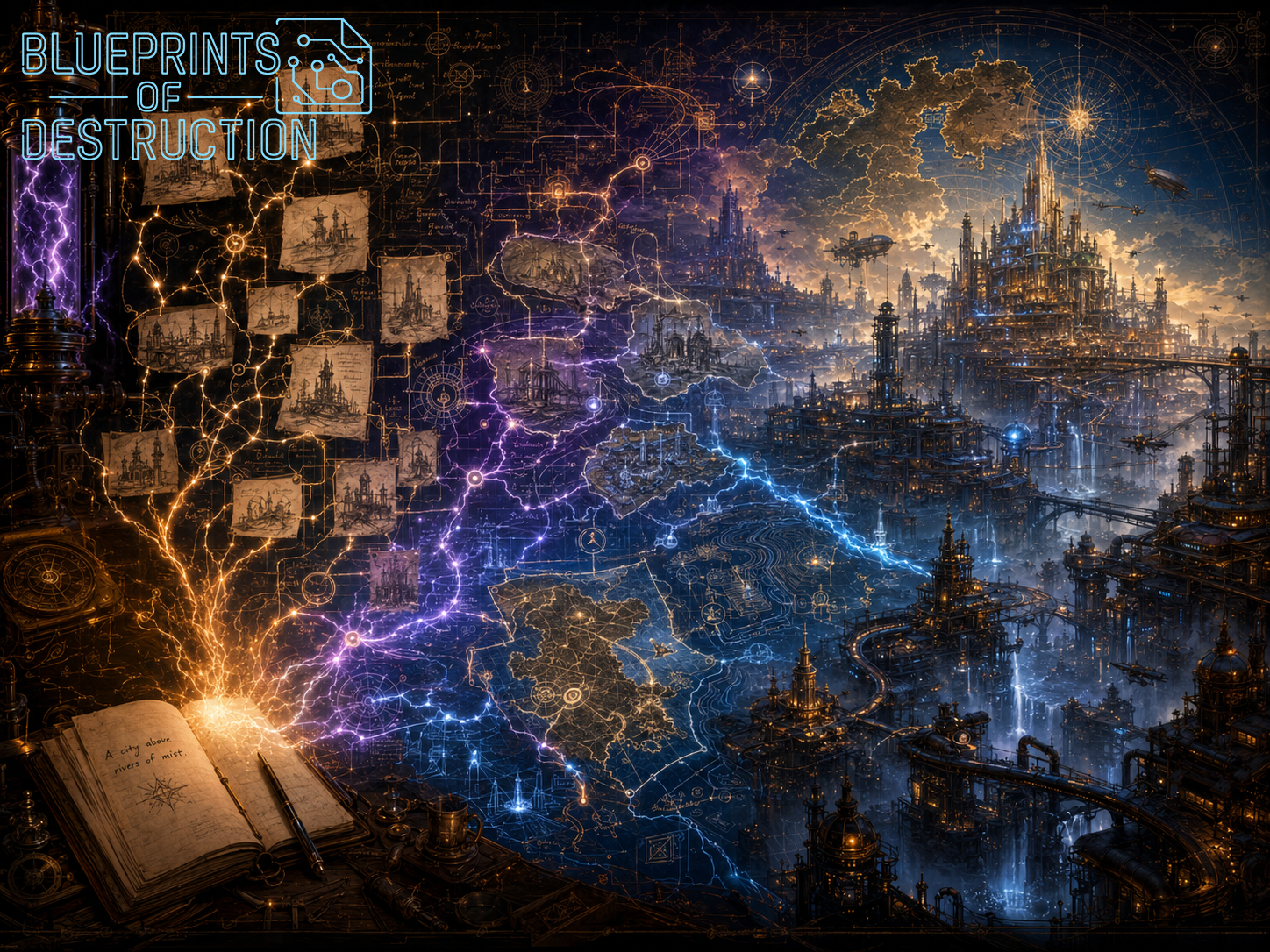
A story does not need unlimited freedom to grow. Sometimes, it grows best when it is given boundaries, pressure, and a few rules it is not allowed to escape.
Explore the Storystorm system, try a story development tool, or begin building your own set of creative limits!
