Economic Systems in Worldbuilding
Fifteen Core Questions of Qualx (Collapsible)
Fifteen Core Questions of Qualx (Collapsible)
Structural and Foundational Questions
1. Founding Principle: What was the original purpose or event that led to the formation of Qualx's governing body?
2. Power Source: Who or what grants authority in Qualx? Is authority granted by the people, an inherited class, or divine mandate?
3. Political Hierarchy: Does Qualx have a single central government, or multiple autonomous city-states that operate under one banner?
4. Guilds and Governance: How does the Guild function within the overall government structure? What groups, arms of government, organizations, corporate entities, or separate power blocs interact? Who negotiates with whom?
5. Citizenship and Life Rights: How are Life Rights granted, suspended, revoked, or used as currency? And who has the authority to execute and activate these transactions?
Administrative and Legal Questions
6. Law Enforcement: Who enforces law and order in Qualx? Is it a police-like structure, a military force, mindless automatons, Guild-appointed agents, or is there something darker and more mysterious at play?
7. Judicial System: Who administers justice? Are there trials, arbitration councils, judges, natural disasters sent by gods, or Guild tribunals?
8. Economic Control: What serves as currency in Qualx? And is the economy state-run, Guild-driven, capitalist, resource-based, or is it some kind of hybrid system?
9. Territorial Management: How is land and resource distribution managed? Is there private ownership, state assignments, or a link between Life Rights and the acquisition of raw materials?
Cultural and Ideological Questions
10. Core Ideology: What is the prevailing philosophy or moral compass of the government or people? What mindset helps determine order, progress, control, or survival?
11. Religion and Power: Does religion have any role in Qualx? If so, is it used to legitimize or challenge authority?
12. Information Control: How is knowledge and communication regulated? Is it open and free, heavily censored, or filtered through some kind of in-story gatekeeper or censor?
Political Dynamics
13. Conflict and Rebellion: What forms of dissent exist? Are there underground movements, rival factions, sanctioned opposition, or is it a free-for-all?
14. Military Role: If there is an army? Is it a protector of the people, an enforcer of the regime, or is it fragmented and bureaucratically useless?
15. Foreign Relations: Does Qualx interact with other peoples, nations, or worlds, or is it isolated and self-contained?
Economic Control as a Worldbuilding Guide
This question focuses on who controls the money in Qualx, with a concentration on the consequences of an economy, not just the transactions.
Economic control can be a powerful worldbuilding guide as it establishes how the characters within your story function day-to-day. Establishing the "normal" is necessary before you can show how the characters within the narrative are able to break the system.
Qualx does not operate under a single economic model. It uses a centralized system that appears efficient on the surface, but in the wrong hands it can be misused. That misuse can lead to dire repercussions.
A Centralized Economic Spine
On Qualx, every citizen is connected to a single integrated profile. This profile is a hub that links residence, legal status, employment eligibility, and financial access. For many Qualxians, possession isn't the only thing they have to consider when it comes to money. Access to one's money is a revokable feature. Because this is a foundational understanding, even the wealthy look for other forms of currency to buffer against unexpected revocation.
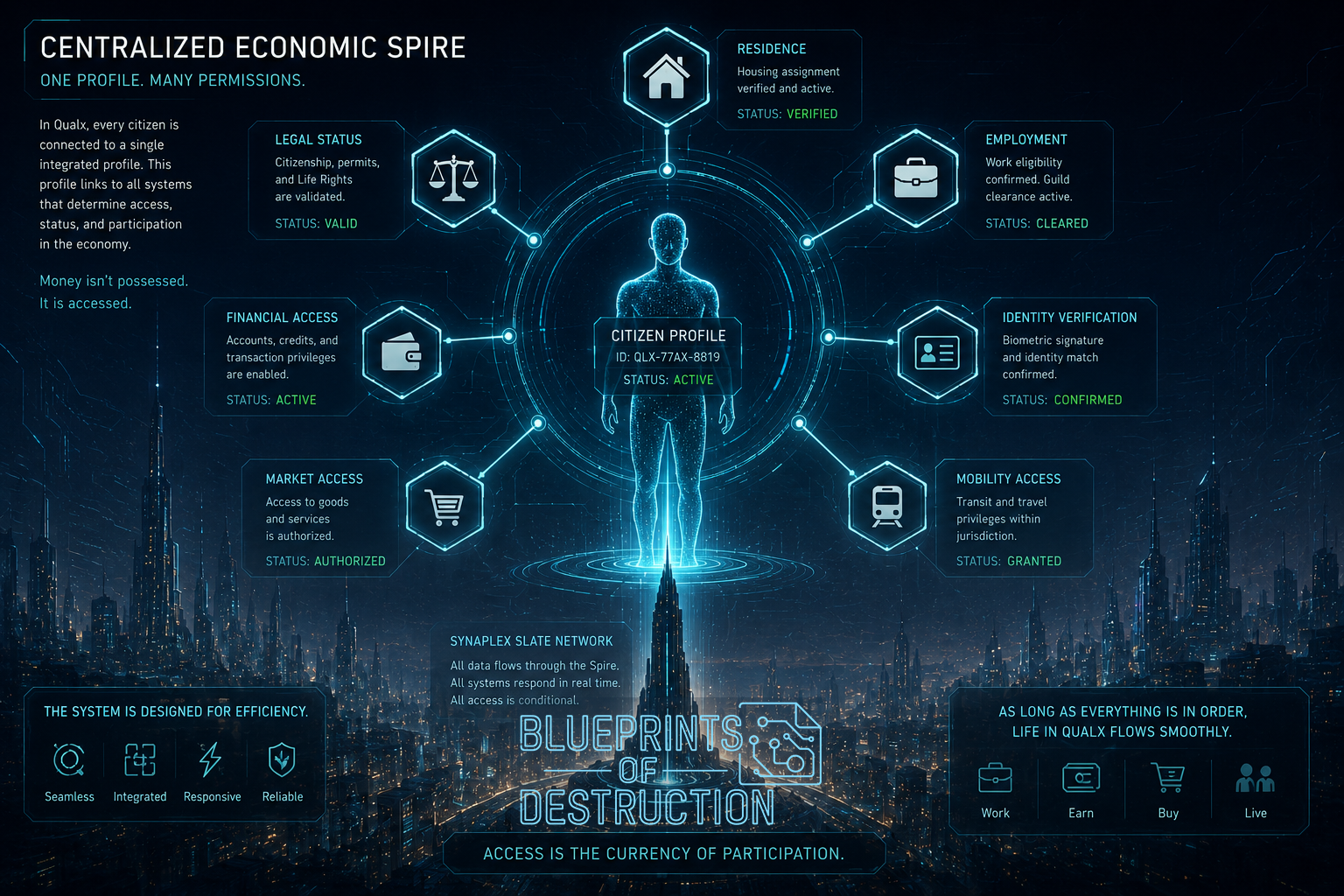
The financial economy is a Conglomerate-run structure, enforced by the Guild. It is a smooth, seamless, almost flawless system. That is, until something goes wrong. Then, what was a simple setup to maximize efficiency is converted into a control mechanism, and is weaponized against the citizens.
Economic control does not have to be only about money and finances, it can also include housing, access to goods, employment, or the very right to live. In Qualx, all of these apply. In many cases, this is as cut and dry as how much is in your bank account. In a vast majority of Qualxian circumstances, the truth of this general rule is shrouded in the shadows of nuance. Most citizens of Qualx do not fully understand the depth of this nuance, and those who do are not likely to discuss it openly.
Life Rights and Economic Control
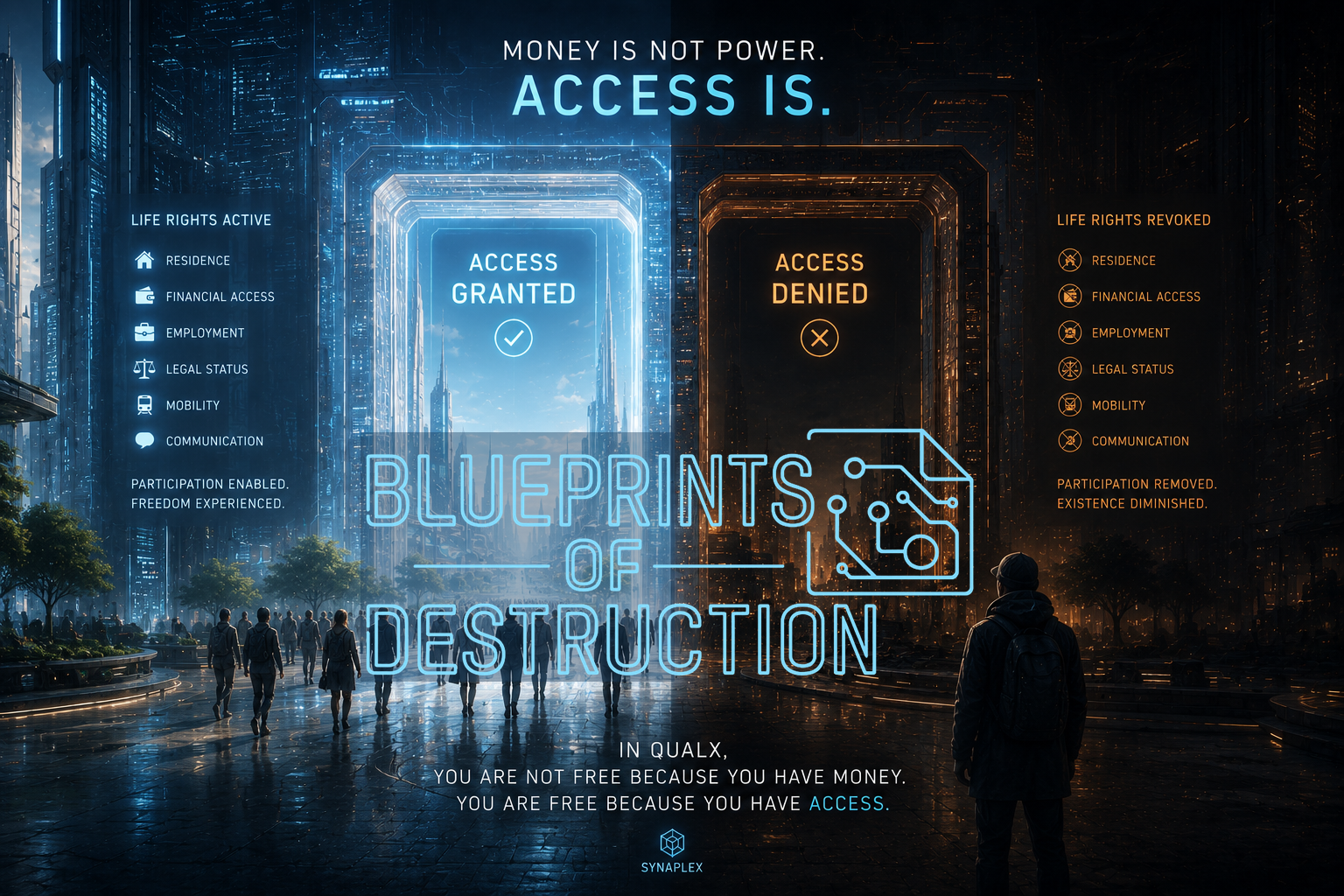
Housing, income, and access to goods are all tied to a single system. That system only functions as long as a citizen maintains Life Rights. Once a citizen loses their Life Rights, it is not just their access to finances that are removed. Access to society also suffers.
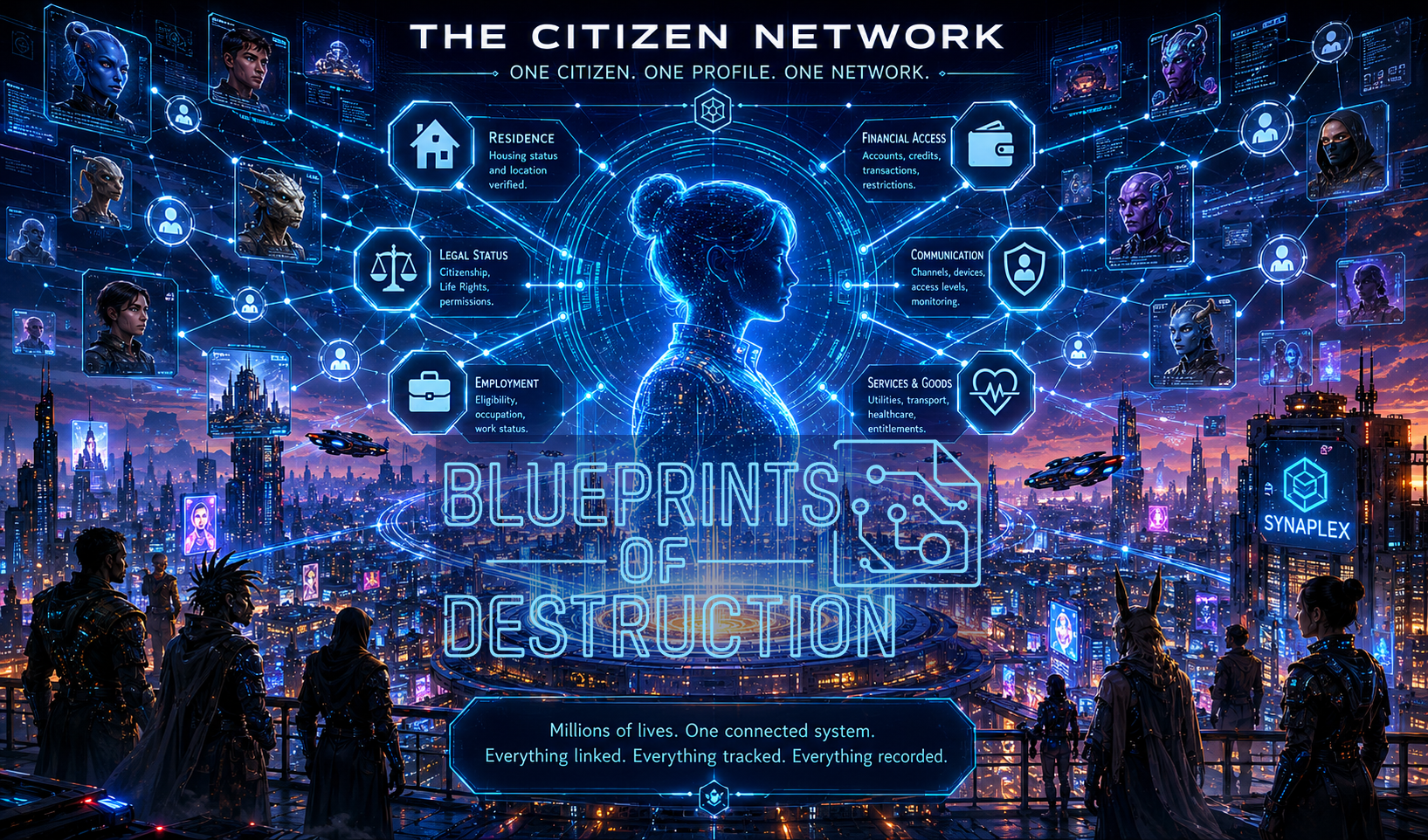
Loss of Life Rights means:
- No legal residence
- Frozen or erased financial access
- Inability to engage in sanctioned labor
Life Rights aren't just the way an individual has access within the city; it is also their economic gateway. This makes the economy function as a coercive device without appearing brutal. This is a major way the Hive is able to control such a large population with so many species.
The In-World Perspective
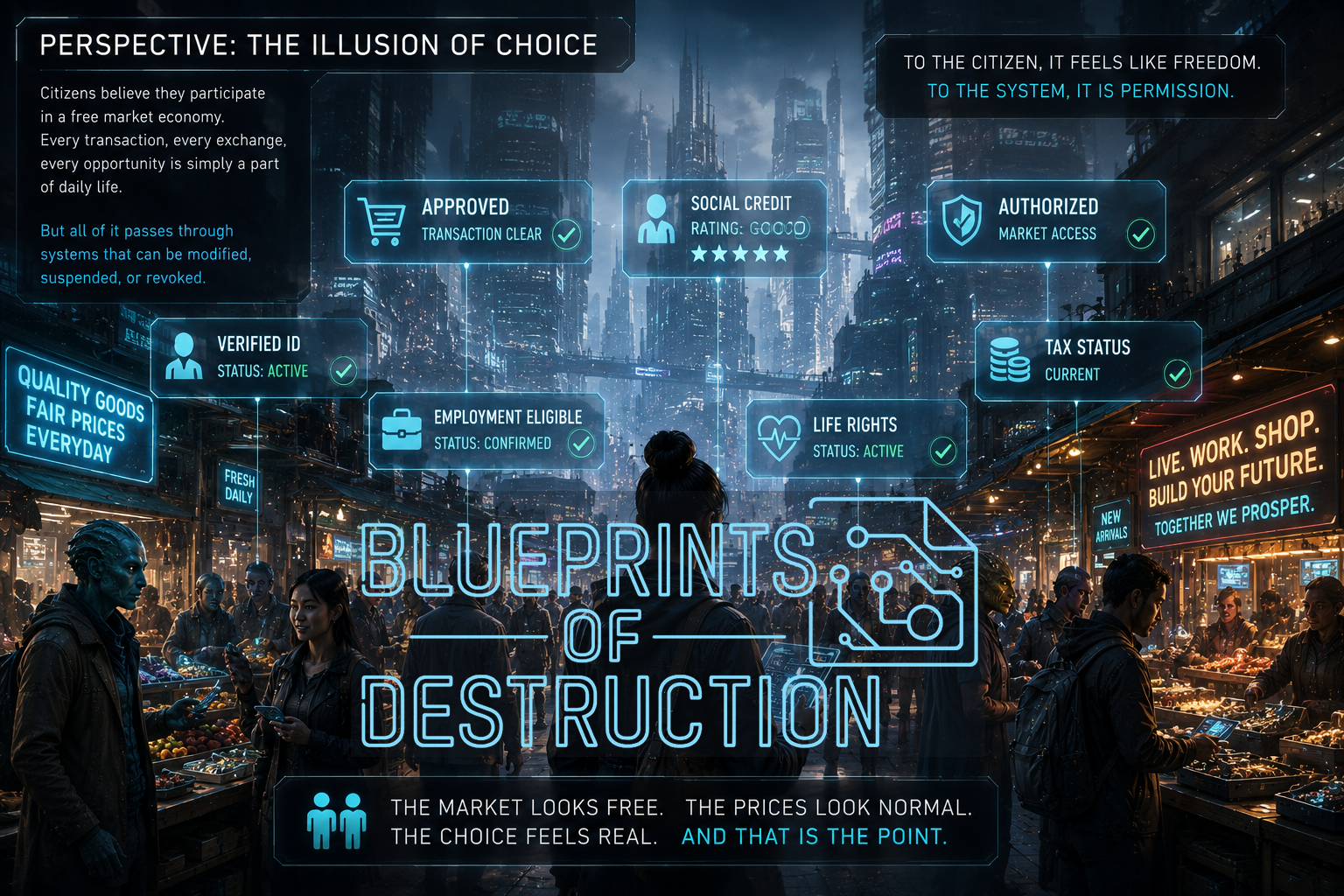
While citizens believe they participate in a market economy, all transactions ultimately pass through systems that can be suspended, modified, or revoked. However, individuals are able to work, earn, and have access to goods with prices.
This is not a fully capitalist system because ownership is conditional. Yet it is not a purely state-run system either, as citizens are still able to make transactions. It is a permission-based economy that gives the illusion of choice.
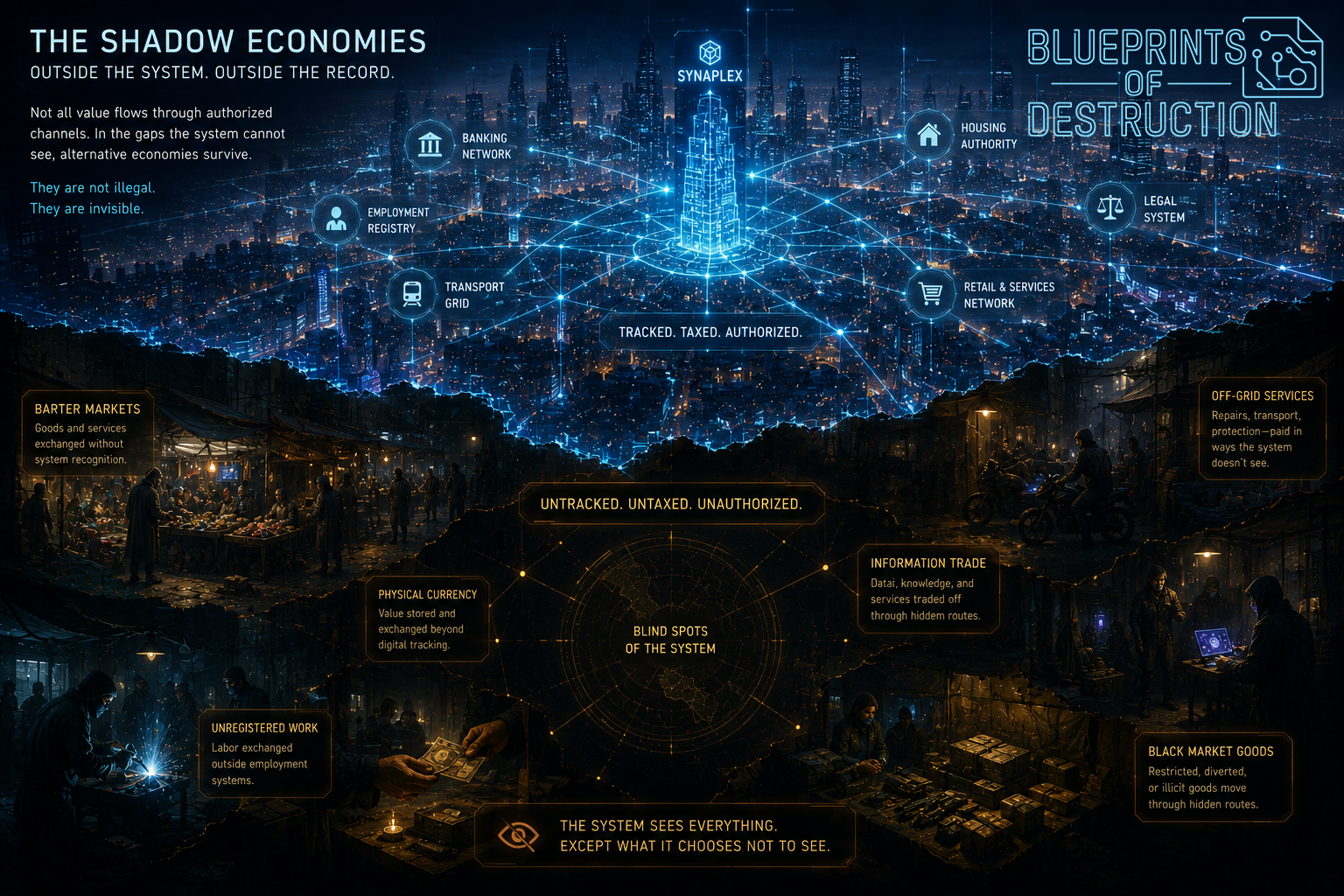
External and Shadow Economies
The system for citizens who hold Life Rights within Qualx is a single large, all-encompassing system. That is not to say there are no counter-economic systems. These are not rival systems, but are instead workarounds. They exist because the primary system cannot fill in all the gaps.
These alternative systems rely on barter, physical goods, and untracked currencies. While the alternate systems are risky, they are free in ways that the main system cannot be. Not only do they provide access to goods that the Conglomerate can't or won't make available, but they also provide goods to unwrits. These outside economies do not replace the central system. Instead they exist in its blind spots.
Summary
Economic Control in Qualx:
Primary System: Centralized, Identity-linked database
Enforcement: Guild-controlled
Penalty Mechanism: Loss of Life Rights
Effect: Total Economic Exclusion
Alternatives: Barter and shadow systems used by Pirates and other criminal networks
Overall Model: Hybridized, Permission-based economy
In Qualx, money works when everything is in order. As long as citizens follow the rules, the system feels fair and easy. Individuals can work, buy, and live their lives without much thought.
But Qualx, and its economy is built to be effective. It was not built, nor was it designed to help everyone. One might think that when someone loses their place inside the system, it doesn't notice. That it might simply move on without them. This perspective is why the loss of access is so frightening to the citizens. They believe the economy does not punish; it removes.
The Conglomerate structured the economy to vent unrest through shadow systems. They are intended to promote the creativity that can only flow through desperation. But desperation alone will crush new thought, so the shadow systems were intended above all else to give individuals hope.
In Qualx, money is not power. Access is.
Even if that is only access to hope for a better future.