How to Build Politics in a Story
How Diplomacy Works Between Cultures (Even Without Nations)
Foreign relations are often treated as interactions between nations, but in worldbuilding, politics can exist anywhere multiple cultures share the same space. Even within a single city, differences in biology, belief systems, and social structure can create the same tensions found between entire countries.
Foreign relations in worldbuilding are really about how different groups manage conflict and cooperation within a shared system.
- Foreign relations are not limited to nations. They exist wherever different groups must coexist.
- Politics in worldbuilding often happens inside a single city, empire, or system.
- Cultural, biological, and ideological differences create natural tension between groups.
- Stable worlds rely on systems that manage conflict, cooperation, and power balance.
- These internal dynamics create some of the strongest opportunities for story conflict.

Learning how to create foreign relations in worldbuilding is really about understanding how politics works between groups. Whether you're designing multiple species, rival factions, or cultural districts, the systems that manage cooperation and conflict will shape how your world functions and how your stories unfold within it.
Before we dive into answering the final foundational question, here is a reminder of the fifteen foundational questions that helped build Qualx and may help you build your world.
Key Terms: Politics and Diplomacy in Worldbuilding
The following terms can help you design more believable political systems in your world.
Cultural Friction
Tension that arises when different values, behaviors, or needs come into conflict.
Diplomacy
The systems and individuals responsible for managing conflict, cooperation, and communication between groups.
Foreign Relations
Interactions between different groups within a world, including cultures, species, or factions. This applies to more than just nations.
Internal Politics
Power dynamics and decision-making processes that occur within a single society or governing system.
Mediator
A person, group, or system responsible for maintaining balance and preventing conflict from escalating.
Power Balance
The distribution of influence between groups that prevents any one faction from dominating the system.
System Failure
The point at which political or diplomatic structures can no longer manage tension, often leading to conflict or upheaval.
Fifteen Core Questions (Collapsible)
Fifteen Core Questions (Collapsible)
Structural and Foundational Questions
1. Founding Principle: What was the original purpose or event that led to the formation of Qualx's governing body?
2. Power Source: Who or what grants authority in Qualx? Is authority granted by the people, an inherited class, or divine mandate?
3. Political Hierarchy: Does Qualx have a single central government, or multiple autonomous city-states that operate under one banner?
4. Guilds and Governance: How does the Guild function within the overall government structure? What groups, arms of government, organizations, corporate entities, or separate power blocs interact? Who negotiates with whom?
5. Citizenship and Life Rights: How are Life Rights granted, suspended, revoked, or used as currency? And who has the authority to execute and activate these transactions?
Administrative and Legal Questions
6. Law Enforcement: Who enforces law and order in Qualx? Is it a police-like structure, a military force, mindless automatons, Guild-appointed agents, or is there something darker and more mysterious at play?
7. Judicial System: Who administers justice? Are there trials, arbitration councils, judges, natural disasters sent by gods, or Guild tribunals?
8. Economic Control: What serves as currency in Qualx? And is the economy state-run, Guild-driven, capitalist, resource-based, or is it some kind of hybrid system?
9. Territorial Management: How is land and resource distribution managed? Is there private ownership, state assignments, or a link between Life Rights and the acquisition of raw materials?
Cultural and Ideological Questions
10. Core Ideology: What is the prevailing philosophy or moral compass of the government or people? What mindset helps determine order, progress, control, or survival?
11. Religion and Power: Does religion have any role in Qualx? If so, is it used to legitimize or challenge authority?
12. Information Control: How is knowledge and communication regulated? Is it open and free, heavily censored, or filtered through some kind of in-story gatekeeper or censor?
Political Dynamics
13. Conflict and Rebellion: What forms of dissent exist? Are there underground movements, rival factions, sanctioned opposition, or is it a free-for-all?
14. Military Role: If there is an army? Is it a protector of the people, an enforcer of the regime, or is it fragmented and bureaucratically useless?
15. Foreign Relations: Does Qualx interact with other peoples, nations, or worlds, or is it isolated and self-contained?
Foreign Relations: Does Qualx interact with other peoples, nations, or worlds, or is it isolated and self-contained?
The Illusion of a World
At first glance, the concept of foreign relations seems unnecessary in Qualx.
There are no neighboring nations, no distant continents to send diplomats or ambassadors. From the perspective of the average citizen, Qualx is simply the world itself.
That belief is an illusion.
Qualx is not a planet-wide civilization. It is a roving megacity moving slowly through the surface of the planet Jad. As it travels, it harvests materials and resources, and any surplus is ultimately shipped to the Hive.
Most citizens never learn this truth.
To them, Qualx is home. A sprawling world-city where countless species live, work, and build their lives together. Because of this, what Qualx lacks in traditional foreign nations, it replaces with something just as complex:
Internal civilizations.
Each species, and even variants of a species, inside Qualx brings with it its own history, psychology, and cultural expectations. Some are naturally cooperative. Others are territorial. Still others are hyper-aggressive. Some rely heavily on hierarchy and authority, while others operate through consensus or distributed decision-making.
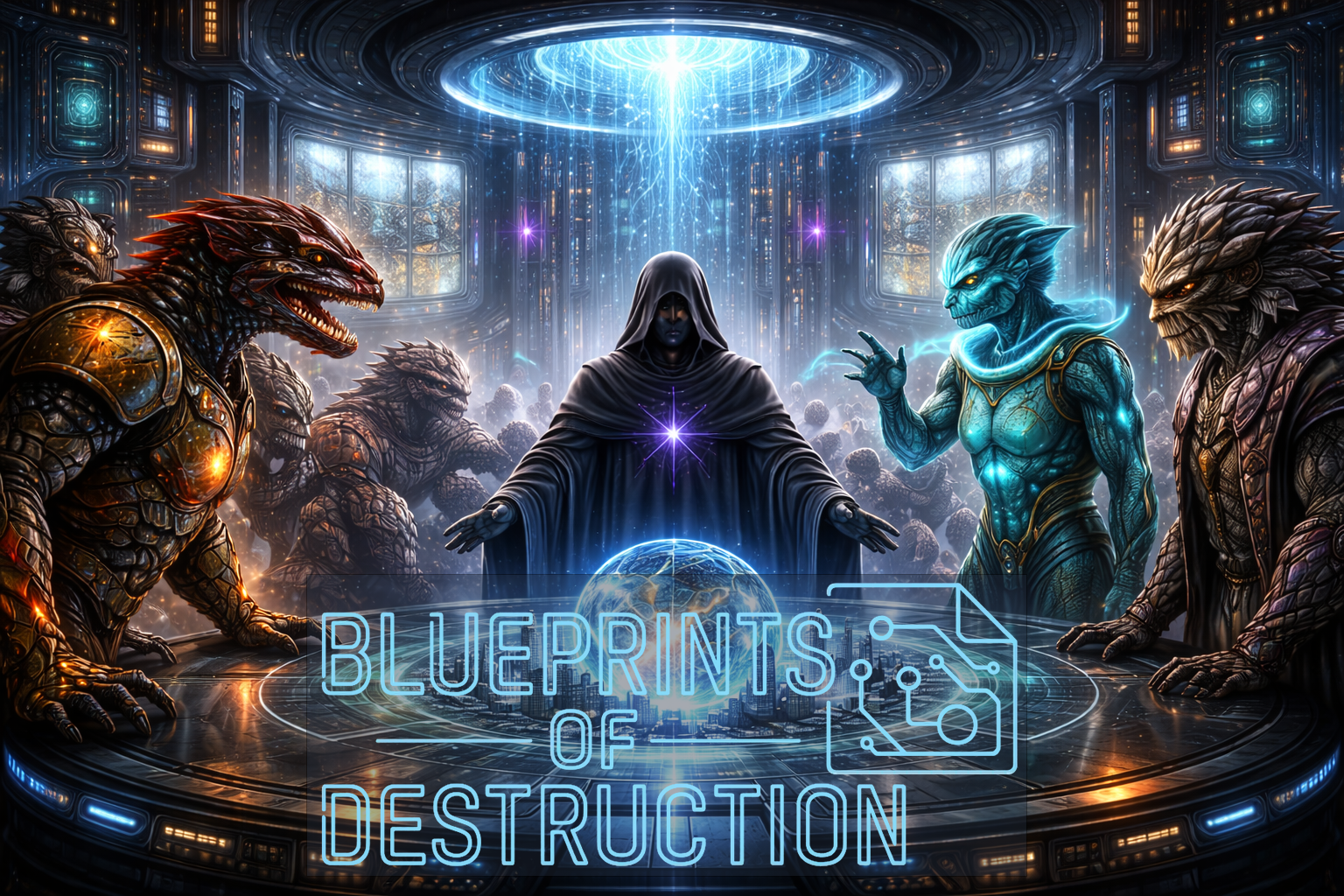
All of these differences mean that even though all citizens technically live inside the same city, many communities function like foreign nations.
Entire sectors develop cultural identities shaped by the dominant species that inhabit them. Food, architecture, lighting and heating preferences, work rhythms, communication styles, and even acceptable emotional expression can vary drastically between districts. What one group may view as polite behavior may feel offensive or even aggressive to another. Because of this, maintaining stability in Qualx requires a great deal of diplomacy.
Species Diplomacy
Instead of ambassadors between nations, Qualx has inter-species coordinators established to help the city run smoothly.
These officials serve as translators not just of language, but of culture and psychology. Their responsibilities include:
- Mediating disputes between groups
- Advising on policy that may impact specific biological or cultural needs
- Coordinating shared infrastructure across districts
- Preventing misunderstandings that could escalate into violence
This is where the Harmonic Interpreters were born. An arm of the Harmonic Concordats, they are interpreters not only of the law, but also of culture. They are positioned and trained specifically to keep the peace across species' physical boundaries and cultural tendencies.
For example, the siveslekk species largely works in the dark, preferably in the damp caves they are born in. The krimtchar need both light and heat to regulate their cold blood. Without mediation and the ability to keep the peace, even a small dispute could spiral into a constant and bloody conflict. Harmonic Interpreters allow the city to adapt instead of fracture.
Cultural Events
Beyond conflict management, Qualx must manage celebration and cultural recognition. Different groups carry their own traditions, holidays, mourning rituals, and historical commemorations.
The city maintains an enormous cultural calendar to coordinate these events so that they do not interfere with one another or disrupt city-wide operations. Some festivals are confined only to subsectors, while others expand across multiple sectors of the city. Occasionally, larger celebrations draw thousands from every species.
These events serve two important purposes. First, they allow each culture to maintain its identity. Second, they allow citizens to experience and appreciate cultures beyond their own. Over time this process has created something uniquely Qualxian: a shared inter-species civic culture built from layered traditions.
Part of the Harmonic Interpreters role is to ensure that the proper boundaries and protections are in place to keep all celebrating citizens safe while participating in the revelries.

The Role of the Guild
While cultural diplomacy helps maintain harmony, it is ultimately the Guild that ensures continued cooperation and understanding.
The Guild operates as the stabilizing authority that keeps competing interests from pulling the city apart.
Some of the Guild's responsibilities include:
- Ensuring the safety of Harmonic Interpreters
- Maintaining neutral arbitration in disputes
- Ensuring resource distribution remains balanced
- Preventing any single cultural bloc from gaining overwhelming influence
This allows cultural differences to exist without threatening the overall stability of Qualx.
Stability Through Balance
The survival of Qualx depends on careful balance. Too much cultural separation would risk elements of the city refusing to work together. The result would either be isolated enclaves or the rise of bloody disputes. Too much forced uniformity would erase the harmony that allows Qualx to function as a thriving multi-species society.
The solution lies in balancing extremes.
Each culture retains its identity, while the larger civic structure ensures continued cooperation. To the average citizen, this delicate system is simply everyday life, though not every individual is pleased with the system. Neighbors come from different species. Markets sell foods from distant subsectors. Festivals rotate through the city calendar.
The machinery that keeps it all functioning remains largely invisible.
What few citizens realize is that this carefully maintained harmony serves a purpose far larger than simple coexistence. Qualx is not merely a city. It is a machine, designed to move, harvest, and produce for something beyond the knowledge and comprehension of those who live within it.
The citizens believe they are part of a world. In truth, they are simply part of a machine. Maintaining harmony between its many species is simply one more system that keeps the engine running.
Make This Idea Your Own
Many fictional worlds exist inside single cities, single planets, single organizations, or single empires. Yet, they still contain complex cultures and politics.
When some writers hear the phrase foreign relations, they often imagine treaties between nations, or an alliance between kingdoms. In many stories, the most interesting political tensions happen inside a single civilization. Diplomacy does not require borders on a map.
Your world might only contain one empire, one city, or one governing body. Yet within that structure there can still be groups that function like foreign cultures.
These groups can differ in more than biology. They might differ in:
- Culture
- Economic role
- Belief system
- Social hierarchy
- Environmental needs
Even when everyone technically lives under the same government, these differences create the same pressures that exist between two nations.
The question for a worldbuilder becomes, "How does your society manage those differences?"
Developing a Culture of Your Own
Step 1: Identify the Major Cultural Groups
The major groups that live inside your world do not need to be separate species. They could instead be:
- Noble houses
- Corporate factions
- Religious orders
- Economic classes
- Planetary colonies
The key is to make sure that these groups have meaningful differences in values or needs, and that they need to work together for a larger goal.
Even small differences can create enormous political consequences. Ask yourself:
- What does this group value most?
- What do they need from the system to survive?
- What behaviors do they consider normal that others might not?
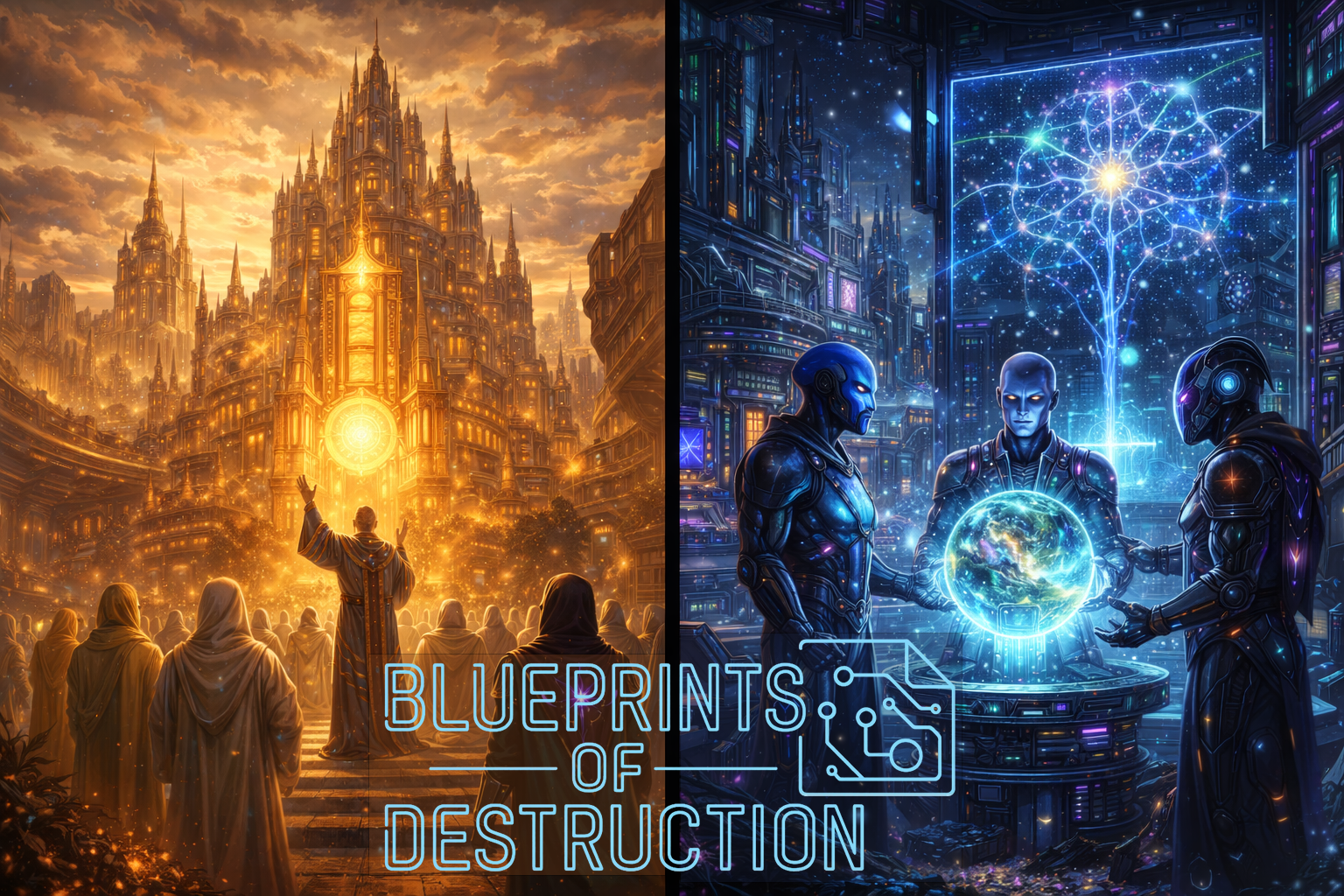
Step 2: Identify Points of Friction
Once the groups exist, look for places where their needs conflict.
Conflict happens when groups compete for:
- Space
- Resources
- Political influence
- Cultural recognition
- Safety
For example:
A merchant guild might want free trade across a particular passage, but a manufacturing guild demands strict regulation to protect its industry. These two differing groups may live within the same world, but this scenario creates the kind of negotiations that nations encounter.
Step 3: Decide the Mediator
Most stable societies develop systems to prevent conflict from escalating.
Who is responsible for keeping peace on your world?
Possible answers could be:
- A central government
- A council of representatives
- Neutral arbiters
- Religious Authority
- An ancient treaty system
Most stable societies develop systems to prevent conflict from escalating. The presence of a kind of mediator helps explain why the society continues functioning instead of collapsing into chaos.
The reverse can also be true. If your story focuses on the conflict rather than the system, your world might lack mediators altogether.
In Qualx, this role belongs to the Conglomerate, through both the Guild and the Harmonics who balance competing interests between species, districts, and cultures.
Step 4: Preservation of Culture
Successful multi-cultural societies allow groups to retain parts of their identity. Think about how cultures might maintain themselves within the larger system. These might include:
- Dedicated districts
- Cultural festivals
- Protected traditions
- Language preservation
- Specialized architecture
- Biological accommodations
These details help the world feel alive because they aren't forcing different cultures to blur together into a single uniform civilization.
Step 5: What Happens When the System Fails
Every diplomatic system has a risk that it will break down. Your story deepens when you consider what happens if tensions exceed the system's ability to manage them. This might result in:
- Riots
- Political coups
- Economic sabotage
- Secession movements
- Organized crime networks
- Underground resistance groups

When the system breaks, characters are forced to decide where they stand. These moments of failure often create powerful story opportunities.
A story begins when two groups want the same thing. Hidden negotiations can become a rich source of story conflict.
This does not require borders or nations, only differences. If your world contains multiple cultures, species, factions, or belief systems, then some form of diplomacy is already happening.
A believable world is rarely built from perfect agreement. Instead, it grows from the systems that allow disagreement to exist without tearing everything apart.
Peace is rarely the natural state of complex societies. It is something that must be maintained. Sometimes this is a careful balancing act, other times it is a forceful one.
For a writer, those systems are not just background details. Wherever balance must be maintained, a story is waiting to unfold.
Stories begin at the fault lines.
