How to Use the Five Whys for Character Development and Worldbuilding
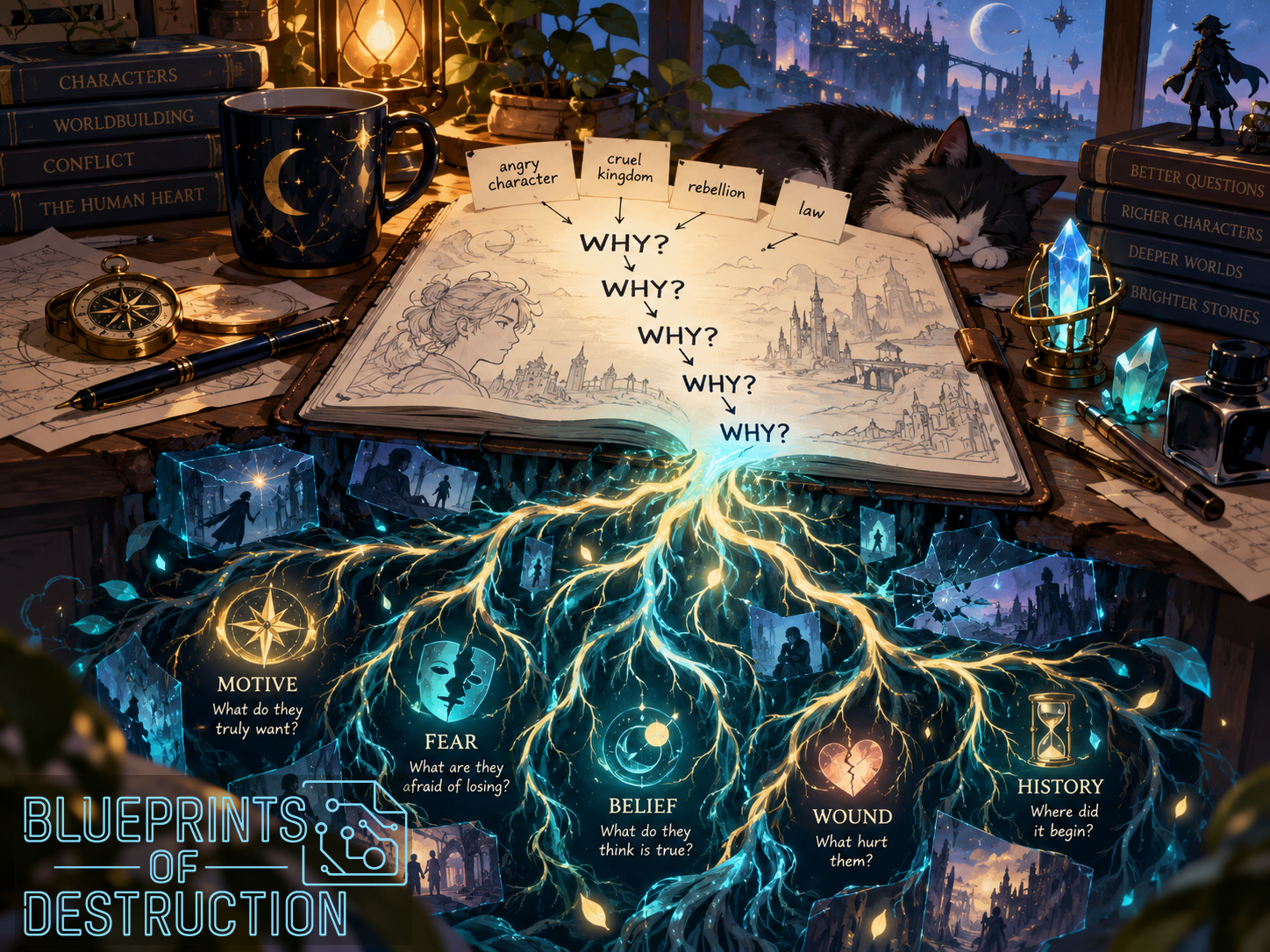
The Five Whys help writers move past surface ideas and discover the deeper cause behind a character, conflict, setting, law, culture, or story problem. New writers often stop at the first answer. A character is angry. A kingdom is cruel. A rebellion begins. A law exists. But the first answer is almost never the deepest one.
The Five Whys began as a problem-solving method associated with Sakichi Toyoda and the Toyota production system. In its original use, the goal was to keep asking "why?" until the real cause of the problem became clear. In writing, we can adapt the same idea: ask "why?" until the reason behind the character, behavior, or system becomes deeper, clearer, and more useful.
The Five Whys method is the practice of asking "why?" repeatedly until you reach the root cause of a problem, decision, behavior, or belief. It does not have to be exactly five. Sometimes three questions are enough. Sometimes you need more. The point is not the number. The point is digging.
Why The First Answer Might Be Too Shallow
If you ask "why?" about your story, character, behavior, or system, and the answer is "because he is evil," your story may end up feeling flat. If your answer is, "because he believes mercy destroyed his family," your character can become more specific. If your answer is, "Because he was raised in a society where mercy is considered treason," the world and the character begin to support each other. Both become stronger at the same time.
Deeper answers create:
- Better motives
- Better conflict
- Better world logic
- Better emotional tension
- Better themes
The Five Whys for Character Development
Let's look at a practical example of how the Five Whys can improve a character. The surface idea is a character who refuses to trust anyone.
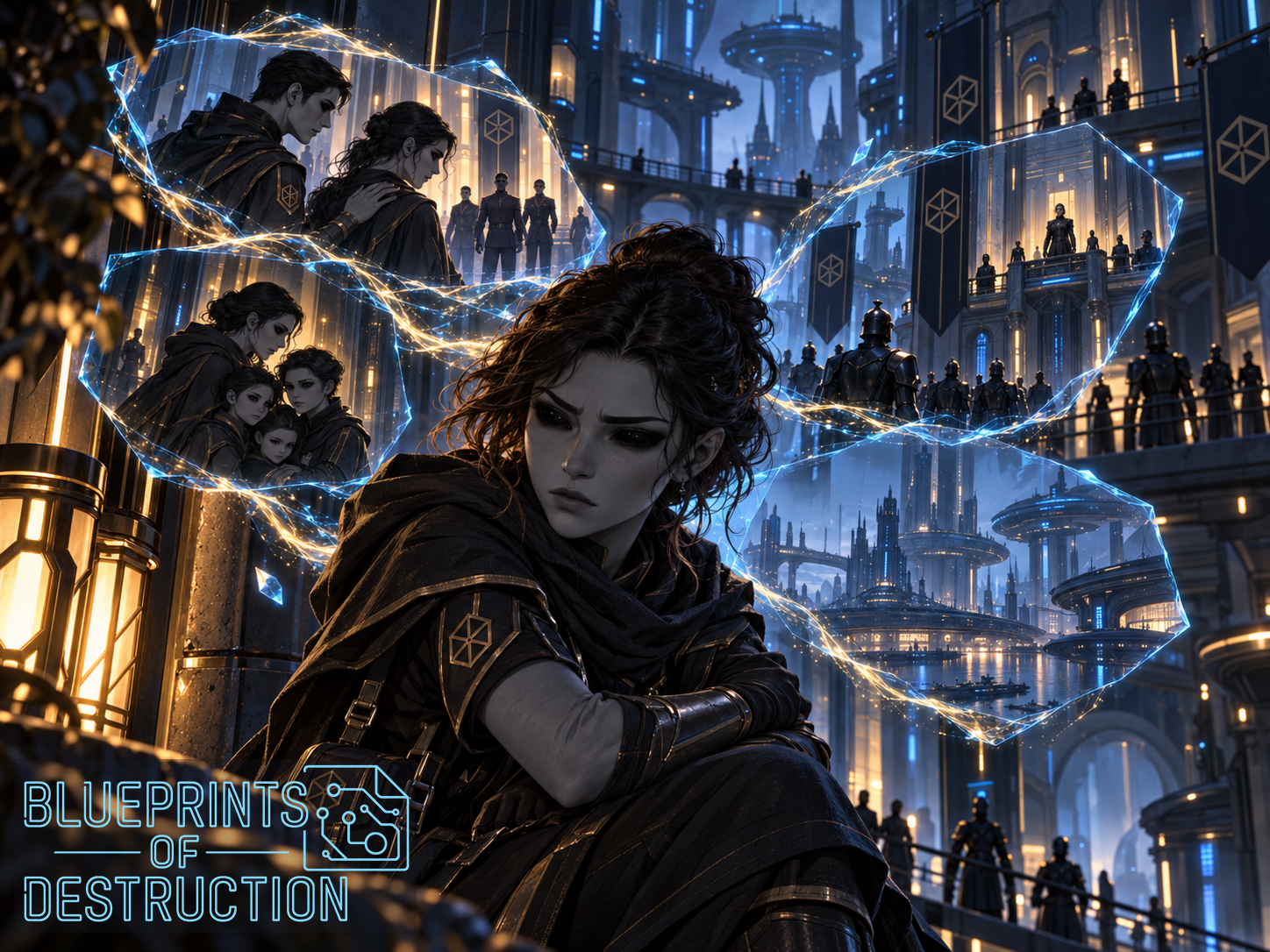
Why 1: Why does she refuse to trust anyone?
Because someone betrayed her.
Why 2: Why did that betrayal affect her so deeply?
Because she trusted that person with her family's safety.
Why 3: Why was her family in danger?
Because her family was hiding from the ruling authority.
Why 4: Why were they hiding?
Because her father had evidence of government corruption.
Why 5: Why does this still shape her now?
Because trusting the wrong person cost her home, family, and identity.
Now this character is not simply distrustful. Her distrust has a history, a deep wound, a political implication, and a story consequence.
The Five Whys for Character Motivation
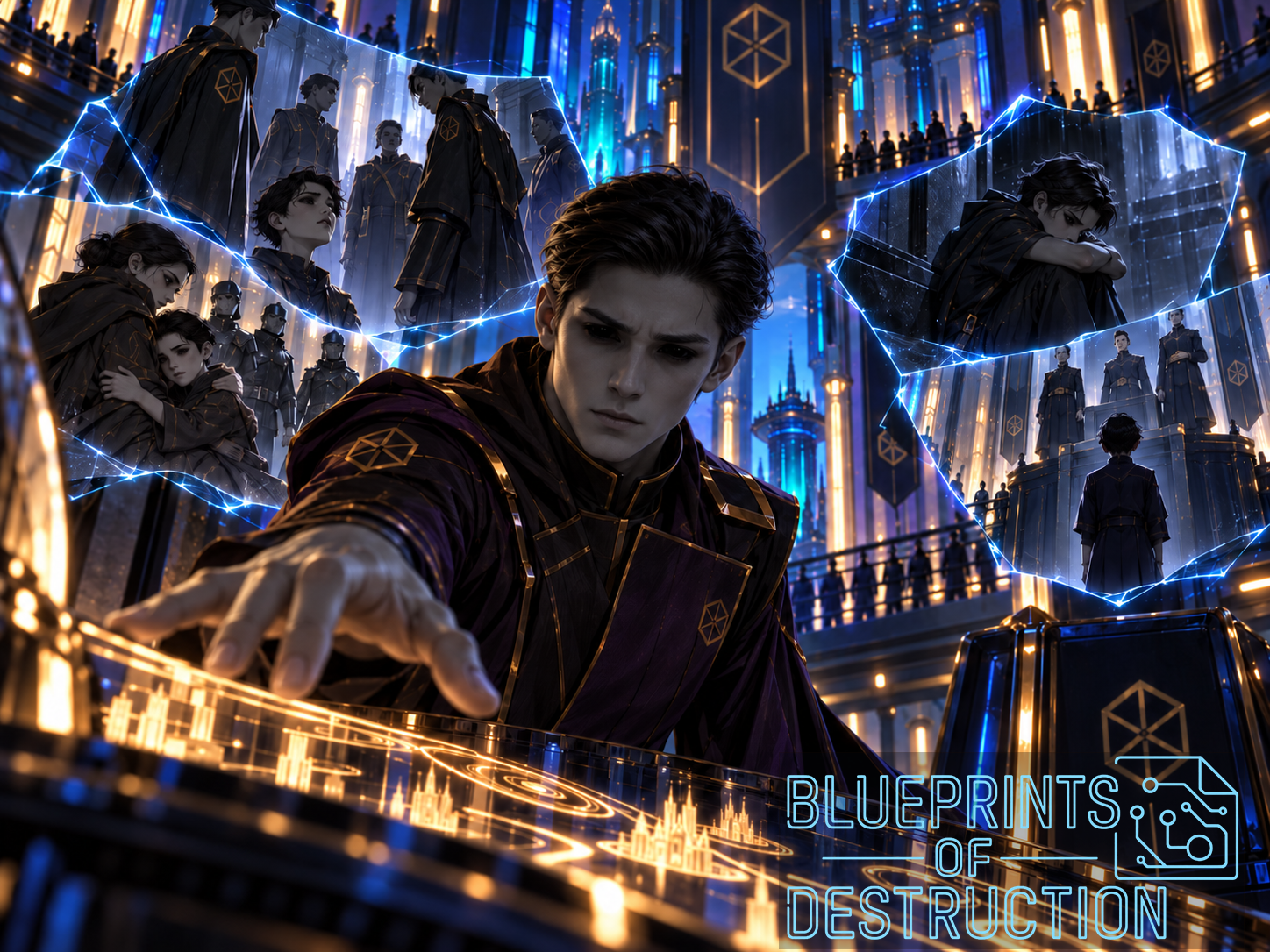
Let's look at this from a slightly different angle. This time, the surface question is: "Why does this character want power?"
Why 1: Why does he want power?
Because power makes him feel safe.
Why 2: Why does power make him feel safe?
Because he grew up powerless.
Why 3: Why did he grow up powerless?
Because his family was punished by the people above them.
Why 4: Why was his family punished?
Because the law protected status instead of justice.
Why 5: Why does his original belief still control him?
Because he believes only the powerful get to survive.
A shallow motive states, "He wants power." A deeper motivation says, "He wants power because he believes weakness is a death sentence, based on the consequences he saw with his family." This creates a stronger character, with deeper motivations, hidden history, and more opportunity for future revelations.
The Five Whys for Villains
The answers to the Five Whys here do not excuse a villain's actions. They explain the root of a villain's choices, and help to create a better, more relatable antagonist.
Our surface question here is:
Why does the antagonist burn villages that disobey?
Why? Because he wants obedience.
Why? Because rebellion destroyed his homeland.
Why? Because the old government ignored small uprisings until they became a war.
Why? Because he believes mercy allows chaos to grow.
Why? Because he believes control is the same as peace.
The final answer gives your story a theme. The villain is not just cruel. He believes ruling with an iron hand is the only way to prevent collapse, and ultimately is the only way to ensure that those around him live in peace.
The Five Whys for Worldbuilding
The Five Whys give clarity to questions like:
- Why does this law exist?
- Why does this culture value this trait?
- Why does the government have this structure?
- Why do citizens accept this system?
- Why do rebels oppose it?
- Why does the economy depend on this practice?
- Why is this tradition still followed?
- Why does this system create conflict?
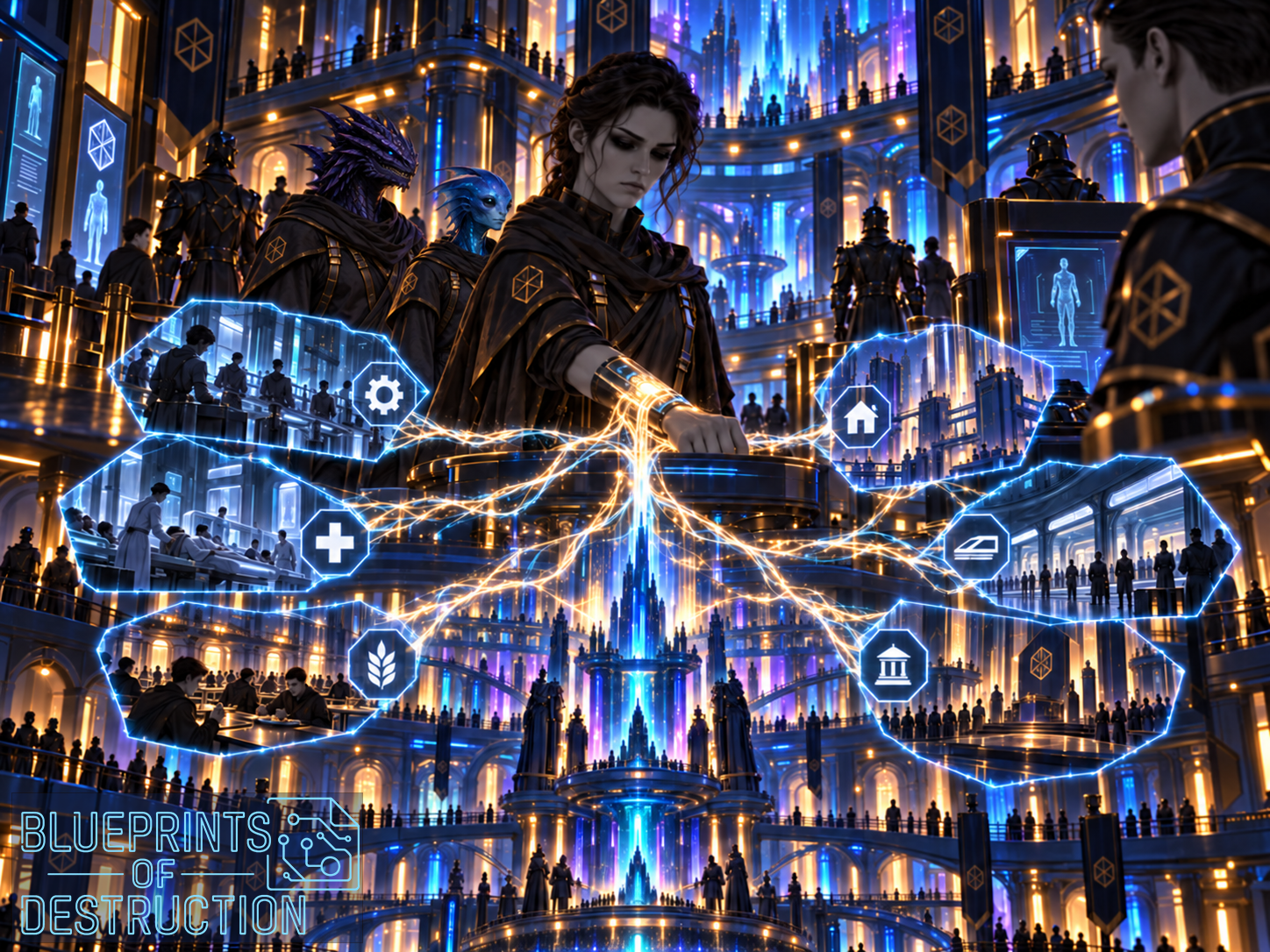
Answers to these kinds of questions can be crucial to good worldbuilding. If these questions have weak answers, the reader's immersion will be broken. If there is no logical explanation for why characters behave the way they do, the reader may lose interest in how the story's problems will be solved.
Let's look at an example.
Surface idea:
Qualx requires every citizen to have an identification implant.
Why? Because the government tracks citizenship.
Why? Because citizenship determines access to work, travel, medicine, and housing.
Why? Because access to resources is tied to production, labor, and legal status.
Why? Because if resource production fails, then the entire system risks destruction.
Why? Because the Conglomerate values production more than privacy.
Now the identification implant is not just a cool piece of technology. It has a root purpose, a social consequence, and a built-in source of conflict.
The world of Qualx believes that survival is not a right. It must be fought for.
The Five Whys for Conflict
Nobody is evil in their own eyes. Conflict becomes stronger when the reader understands why both sides think they are right. Let's look a little bit closer at two sides of an example conflict.
The uprising group wants to destroy the system.
The loyalist group wants to preserve it.
Uprising Side:
Why do they want to destroy the system?
Because they believe the system enslaves individuals.
Why does the Uprising believe the system wants to enslave individuals?
Because the Uprising believes that the muzh system is a form of enslavement
Why does the Uprising believe the muzh system is a form of enslavement?
Because they see dependence as oppression.
Why do they see dependence as oppression?
Because they are unwilling to be dependent on that same system, and the muzh system is a stark reminder that everyone is vulnerable to needing someone else.
Loyalist Side:
Why do the loyalists defend the system?
Because they believe the system protects people.
Why do they believe the system protects people?
Because they have seen people in the muzh system not just survive, but thrive within its structure.
Why do the muzh do so well?
Because the system is designed to allow individuals to elevate beyond their current situation, and gain status and prosperity they would otherwise have no access to.
Why does the system allow for this kind of growth?
Because the system identifies the need and the opportunity for those outside the system to benefit the system by entering it.
Why does the system benefit from outsiders entering it?
Because without it, the vulnerable would be abandoned.
By using the Five Whys, you can turn a simple good-versus-bad conflict into a complex clash of beliefs, fears, histories, and values.
The Five Whys for Plot Problems

The Five Whys can also help when you are stuck on a plot problem. For example:
Problem: The middle of the story feels boring.
Why? Because nothing important changes.
Why? Because the character is reacting instead of choosing.
Why? Because the stakes are not forcing a decision.
Why? Because the antagonist is not applying enough pressure.
Why? Because the story has not made it clear what will be lost if the antagonist fails.
This can become a very practical tool because it can reveal that the problem is not "the middle is boring." The root problem is that the character has no urgent decision to make, and the reader is not sure why the antagonist is trying so hard.
Mistakes When Using the Five Whys
Possible Mistake 1: Stopping at a Vague Answer
"Because he is sad" is not deep enough. Why is he sad?
Possible Mistake 2: Repeating the Same Answer
If every answer is just "because he was betrayed," you are circling, not digging.
Possible Mistake 3: Making Every Answer Traumatic
Not every root cause has to be a deep wound. Some roots are cultural, spiritual, economic, relational, or philosophical.
Mistake 4: Using the Five Whys to Over-Explain Everything
Some mystery is good. The writer should know more than the reader, but the reader does not need every explanation at once.
Mistake 5: Asking Only One Character Why
In strong conflict, both sides should have a reason that makes sense to each of them.
The Five Whys Reveal Story Roots
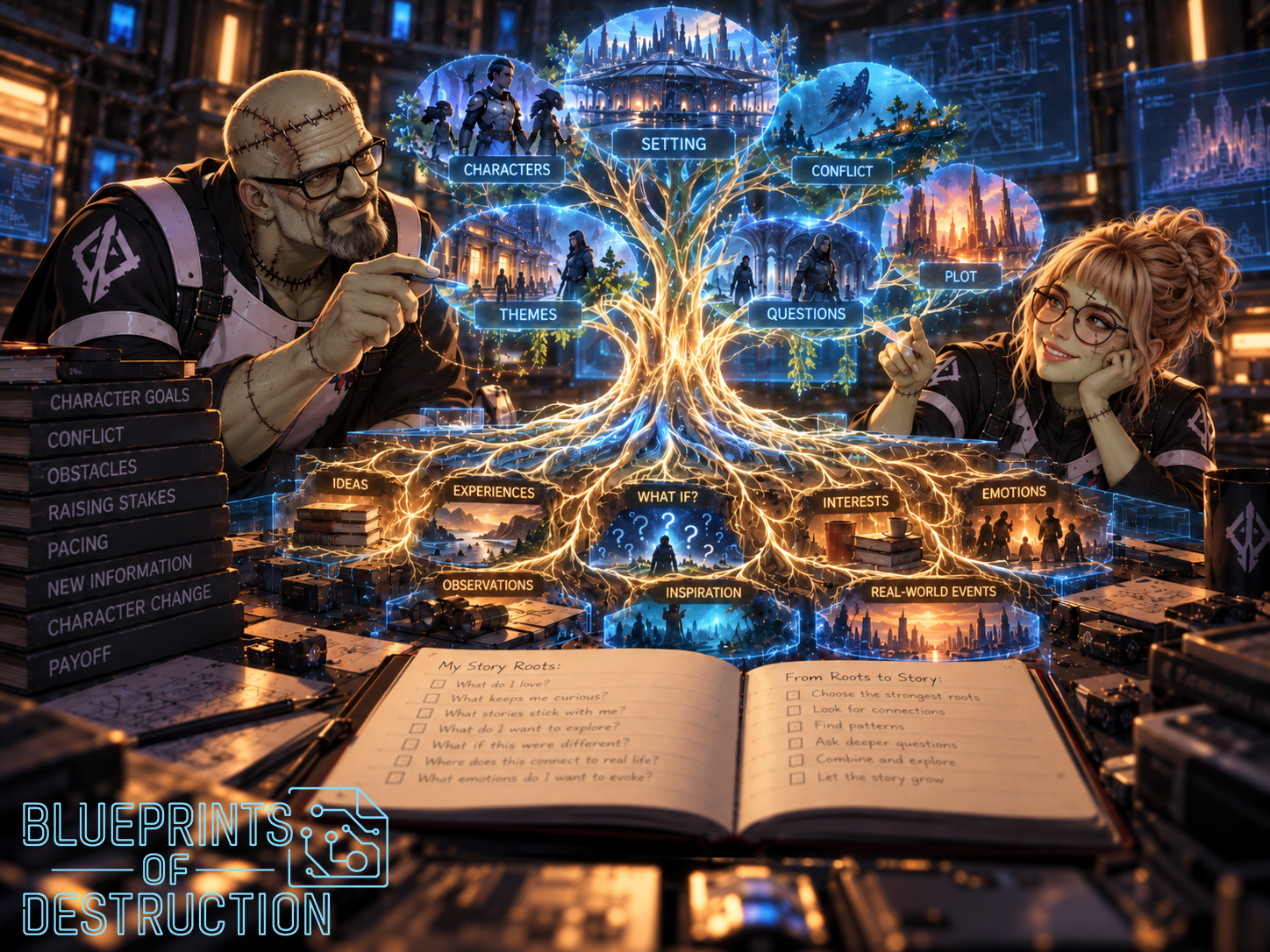
The Five Whys are not just a questioning trick. They are a way to find roots:
- A character's root motive
- A society's root belief
- A villain's hidden fear
- A conflict's root wound.
When you know the root, the rest of the story grows with more purpose.
So, go! Find your own story's roots, and see what grows from them!
