- Home
- Creating a Character Arc
Creating a Character Arc
Plot Vs Arc
The plot is what happens in a story. The character arc is about how those events affect the character. When you break a character arc down to its bare bones, it is a record of a character's internal change under pressure as the story unfolds. Every character arc answers the same question: When this character is stressed, challenged, tempted, or hurt, how do they change?
A character arc is a system with complex moving parts, not a vague emotional journey.
The Path to Change
The path to character change follows an almost universal format, although the details vary. The simplified formula is:
Lie → Want → Conflict → Moment of Truth → Transformation
Through external pressure, internal conflict is magnified, and real transformation is born.
A good story introduces situations that challenge more than a character's physical circumstances. They also put the character's beliefs under pressure.
Mechanically, the world needs to present problems the old belief cannot solve. Before you can understand how a character changes, you first need to understand who they are at their core. This usually begins by defining:

- Wound:
The wound is what hurt your character. - Lie:
The lie is the belief your character has built around their wound. - Want:
The want is what your character is chasing externally. - Need:
The need is what your character must understand, accept, or become internally. - Coping Mechanism:
The coping mechanism is the behavior your character uses to protect themselves from pain, fear, or vulnerability. - Moment of Truth:
The Moment of Truth is the pivotal choice that reveals whether the character will change or remain trapped by the lie. - Final Transformation:
The final transformation is the result of that choice, whether it leads to growth, downfall, or a steady truth proven under pressure.
Good Vs. Great
A good arc and a great arc share the same components, but a few refinements can make a huge difference.
True change always comes at a cost. This is no different for the characters in your story. Whether it is relationships, safety, status, or illusion, when a character loses something, the stakes go up and the change feels genuine.
Relationships are one of the easiest ways to reveal an arc because different characters can pressure different parts of the protagonist:
- A mentor may challenge the lie.
- A foil may mirror the danger of staying the same.
- A friend may reveal what the character is afraid to lose.
- An antagonist may exploit the wound.
- A love interest may expose the character's defenses.
The Antagonist as Arc Pressure
The antagonist should not only stand in the way of what the character wants. A strong antagonist also pressure what the character believes.
Another thing to remember as you generate character arc ideas is that humans, by their very nature, are inconsistent. This should be no different for your characters. Inconsistency helps your characters feel authentic and grounded.
It is important to remember that arc direction is not the same thing as effectiveness. A tragic arc can be just as complete and meaningful as a heroic one.
Alignment
The final victory or loss in your narrative should be shaped not only by the character's internal resolution or failure, but also by the choices they made throughout the story. The climax should grow directly out of the character's decisions, especially those made during the Moment of Truth. The external defeat or victory is a direct reflection of the internal one.
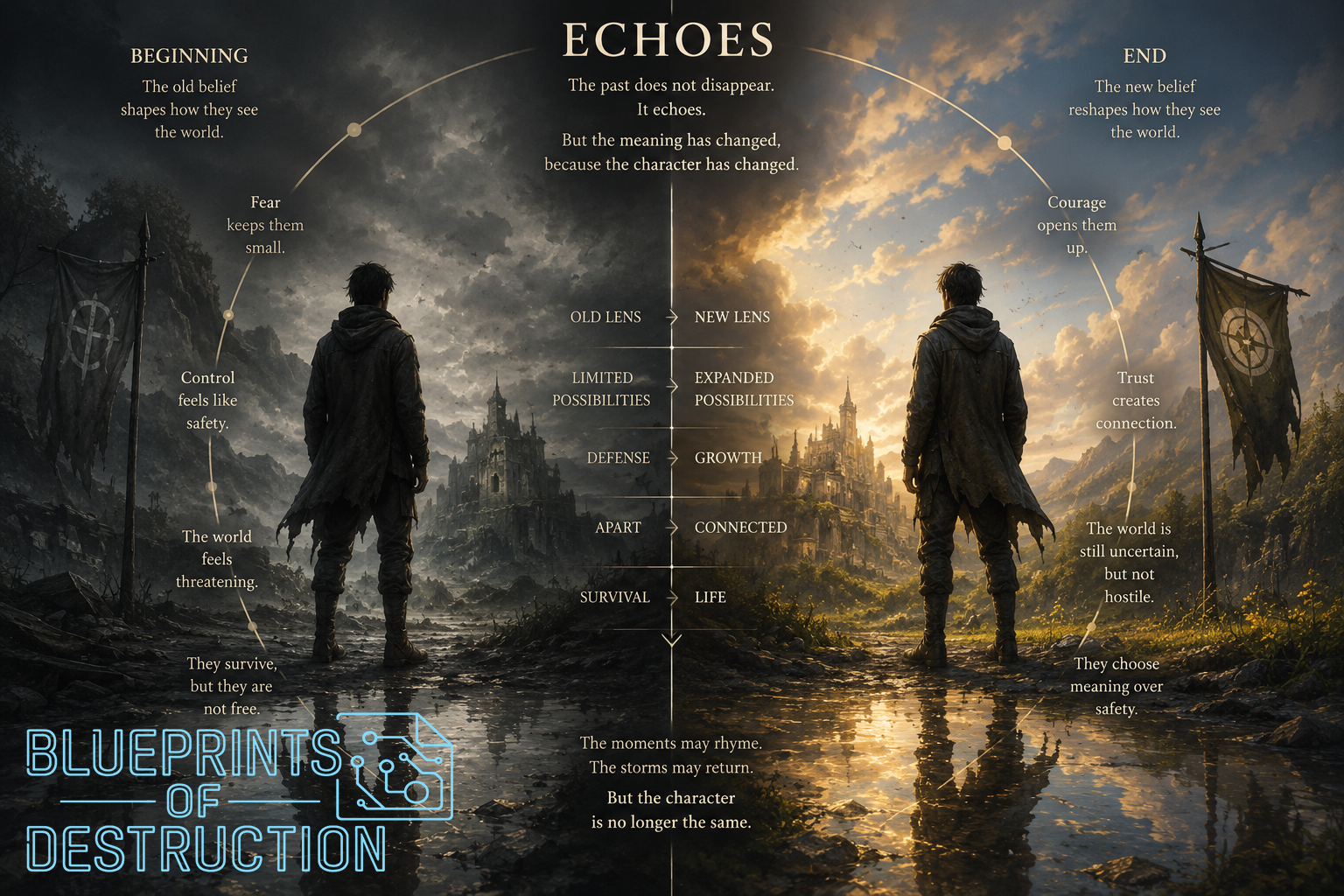
Echoes
A good character arc should echo earlier scenes and can serve as the "cherry on top". Showing the contrast between who the character was and who they become is a wonderful way to round off the story and give it a sense of completeness.
How You can Apply Character Development
A meaningful character arc is the heartbeat of a memorable story. By understanding the lie, the want, the need, and the underlying emotional wound behind your character's choices, you gain the ability to craft something meaningful that lasts long after the pages are closed. Character development isn't just change. It is meaning that cuts to the heart of the reader.
Template for Character Arc Ideas
The following is an example character arc:
- Lie: "I can't rely on others if I want to protect myself."
- Want: "I must defeat the enemy alone."
- Conflict: The character is overwhelmed by their own choices and is pushed to failure.
- Moment of Truth: They choose not to trust others, even when help is available.
- Transformation: They perish because they are unable to stop relying solely on themselves.
Even though this is an example of a negative arc, it is still an effective path of change.
Now that we've established the core components of a character arc, let's examine how those pieces function throughout a story.
Step 1 - The Arc
Choose one:
- Positive Change
The character rejects the lie and moves toward the truth. - Negative Change
The character clings to the lie or embraces an even worse one. - Static
The character's core truth remains steady and pressures the world around them.
Step 2 - Define the Core
- The Lie your character believes:
- The Truth they must accept:
- Wound:
- Want (external):
- Need (internal):
- Coping Mechanism:
- Moment of Truth:
- Final Transformation:
Weak Arc Warning Signs
- The character changes without making a meaningful choice.
- The character’s belief is never tested.
- The climax does not connect to the internal arc.
- The character says they changed, but their behavior does not prove it.
- The transformation has no cost.
Step 3 - Arc Structure
Act I
- Opening behavior that shows the lie:
- Inciting incident that challenges their worldview:
- Early reactions (with the lie still shaping their choices):
Act II
- Midpoint revelation or corruption:
- How relationships still pressure their lie or truth:
- Escalating stakes tied to internal conflict:
Act III
- Moment of truth (what is the pivotal choice your character makes?):
- Transformation (or downfall):
- Final moment showing the new self (or their lie conquering):
Step 4 - Texture
- What contradictions does your character display?
- What is the cost of changing or refusing to do so?
- Is there a mirrored subplot character (also known as a foil)?
- Is there a symbol tied to their internal journey?
Character Transformation Through Narrative Change
Once the baseline of your character's arc has been established, you can begin placing pressure on them. This is done by creating a loop of actions and consequences.
The Feedback Loop
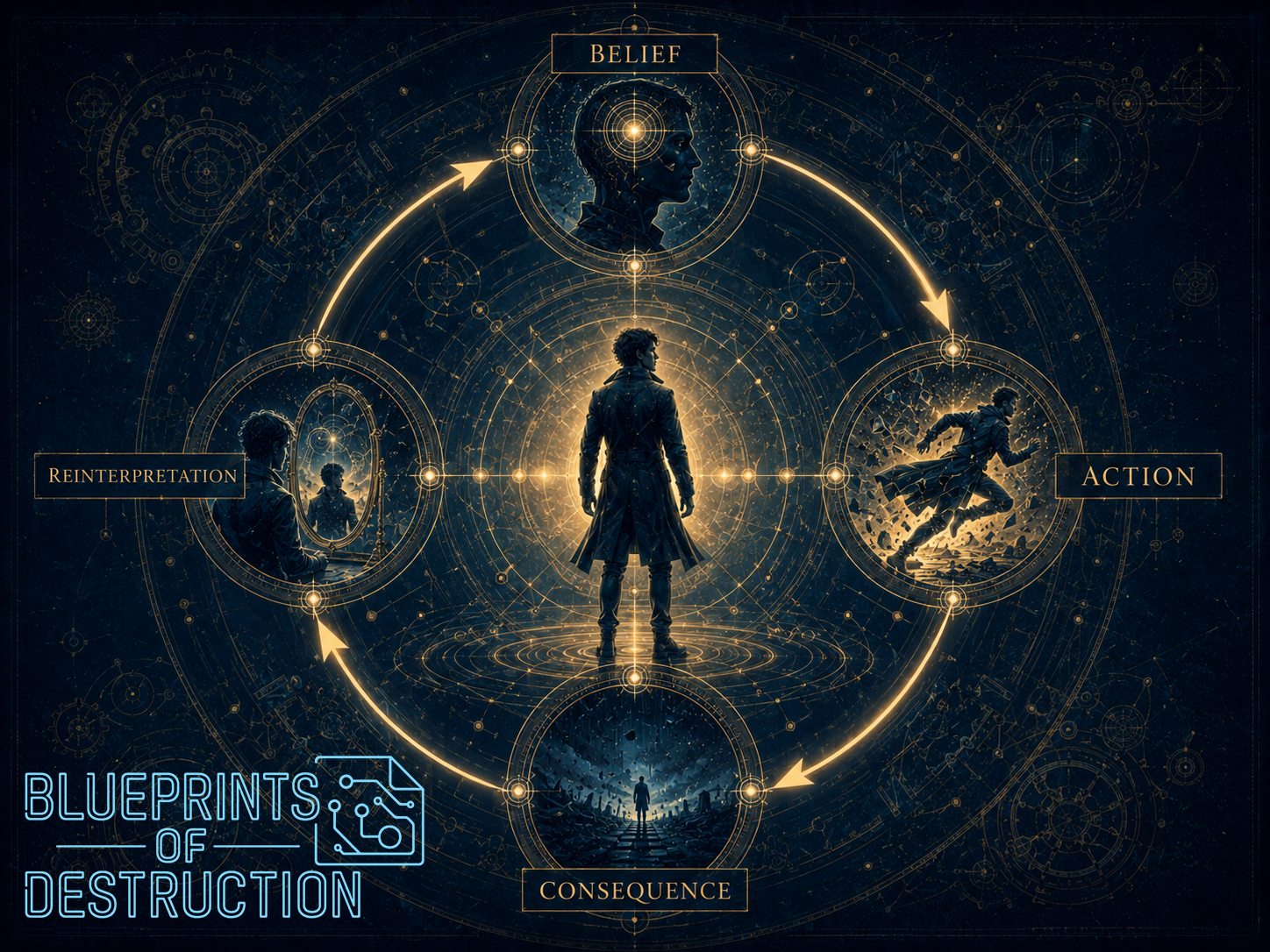
This is where your arc can earn its gravity. As the character repeats old behaviors and justifies their bad choices, they begin to rationalize mounting damage.
Mechanically, this phase acts as a feedback loop. The character's beliefs lead to actions. Their actions create consequences. Through those consequences, they reinterpret the damage around them. As the character reinterprets the world around them, their beliefs are reinforced.
Until this loop breaks, the character cannot change. The closer a character gets to breaking free from this loop, the closer they get to their breaking point.
Character Belief
A character’s belief is the hidden operating rule beneath their choices.
It tells them what is safe, what is dangerous, what is worth protecting,
and what they think they must do to survive.
A character does not just “act.” They act because they believe something.
That belief creates choices.
Those choices create consequences.
Those consequences either strengthen the belief or break it.
When that pattern can no longer hold, the arc begins to break open.
The Breaking Point
This is the fulcrum, or the pivot point, of the arc. This is when the world:
- Makes the old belief actively harmful
- Forces a choice with no safe option
- Costs the character something they cannot rationalize away
Through one of these moments, the character must confront their external failure or accept the cost of staying the same. This change does not need to be loud. In fact, quiet breaking points can be the most devastating.
Reorientation
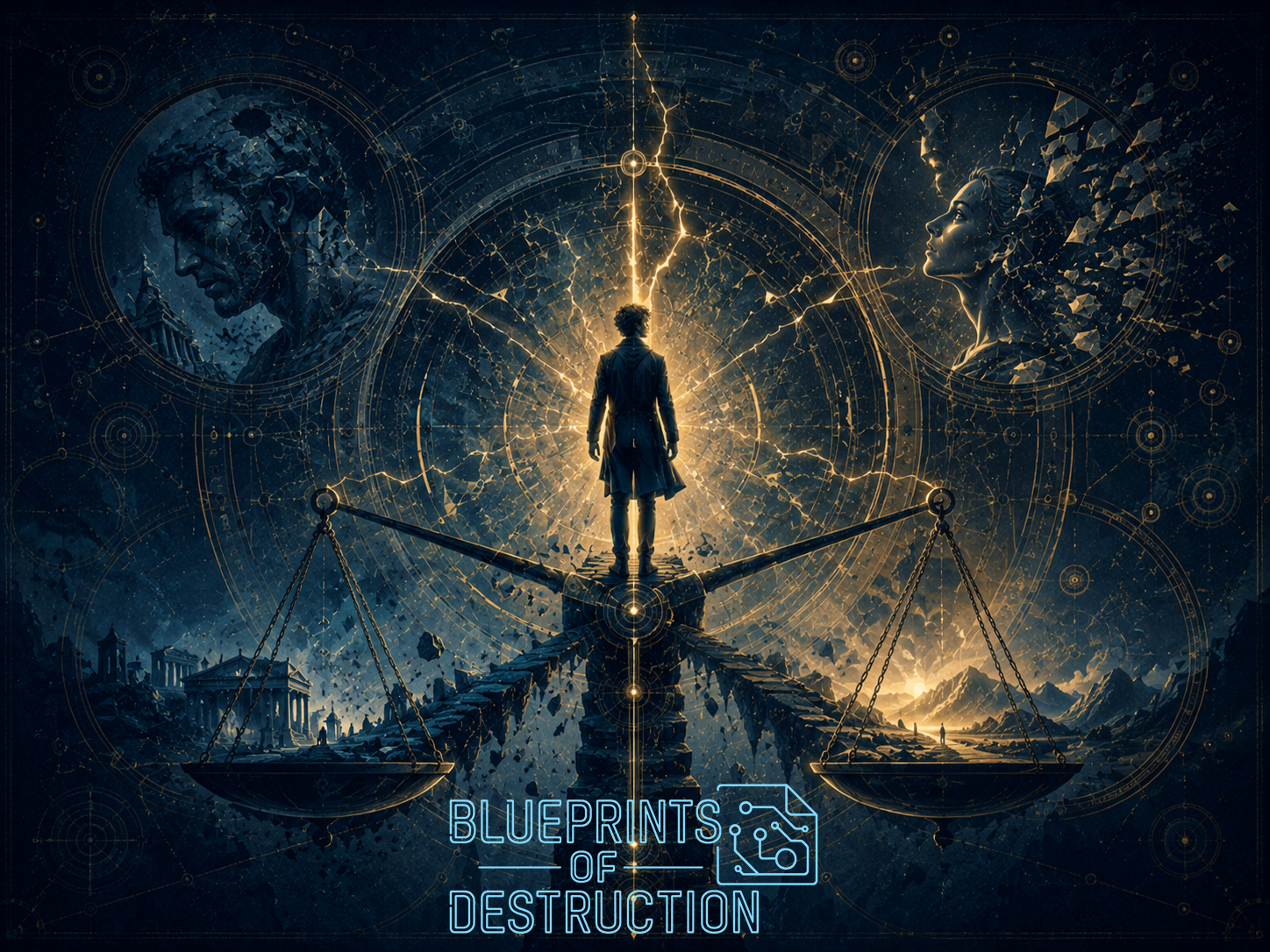
Reorientation is a decision made with uncertainty. This is where a character can adopt a new operating principle and makes a choice that is unproven or risky. Through these choices, the story tests the new belief. The character must then incorporate what they have learned, which prevents the arc from feeling cheap.
As your character makes this first step toward a new baseline, the final step is proving that the change is real.
Integration
This is the phase where the character's arc reaches completion. The arc feels complete if you show that the character behaves differently without being forced. Because this new belief was tested under pressure, the outcome reflects growth instead of perfection.
Proof of Change
A character has not truly changed just because they realize something. The audience needs to see them behave differently.
Real transformation is proven by behavior, not realization.
Use this free, downloadable worksheet to move from theory to construction. The goal is not to make a character change randomly, but to build a clear path from belief, to pressure, to choice, to consequence, to transformation.