- Home
- Step-by-Step Story Writing
- Fictional World
Fictional World
Fifteen Core Questions of Qualx (Collapsible)
Fifteen Core Questions of Qualx (Collapsible)
Structural and Foundational Questions
1. Founding Principle: What was the original purpose or event that led to the formation of Qualx's governing body?
2. Power Source: Who or what grants authority in Qualx? Is authority granted by the people, an inherited class, or divine mandate?
3. Political Hierarchy: Does Qualx have a single central government, or multiple autonomous city-states that operate under one banner?
4. Guilds and Governance: How does the Guild function within the overall government structure? What groups, arms of government, organizations, corporate entities, or separate power blocs interact? Who negotiates with whom?
5. Citizenship and Life Rights: How are Life Rights granted, suspended, revoked, or used as currency? And who has the authority to execute and activate these transactions?
Administrative and Legal Questions
6. Law Enforcement: Who enforces law and order in Qualx? Is it a police-like structure, a military force, mindless automatons, Guild-appointed agents, or is there something darker and more mysterious at play?
7. Judicial System: Who administers justice? Are there trials, arbitration councils, judges, natural disasters sent by gods, or Guild tribunals?
8. Economic Control: What serves as currency in Qualx? And is the economy state-run, Guild-driven, capitalist, resource-based, or is it some kind of hybrid system?
9. Territorial Management: How is land and resource distribution managed? Is there private ownership, state assignments, or a link between Life Rights and the acquisition of raw materials?
Cultural and Ideological Questions
10. Core Ideology: What is the prevailing philosophy or moral compass of the government or people? What mindset helps determine order, progress, control, or survival?
11. Religion and Power: Does religion have any role in Qualx? If so, is it used to legitimize or challenge authority?
12. Information Control: How is knowledge and communication regulated? Is it open and free, heavily censored, or filtered through some kind of in-story gatekeeper or censor?
Political Dynamics
13. Conflict and Rebellion: What forms of dissent exist? Are there underground movements, rival factions, sanctioned opposition, or is it a free-for-all?
14. Military Role: If there is an army? Is it a protector of the people, an enforcer of the regime, or is it fragmented and bureaucratically useless?
15. Foreign Relations: Does Qualx interact with other peoples, nations, or worlds, or is it isolated and self-contained?
What groups, arms of government, organizations, corporate entities, or separate power blocs interact? Who negotiates with whom?

When creating a fictional world, it is important to consider these elements in your worldbuilding. Details on how your world functions generates believability and creates a stronger foundation.
For example, in Qualx, the Guild is a single unified institution that enforces authority across Qualx. It operates under the oversight of the Grand Archon and the Guild Archon. Its internal divisions do not represent rival factions, but instead have specialized jurisdictions within a centralized system.
Guild Authority Structure
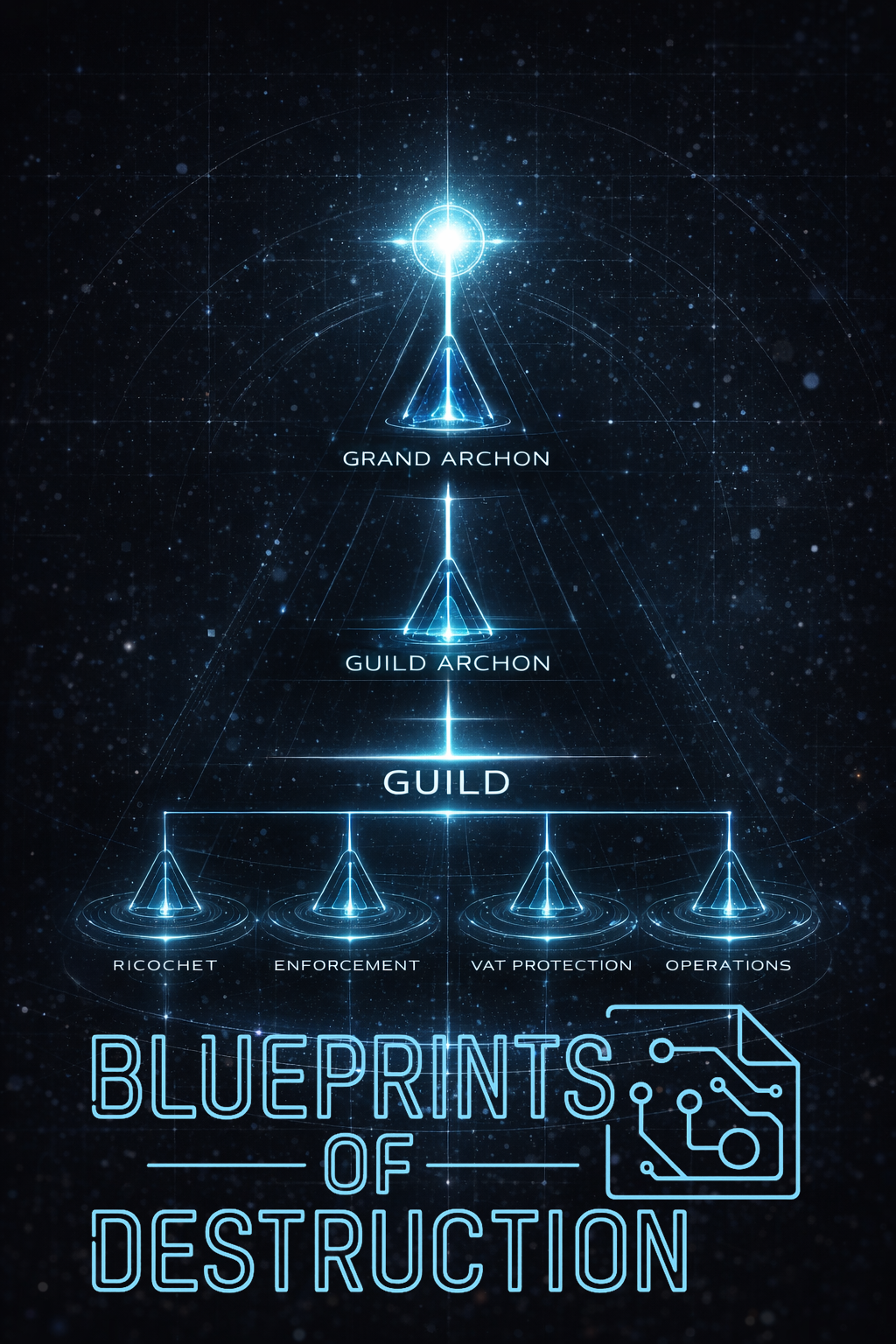
The authority within the Guild is a simple, top-down operation.
The Grand Archon is the supreme arbiter of civic and life-rights authority. He is the ultimate overseer of punishment, decrier of sanctions, and decider of exceptions.
The Guild Archon is the direct overseer of Guild operations. He interprets the Grand Archon's mandates into actionable and enforceable doctrine.
The Guild is a single institution charged with execution, enforcement, and oversight. Qualx itself is too vast to govern uniformly. Authority is therefore distributed by sectors and subsectors, not by ideology or allegiance.
Primary Guild Capabilities by Division
Because of Qualx's large size, species diversity, ethnic and cultural complexities that transcend species, as well as its multifaceted and multilayered physical structure, the Guild is divided into many different divisions. Each subsystem oversees a different aspect of the city.
1. Vat Protection and Patrol
This division is tasked with controlling and defending Qualx's vital infrastructure. Patrol, interdiction, and containment form their primary mandate. While this branch of the Guild rarely interacts with most civilians directly, they do often encounter Mob and Pirate forces.
2. Ricochet Operations Division (RSO)
Ricochet is a special technology-assisted means of travel, akin to teleportation. The RSO specializes in travel, pursuit, and investigation, and handles threats that cannot be addressed through conventional means of travel. They operate with a much higher level of secrecy and autonomy than other divisions.
3. Ground Enforcement
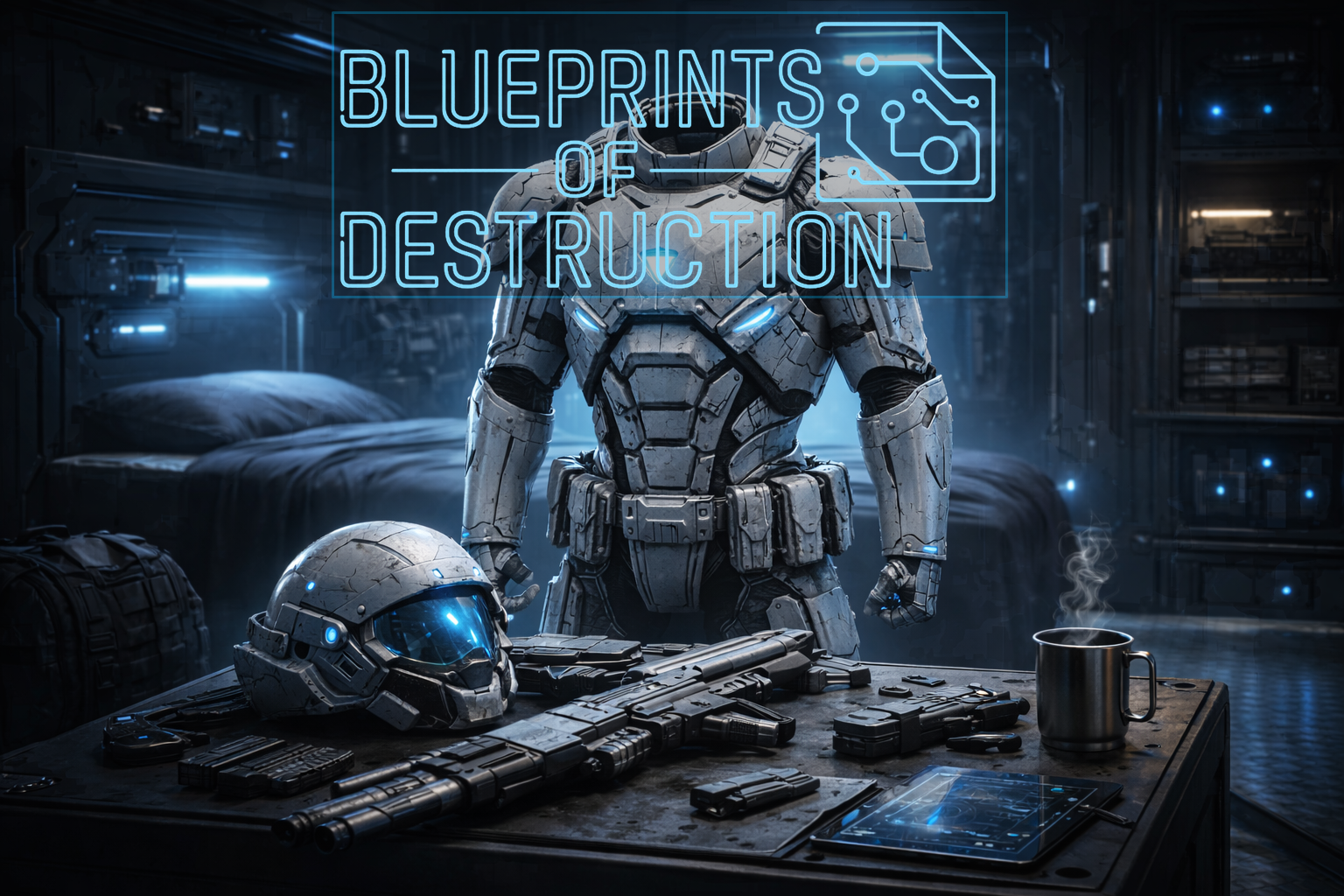
This is the division of the Guild that patrols, raids, seizes, and otherwise actively enforces both the Grand Archon's mandates and the laws that the Senate passes. This is the face of the Guild that most citizens encounter.
4. Internal Audit
This is the branch of the Guild tasked with reviewing the actions of Guild members. They oversee elements like abuse of authority, efficiency failures, and doctrinal decline.
No arm of the Guild commands another; each answers upward.
Movement of Authority
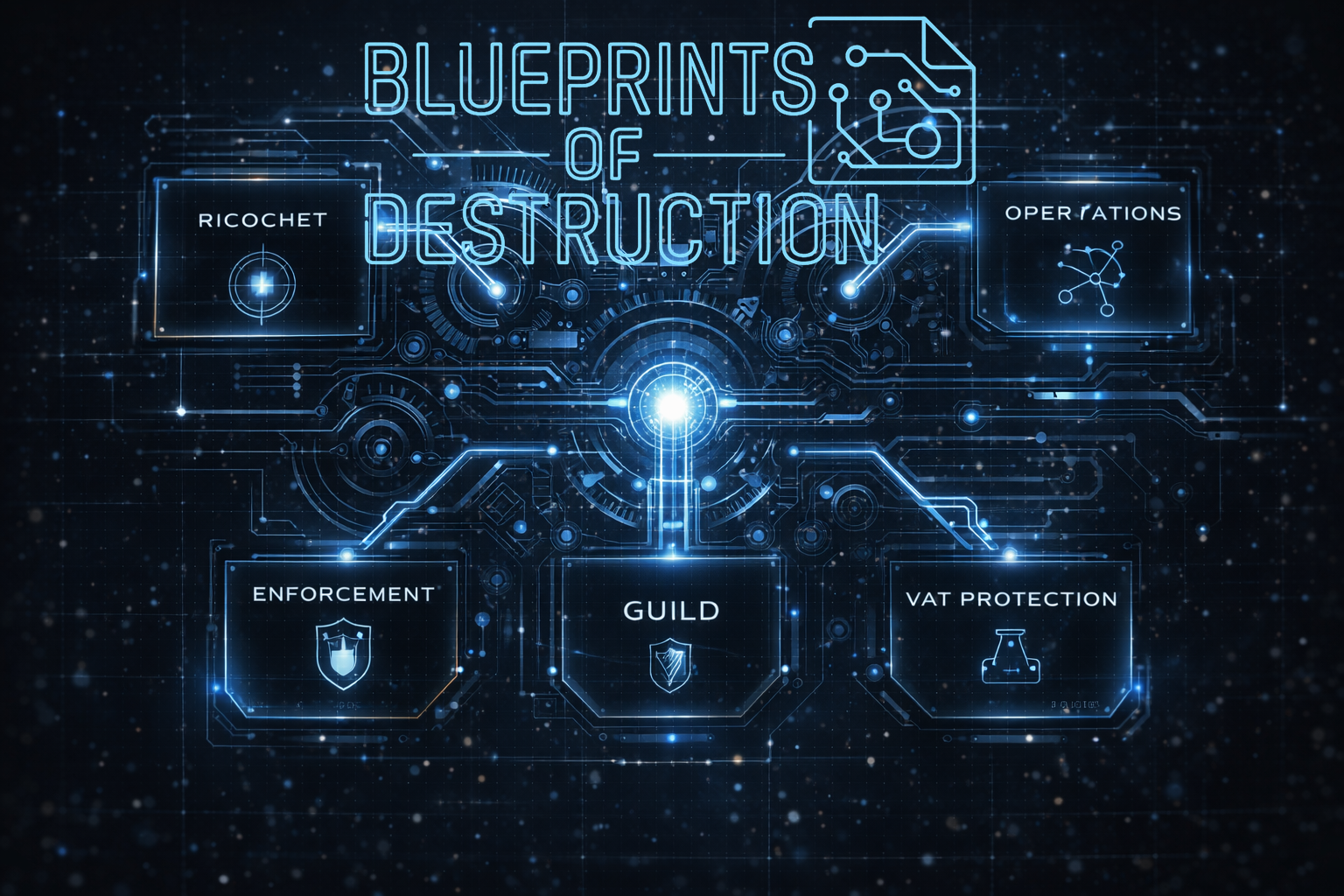
The Grand Archon sets limits and doctrine.
The Guild Archon translates doctrine into enforceable mandates.
Operational arms execute commands without negotiation.
Internal Auditors report deviations upward.
Through these layered levels of authority, clear and functional understanding of how the Guild operates as an interlaced network can be obtained. Even if a reader never learns the internal mechanics of the Guild directly, PhranqenLu's understanding allows the actions to be portrayed with greater consistency and intent within the story itself.
When an author has a firm grasp of how their world functions beneath the surface, the reader is less likely to become confused by the systems that shape it. Clear internal logic creates confidence, not only within the world, but also in the events that unfold within it.

A comprehensive understanding of law enforcement, governance, or any major system in a fictional setting provides a solid foundation for storytelling. With that foundation in place, the author is better prepared to present the world clearly and to meaningfully challenge the characters who live and act within it.
With all of that in mind, don't let every minutia get in the way of actually writing your story. It is easy to get lost in the details, striving to make every thing perfect that we forget what is actually important.
Ready to explore how Qualx enforces laws in practice? Continue to questions for a story.
