How Core Ideology Shapes Fictional Worlds
Fifteen Core Questions of Qualx (Collapsible)
Fifteen Core Questions of Qualx (Collapsible)
Structural and Foundational Questions
1. Founding Principle: What was the original purpose or event that led to the formation of Qualx's governing body?
2. Power Source: Who or what grants authority in Qualx? Is authority granted by the people, an inherited class, or divine mandate?
3. Political Hierarchy: Does Qualx have a single central government, or multiple autonomous city-states that operate under one banner?
4. Guilds and Governance: How does the Guild function within the overall government structure? What groups, arms of government, organizations, corporate entities, or separate power blocs interact? Who negotiates with whom?
5. Citizenship and Life Rights: How are Life Rights granted, suspended, revoked, or used as currency? And who has the authority to execute and activate these transactions?
Administrative and Legal Questions
6. Law Enforcement: Who enforces law and order in Qualx? Is it a police-like structure, a military force, mindless automatons, Guild-appointed agents, or is there something darker and more mysterious at play?
7. Judicial System: Who administers justice? Are there trials, arbitration councils, judges, natural disasters sent by gods, or Guild tribunals?
8. Economic Control: What serves as currency in Qualx? And is the economy state-run, Guild-driven, capitalist, resource-based, or is it some kind of hybrid system?
9. Territorial Management: How is land and resource distribution managed? Is there private ownership, state assignments, or a link between Life Rights and the acquisition of raw materials?
Cultural and Ideological Questions
10. Core Ideology: What is the prevailing philosophy or moral compass of the government or people? What mindset helps determine order, progress, control, or survival?
11. Religion and Power: Does religion have any role in Qualx? If so, is it used to legitimize or challenge authority?
12. Information Control: How is knowledge and communication regulated? Is it open and free, heavily censored, or filtered through some kind of in-story gatekeeper or censor?
Political Dynamics
13. Conflict and Rebellion: What forms of dissent exist? Are there underground movements, rival factions, sanctioned opposition, or is it a free-for-all?
14. Military Role: If there is an army? Is it a protector of the people, an enforcer of the regime, or is it fragmented and bureaucratically useless?
15. Foreign Relations: Does Qualx interact with other peoples, nations, or worlds, or is it isolated and self-contained?
Core Ideology: What is the prevailing philosophy or moral compass of government: Order, Progress, Equality, Control, or Survival?
When looking at different world building components you are going to use within your world, it is important to take a deeper look at how your world and those within your world, view culture. Core ideology can help shape how your characters react as it builds the conflict within your story.
Let's examine Blueprints of Destruction's world building to take a closer look at how ideology might impact conflict.
Ideology of Qualx
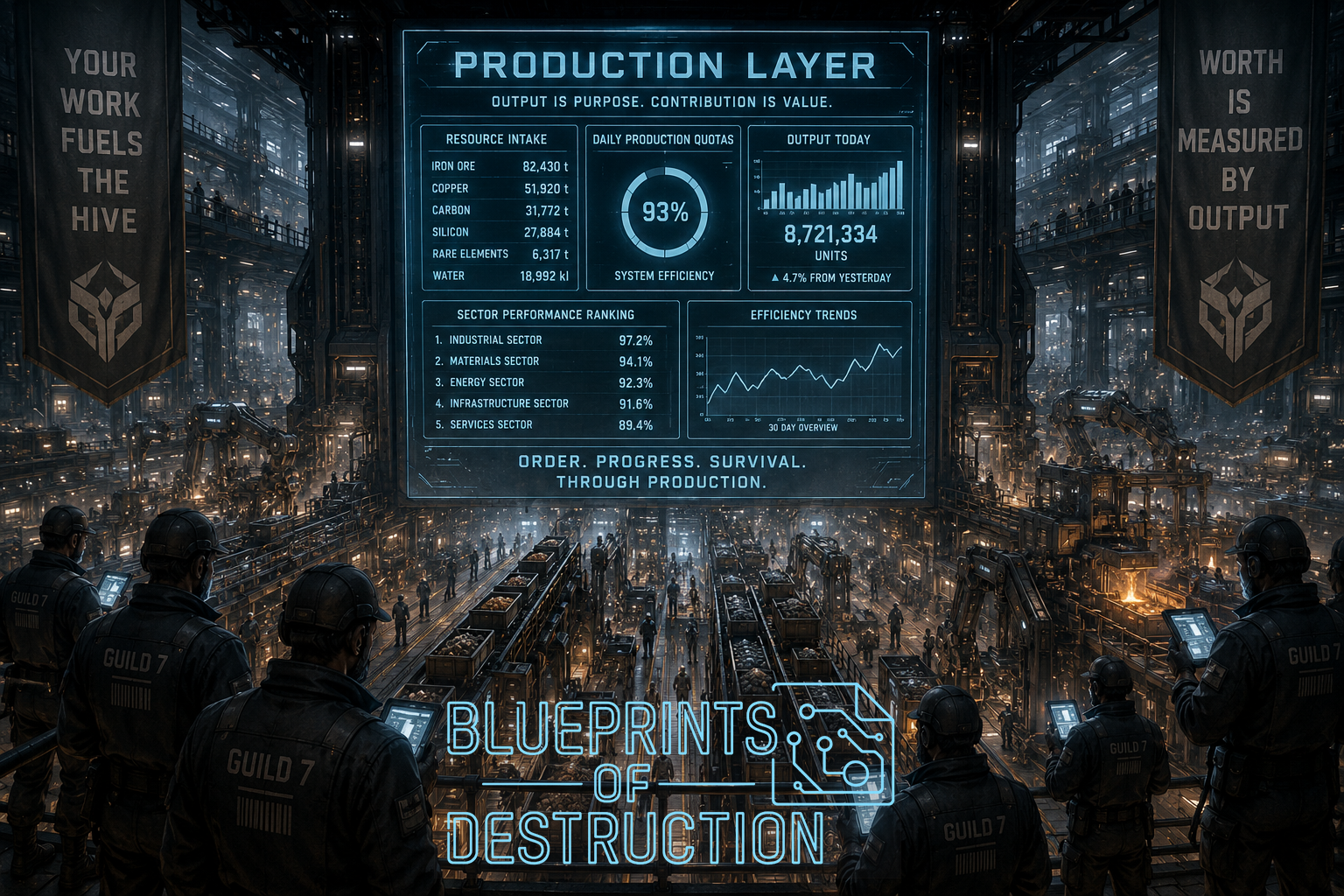
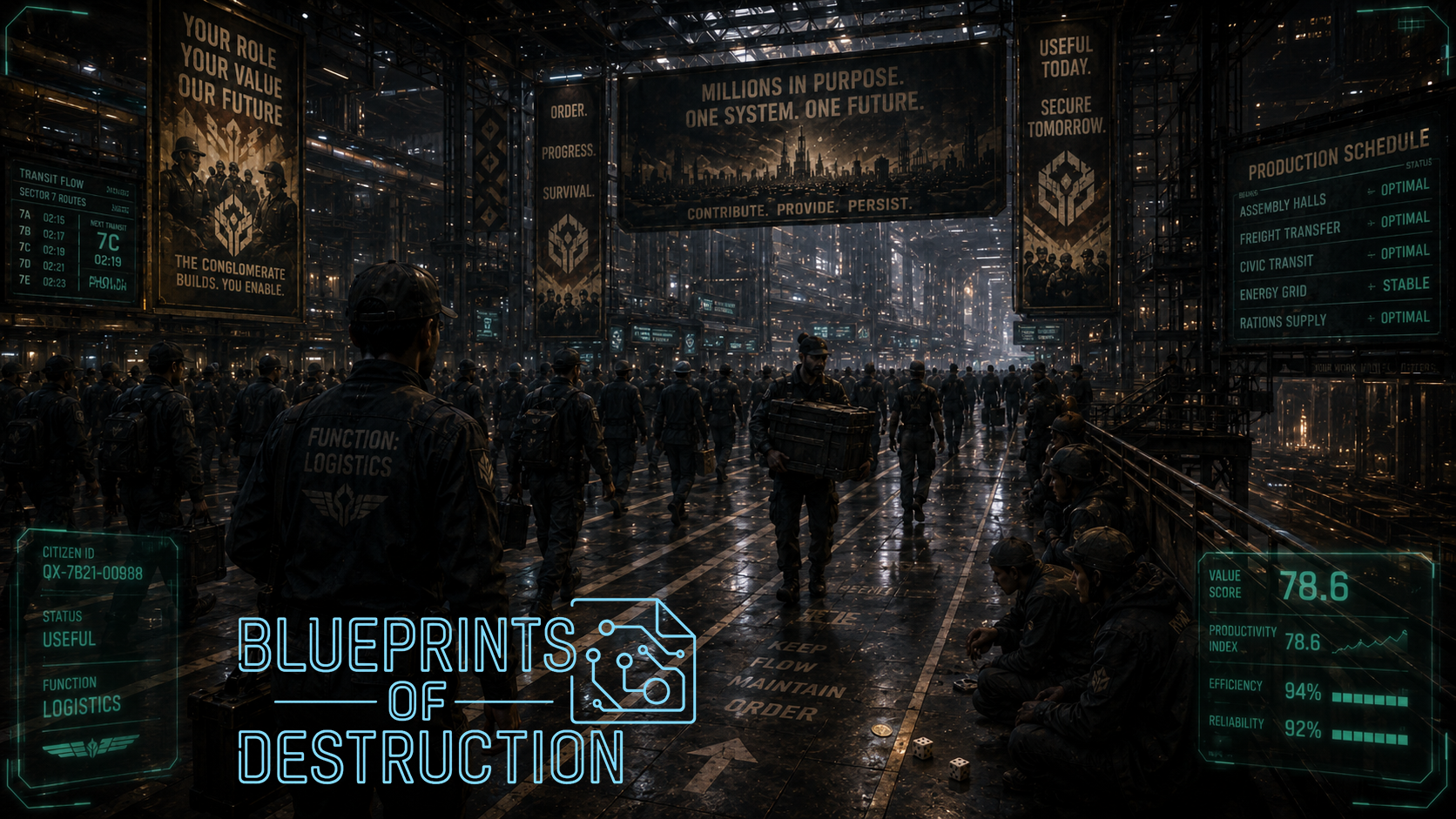
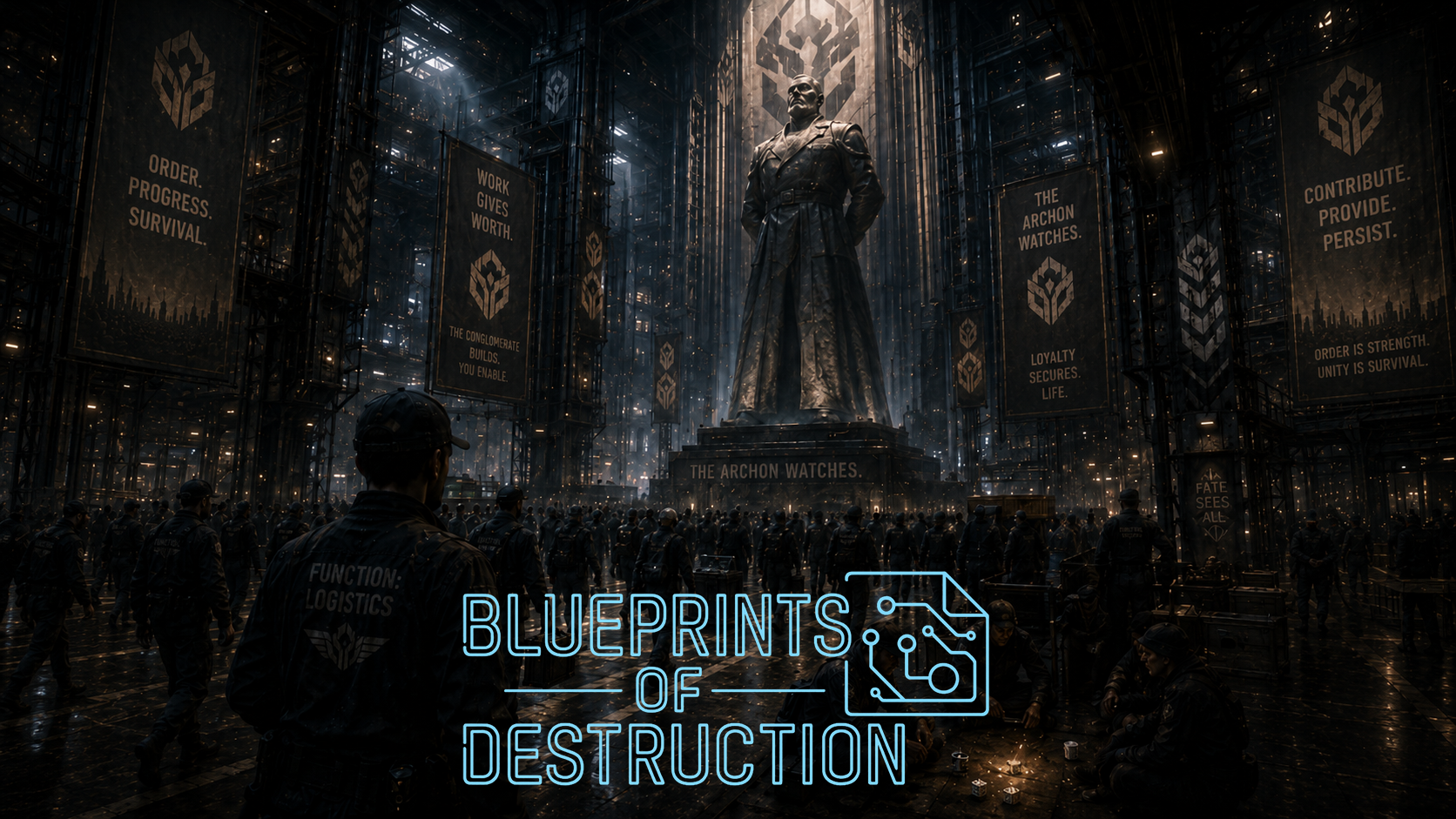
Qualx's core ideology is production. This is how the Hive created the quad-city. A production-minded foundation facilitates the provision of materials for the Hive. The entire reason the system exists is for material output, progress, and order as it facilitates efficiency.
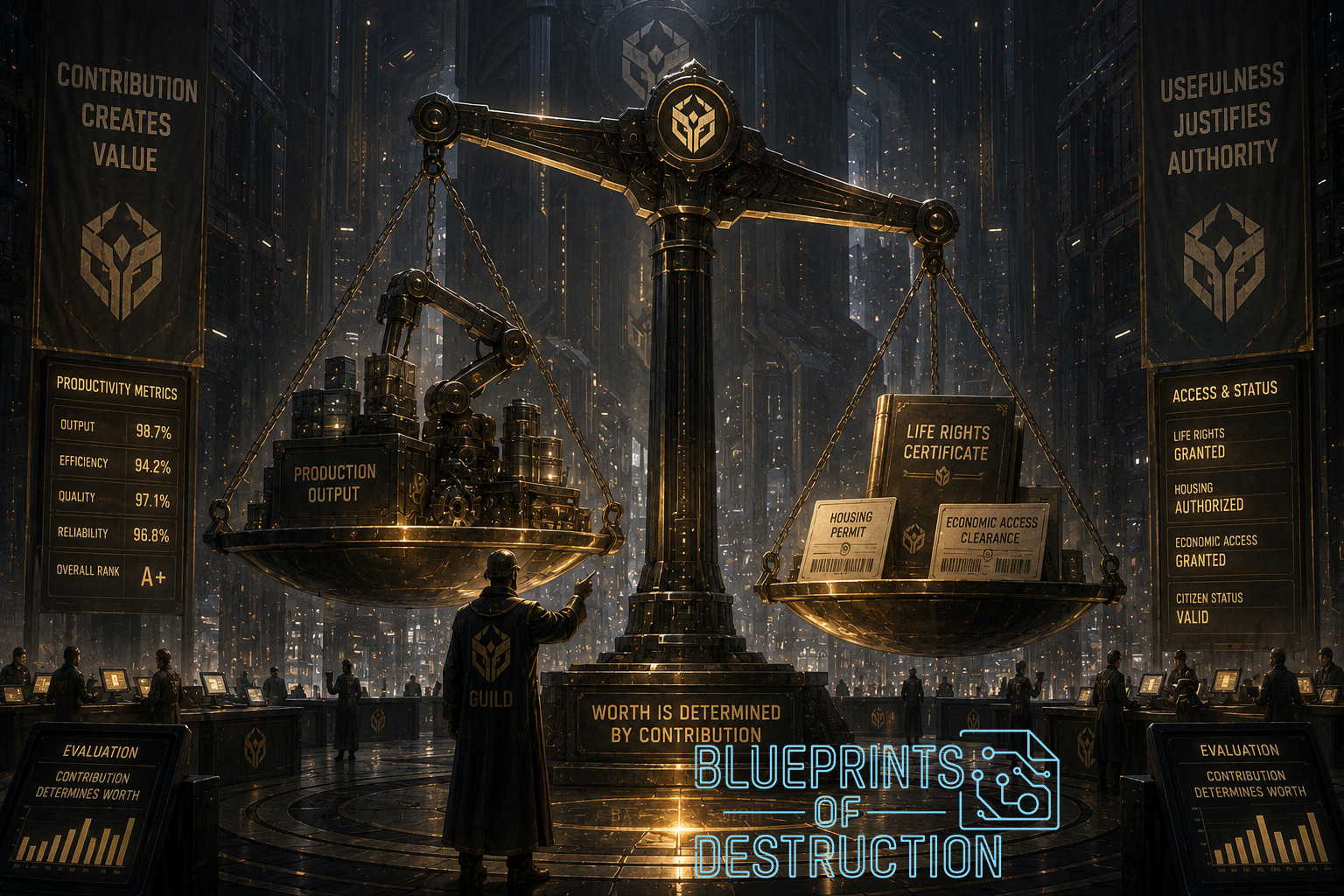
Production has become moralized as a result of this foundational philosophy. For Qualxians, contribution is value. Each system, whether that be law, Life Rights, or economic access, reinforces the belief that function determines worth. Usefulness is what justifies authority and control.
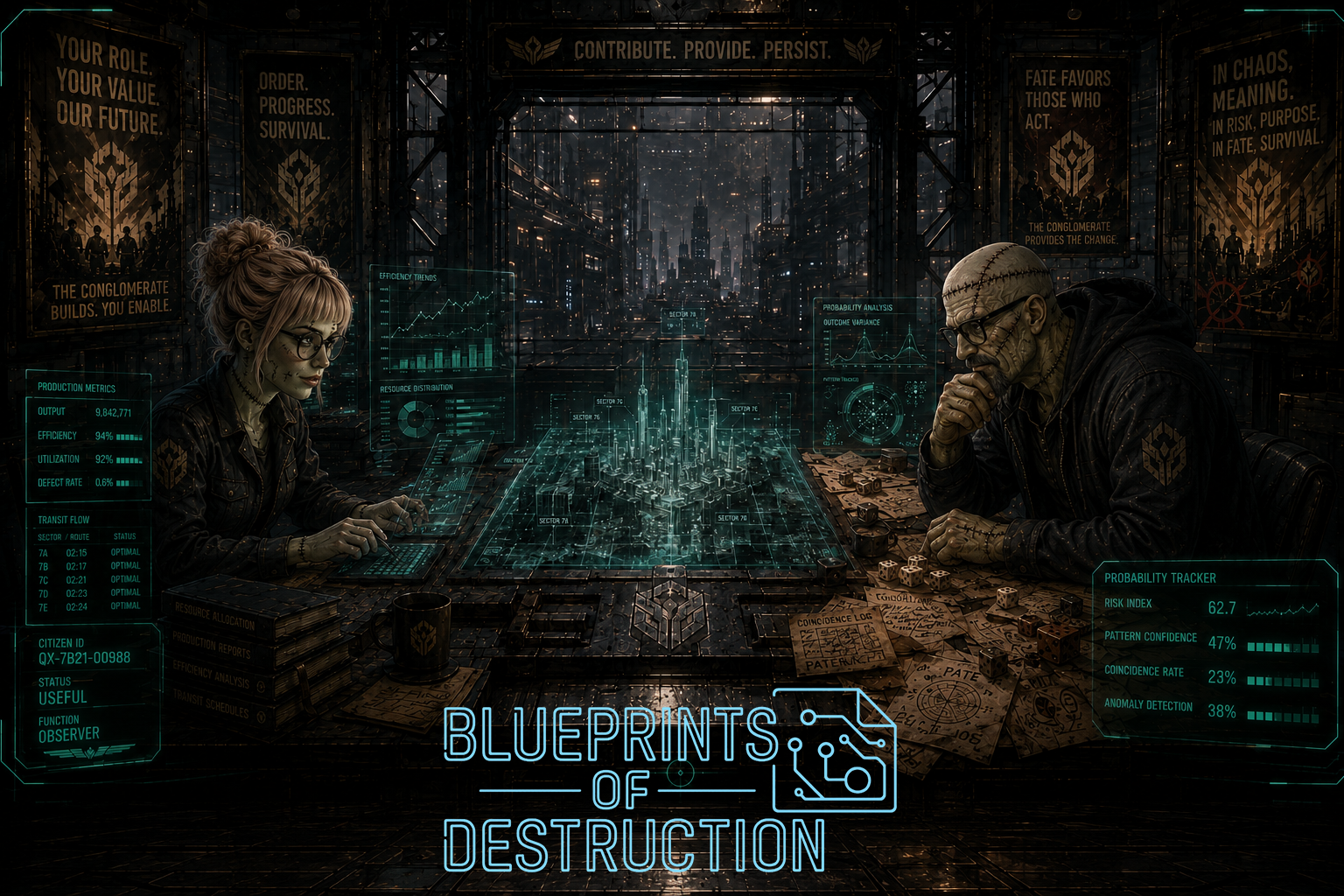
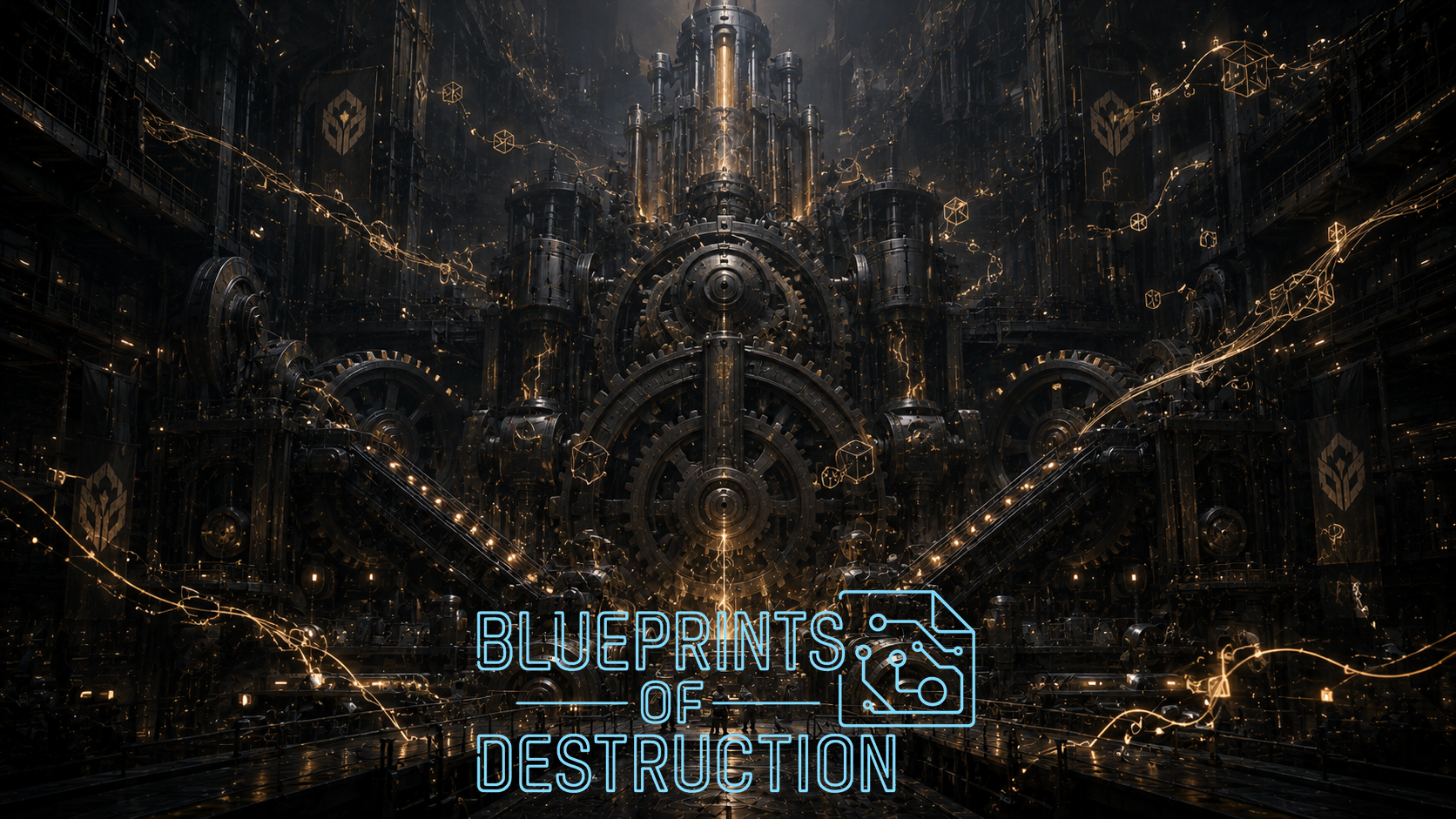
Outside of production as the dominant ideology, Fate exists as a quieter counter ideology. Fate, within Qualx, is understood not as divine will, but as chance. The ideological embodiment of an impersonal force operating beneath the visible systems.
Fate is more an embodiment of statistics, the incidental, and the inconvenient. There are fringe individuals that place greater weight on Fate than the broader population. These individuals interpret coincidence, survival, and loss as meaningful rather than random. While rarely organized and often dismissed, such beliefs quietly undermine the production-driven worldview. They instead suggest that not all outcomes are earned, or even deserved.
Ideological Justification Within Worldbuilding
Ideology is critical when examining the world building components of your world. Whether that is an appeal to divinity, rule from below, or a completely separate form of justification, understanding how characters within your world justify their actions is a crucial part of good storytelling.
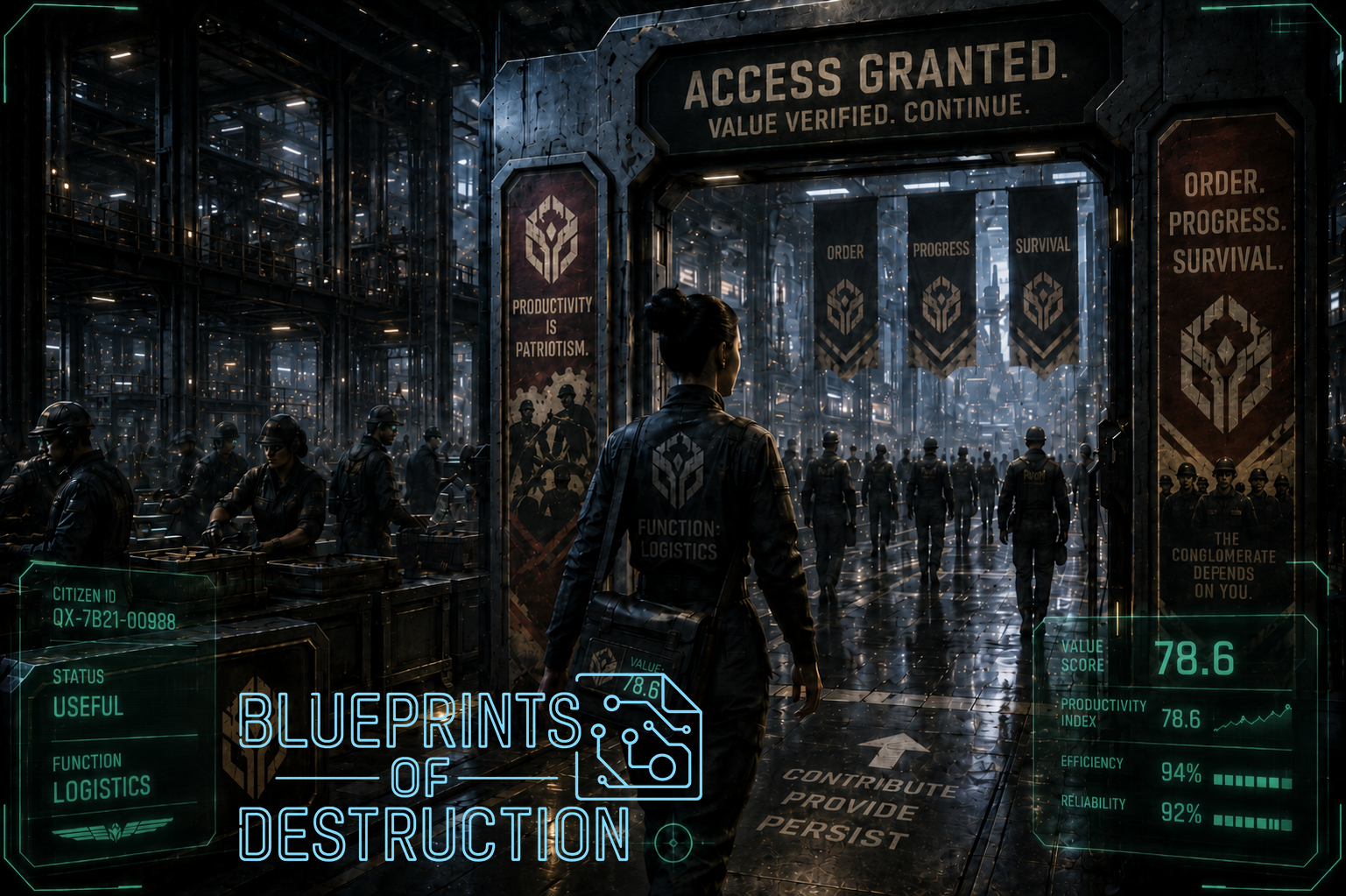
Qualx logical justifications give meaning to production and the harsh systems that exist within the quad-city. Output justifies cruelty under the guise of the continuation of the system, and creates a population that self-polices under the banner of usefulness.
The contrast of the ideologies of production and Fate allows for characters who don't fit neatly into the system, and creates ideological juxtaposition that can be worked into the narrative for societal texture and depth.
Fate, as a concept, doesn't overthrow or overpower the core ideology of Qualx, instead leaking through to subtly introduce a doctrine to counter the mandates of the Hive.
Determining Your World's Core Ideology
Step 1: Define Survival Needs
What must society secure to continue existing?
What resources, behaviors, or conditions are non-negotiable?
Step 2: Identify What Is Rewarded
What earns status, protection, or privilege?
What does society view as valuable?
Step 3: Morality
What behaviors are framed as good, not just legal?
What actions are condemned (if any) even when they cause no harm?
Step 4: Examine Punishment
What is punished most severely?
What are those punishments designed to instill?
Step 5: Justification
How does power explain itself?
Is this justification openly taught or silently assumed?
Step 6: Identify Ideological Tension
Are there any fringe beliefs, myths, or alternative philosophies?
Are these alternative belief systems tolerated, suppressed, or exploited?
Step 7: Stress-Test Ideology
In a crisis, what values are sacrificed first?
What would society destroy in order to preserve itself?
Final Check
Can this ideology function without constant enforcement?
Does it justify harm while appearing reasonable?
Does it pressure individuals when no one is watching?
Core ideology gives a world its heartbeat. In Qualx, production sets the pace, even as Fate whispers quietly from the background. These ideologies mix together and create pressure and conflict.
Understanding the beliefs of your world makes it easier to build characters, choices, and moments that feel real inside of the world. Core ideology gives you the paper on which you can craft your own Blueprints of Destruction.