How to Build Information Control Into Your Fictional World
Let's explore information control and how it strengthens your worldbuilding toolkit. Before we dive deeper, let's revisit the fifteen foundational questions that help shape a world.
Fifteen Core Questions of Qualx (Collapsible)
Fifteen Core Questions of Qualx (Collapsible)
Structural and Foundational Questions
1. Founding Principle: What was the original purpose or event that led to the formation of Qualx's governing body?
2. Power Source: Who or what grants authority in Qualx? Is authority granted by the people, an inherited class, or divine mandate?
3. Political Hierarchy: Does Qualx have a single central government, or multiple autonomous city-states that operate under one banner?
4. Guilds and Governance: How does the Guild function within the overall government structure? What groups, arms of government, organizations, corporate entities, or separate power blocs interact? Who negotiates with whom?
5. Citizenship and Life Rights: How are Life Rights granted, suspended, revoked, or used as currency? And who has the authority to execute and activate these transactions?
Administrative and Legal Questions
6. Law Enforcement: Who enforces law and order in Qualx? Is it a police-like structure, a military force, mindless automatons, Guild-appointed agents, or is there something darker and more mysterious at play?
7. Judicial System: Who administers justice? Are there trials, arbitration councils, judges, natural disasters sent by gods, or Guild tribunals?
8. Economic Control: What serves as currency in Qualx? And is the economy state-run, Guild-driven, capitalist, resource-based, or is it some kind of hybrid system?
9. Territorial Management: How is land and resource distribution managed? Is there private ownership, state assignments, or a link between Life Rights and the acquisition of raw materials?
Cultural and Ideological Questions
10. Core Ideology: What is the prevailing philosophy or moral compass of the government or people? What mindset helps determine order, progress, control, or survival?
11. Religion and Power: Does religion have any role in Qualx? If so, is it used to legitimize or challenge authority?
12. Information Control: How is knowledge and communication regulated? Is it open and free, heavily censored, or filtered through some kind of in-story gatekeeper or censor?
Political Dynamics
13. Conflict and Rebellion: What forms of dissent exist? Are there underground movements, rival factions, sanctioned opposition, or is it a free-for-all?
14. Military Role: If there is an army? Is it a protector of the people, an enforcer of the regime, or is it fragmented and bureaucratically useless?
15. Foreign Relations: Does Qualx interact with other peoples, nations, or worlds, or is it isolated and self-contained?
Information Control and Fear
Informational control always stems from a place of fear. In order to find out what the world fears, ask:
- What is the ruling system most afraid of?
- What kind of knowledge would destabilize the world?
- What truths would shatter public trust?
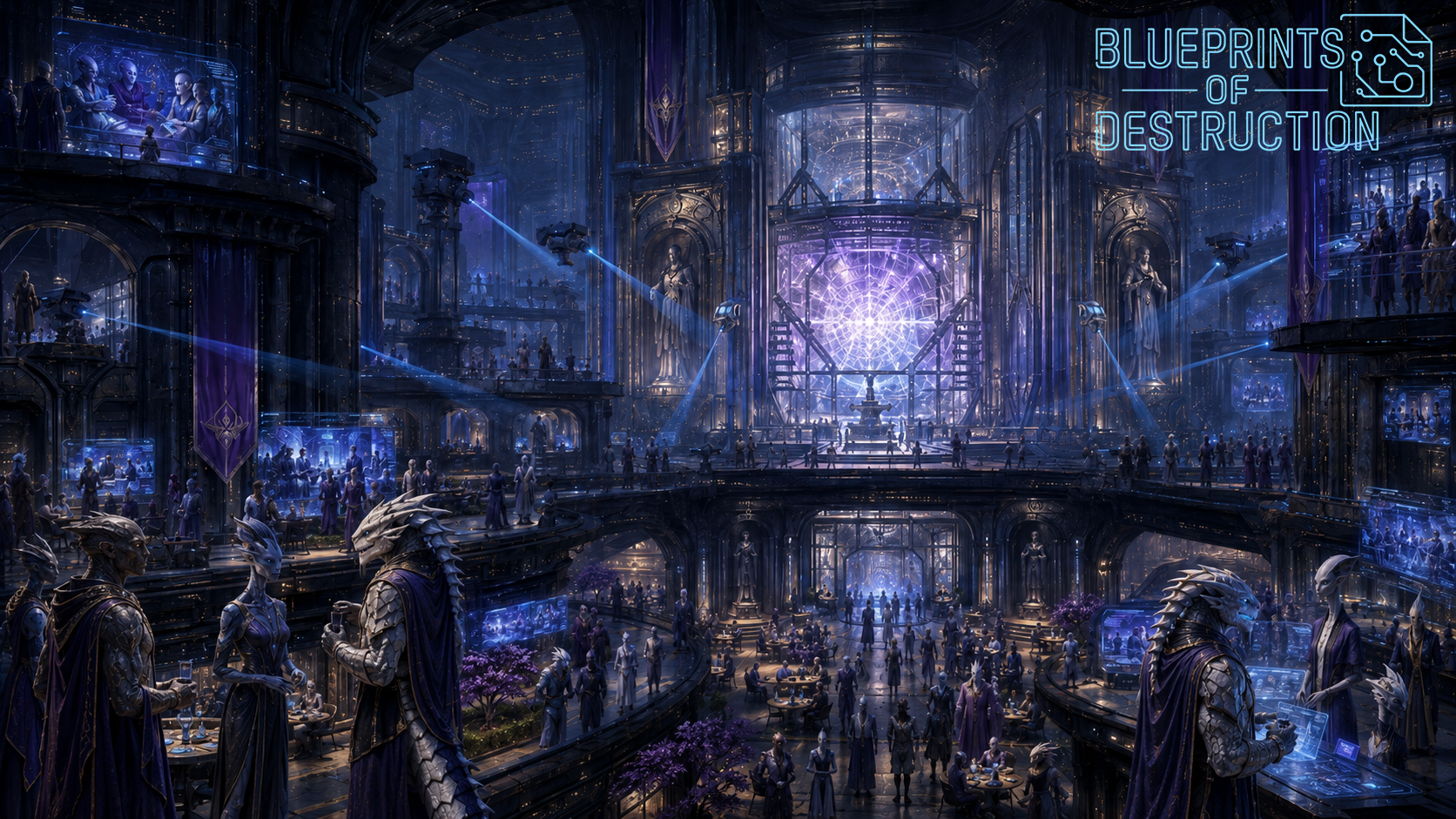
For example, if a world fears stagnation, information may be open but competitive. Once you understand what your system fears, you understand how it controls communication.
Information control is more than cosmetic choice; it is a pressure system. It determines:
- Who knows the truth
- Who can act on the truth
- Who benefits from ignorance
- How rebellion is possible
Information Control in Qualx
If we turn to look at how Blueprints of Destruction handles information control, a very interesting picture begins to form.
Above all else, the ruling system is afraid of losing power over the citizens. This is why the Conglomerate filters information so heavily. Knowledge exists that would both destabilize the world and shatter public trust.
If the citizens of Qualx ever discover they are merely a machine in service to another, their worldview would be broken. One of the main goals of the ruling authority (The Conglomerate) is to keep the citizens at ease and producing. The citizens must never know they are harvesting resources for an outside entity, and must never have information that the Hive exists.
Authority
Information control mirrors the structure of authority. Is your world's authority structure:
- Vertical (a top-down hierarchy)?
- Lateral (hierarchy through distributed networks)?
- Fragmented (multiple competing powers)?
The power structure will influence whether access to information is bottlenecked or widely distributed. If authority is distributed, information may be open but manipulated through social pressure instead of hard censorship.
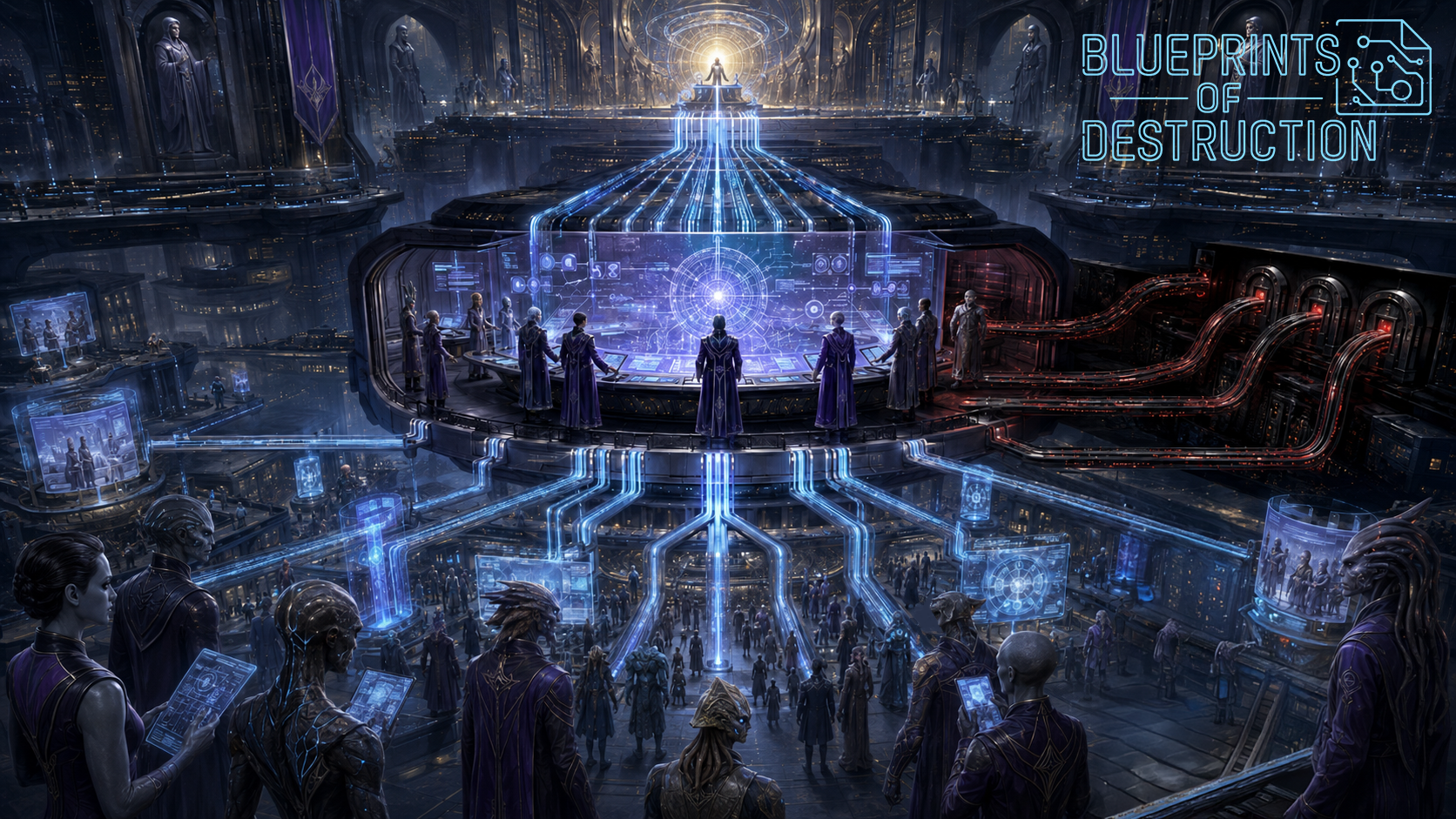
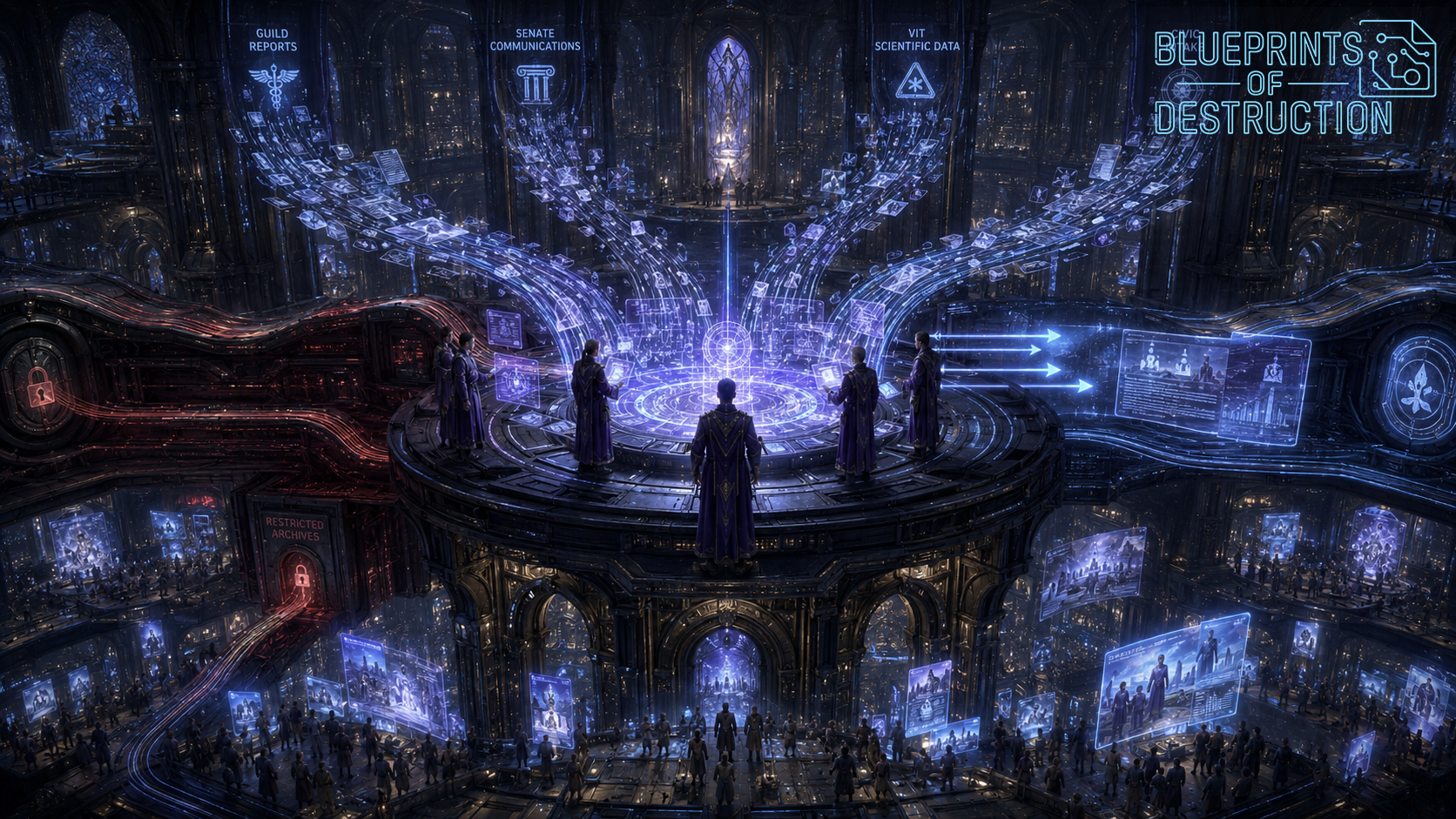
In Qualx, because authority is a strict vertical hierarchy, information comes directly from the top. The information is filtered directly from the Grand Archon's aurate. The Harmonic Concordats determines what information citizens see and how it is presented, based on how they determine the mandate of the Grand Archon. A counter-system of information does exist, but it is withheld from many to keep society from collapsing.
Technology
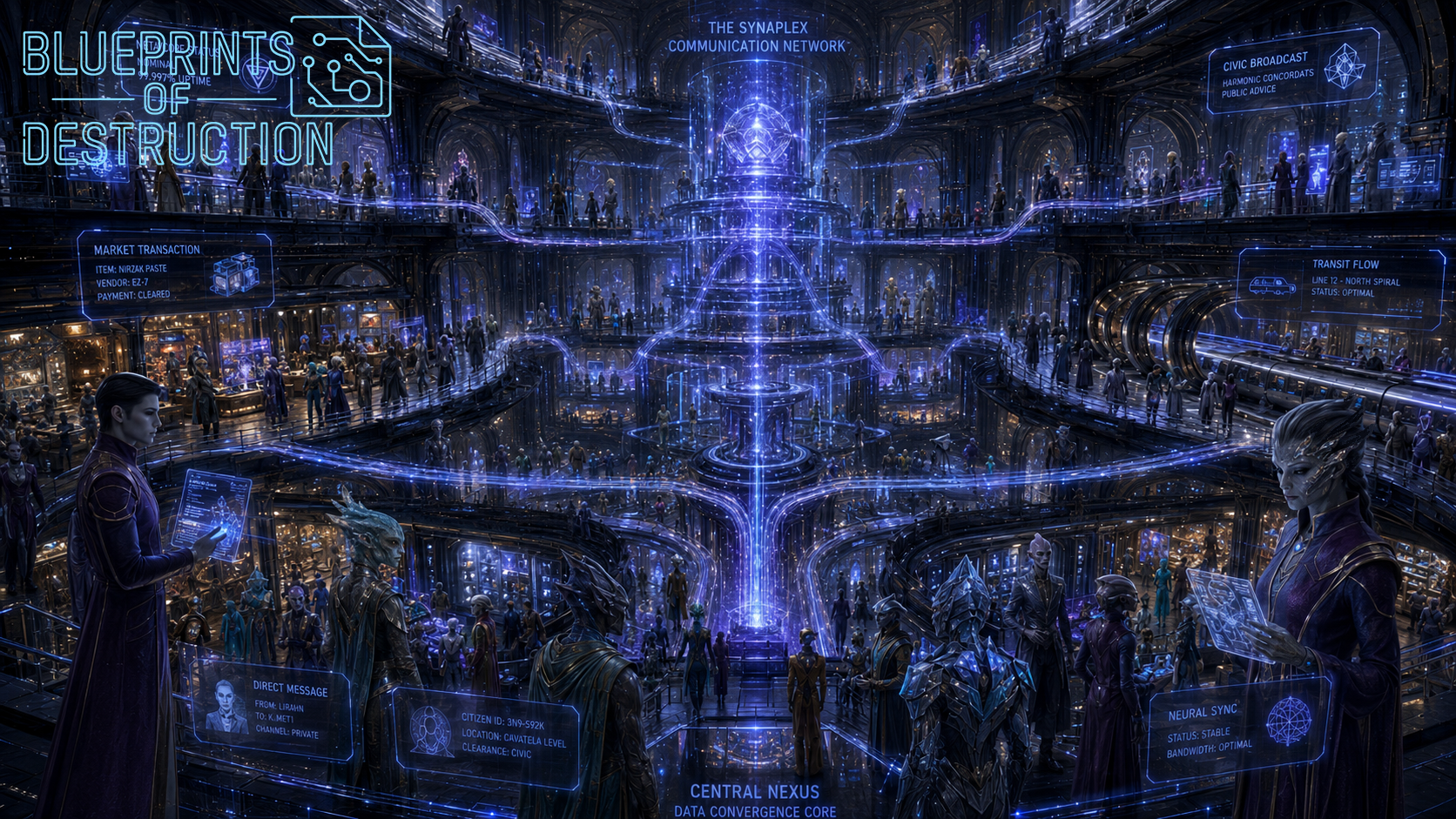
Technology controls how information is spread. In a medieval world, information might spread through rumor and town criers. In a cyberpunk world, it might flow through algorithms and automated moderation. In Qualx, information flows down from the Harmonic Concordats.
In order to determine how technology controls your worlds information, ask:
- How fast does information travel?
- Who owns the infrastructure?
- Is communication traceable?
- Is privacy possible?
Control
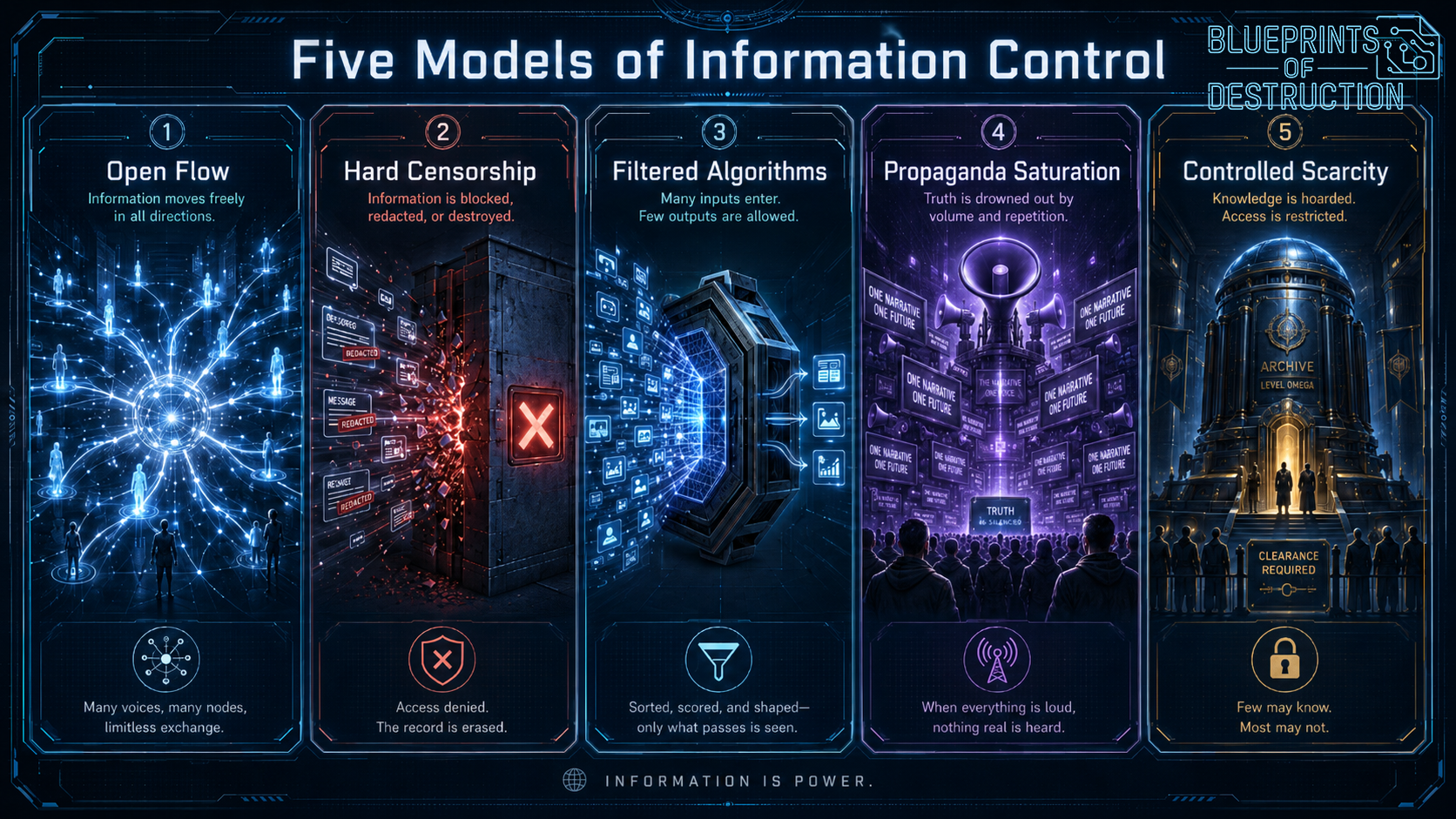
The method of informational control is usually one of five primary models:
- Open Flow
This is where information is free, and control is through persuasion and culture. - Hard Censorship
This is where content is blocked, erased, or punished. - Filtered Algorithms
This is where information technically exists, but most people aren't allowed to see it. - Propaganda Saturation
This is where truth is buried under overwhelming narrative. - Controlled Scarcity
This is where only elites have access to deeper knowledge.
Multiple types of informational control can exist simultaneously. Each aspect of control can be a world building tool that can give the reader a unique perspective on the different aspects of the world you have created.
In practice, Qualx combines hard censorship with filtered access and controlled presentation. The Harmonic Concordats keep a tight grip on what information is "acceptable" for publication.
The Citizens' Perspective
This is the element that takes information control from a dry, nuts-and-bolts system, and transforms it into a tool that you can use in your own storytelling. By designing how the system maintains the narrative from the characters' perspectives, instead of through the government's, you can avoid overburdening the story with dry, pedantic details.
To better understand how characters feel within the world, ask yourself:
- Do the people feel informed?
- Do they feel confused?
- Do they feel suspicious?
- Do they trust the system?
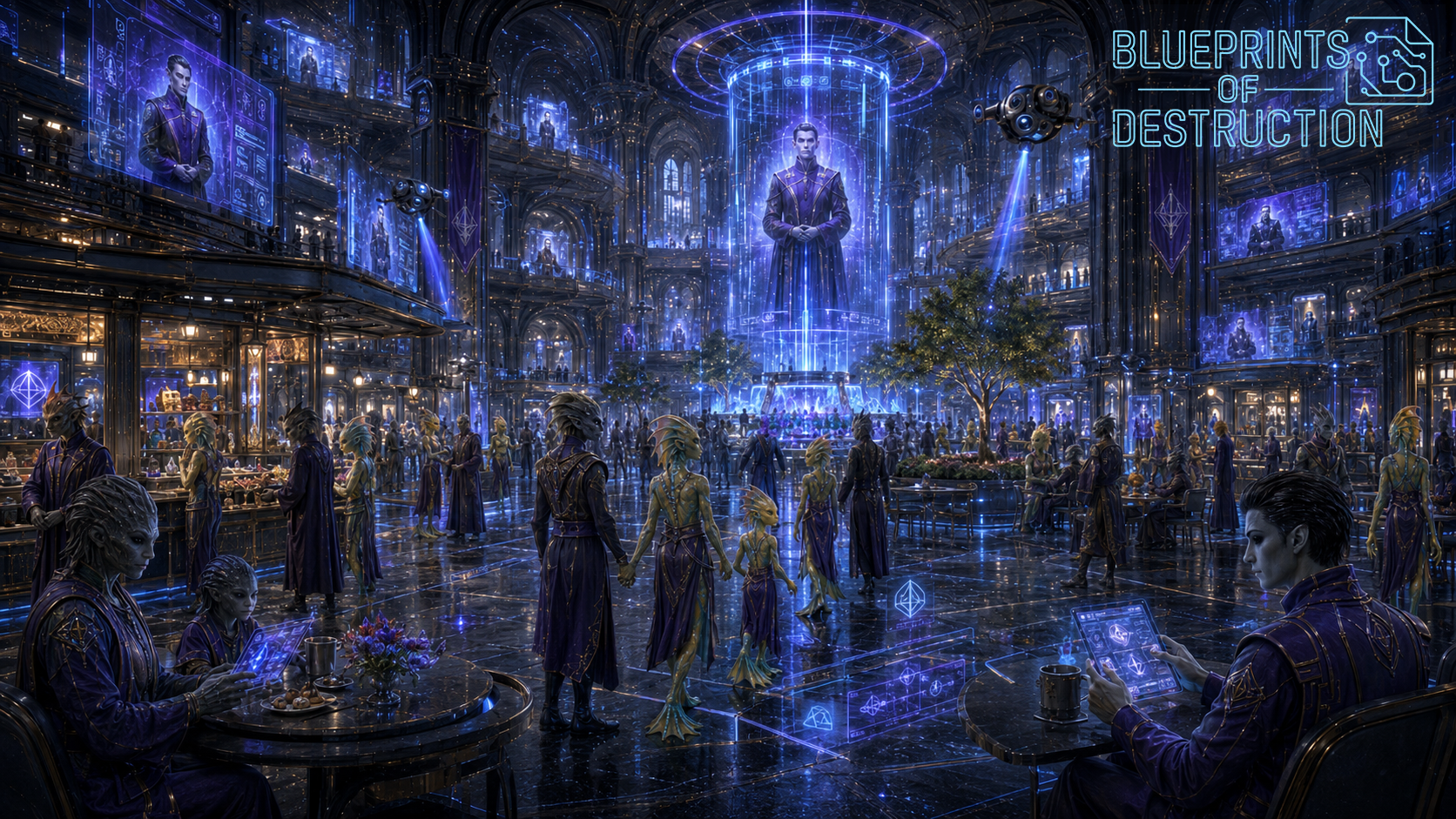
Any system can be brutally controlled, but if a citizen feels stable, that citizen won't resist.
As an example of citizens feeling stable in the world, we can look at Qualx. Outside of a relatively small group of dissenters, most of the citizens are very relaxed and comfortable. They trust in the system.
The Cost
Knowledge has weight, especially in powerful worlds. Is the cost of truth free but socially expensive? Is it a life-ending brush with the forbidden? To help figure this out for your story, ask:
- Is forbidden knowledge illegal?
- Is it dangerous?
- Is it considered spiritually corrupting?
- Is it physically addictive?
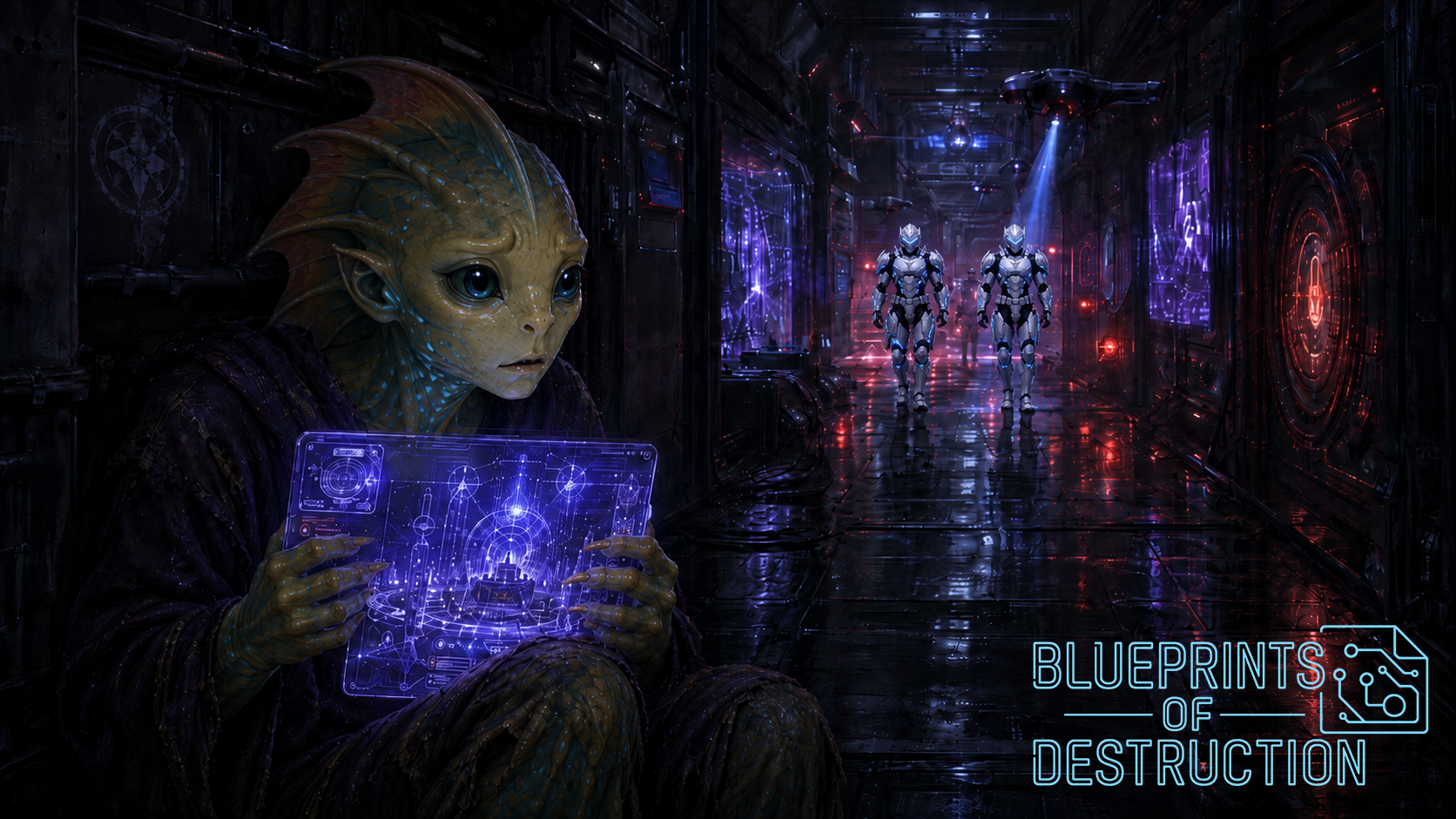
The answers to these questions might affect the entire direction of a character's story.
For Qualxians, getting ahold of the wrong information can mean death. If someone in the Quad-City is found with information deemed dangerous or destabilizing, there is no recourse.
Visible or Invisible
This question adds the finishing touches to your world's system of information control. The effect of this is subtle, but makes a huge impact.
Visible Control or Invisible Control?
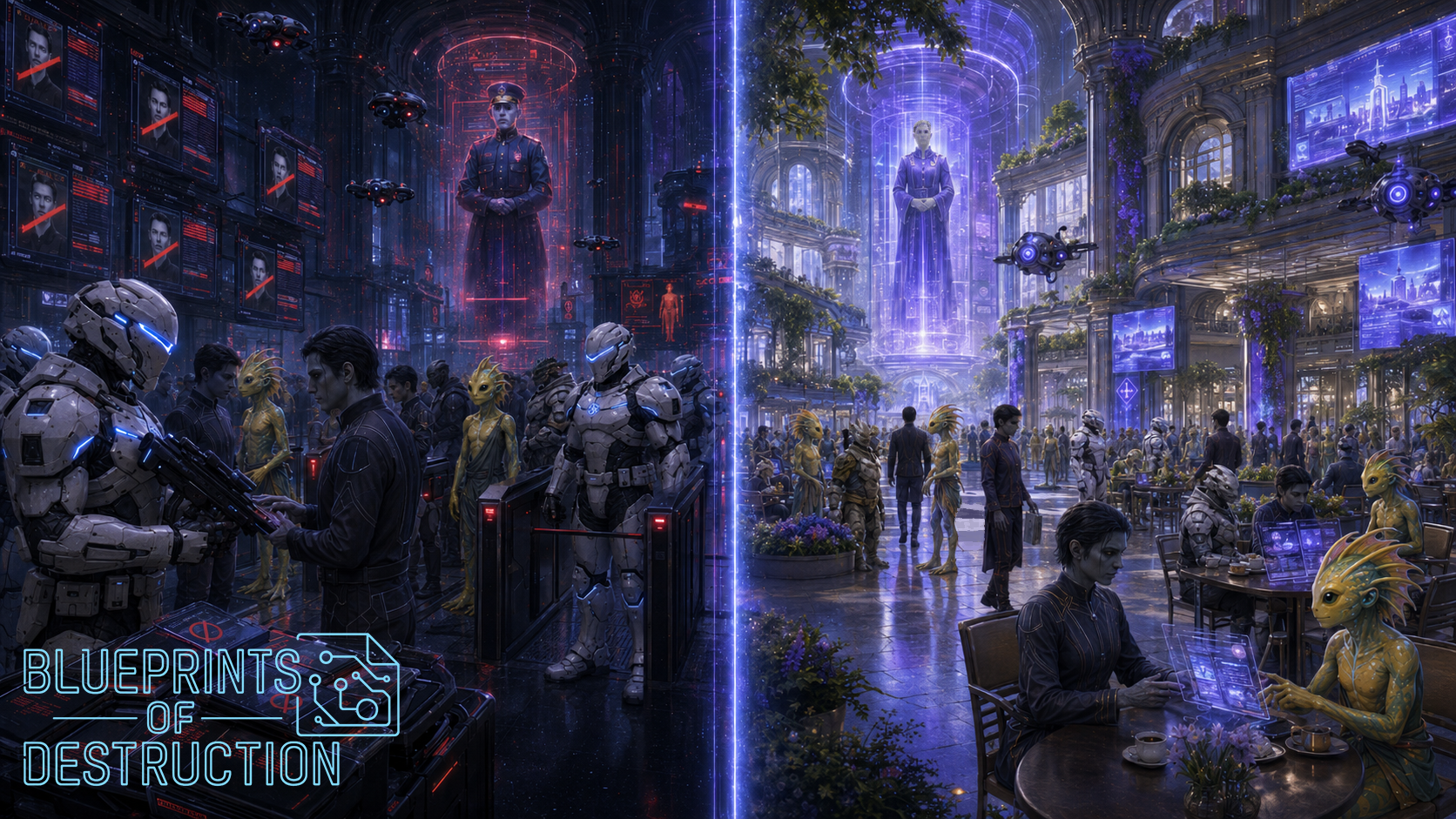
Obvious versus invisible control can be a powerful tool. Characters can be placed in unique situations when they know they are in a system. But if a character never realizes they are in a system, many powerful dilemmas, positions, and revelations can be explored. Carefully decide, with the help of the simplified framework below, the control your system will exert.
A Simplified Framework
If the above information feels too overwhelming, you are not alone! Developing even the smaller components of a world can be daunting. Here are some questions to help further clarify your answers:
- What truth would collapse my world?
- Who benefits from the truth staying hidden?
- How is it hidden?
- What happens to someone who uncovers it?
- Does the average citizen have reason to suspect the system?
- What steps must be taken in order to uncover the truth?
By answering these questions, you can better understand how your characters perceive the world around them. With that clarified understanding, you can see what traps your character into pressures that move your story forward. After that it is up to you to weave the fabric of your character's reality. And that can only be done by you putting words down on paper, and unleashing your inner author!
