Territorial Management in Worldbuilding
Land ownership, Resources, and Government
Fifteen Core Questions of Qualx (Collapsible)
Fifteen Core Questions of Qualx (Collapsible)
Structural and Foundational Questions
1. Founding Principle: What was the original purpose or event that led to the formation of Qualx's governing body?
2. Power Source: Who or what grants authority in Qualx? Is authority granted by the people, an inherited class, or divine mandate?
3. Political Hierarchy: Does Qualx have a single central government, or multiple autonomous city-states that operate under one banner?
4. Guilds and Governance: How does the Guild function within the overall government structure? What groups, arms of government, organizations, corporate entities, or separate power blocs interact? Who negotiates with whom?
5. Citizenship and Life Rights: How are Life Rights granted, suspended, revoked, or used as currency? And who has the authority to execute and activate these transactions?
Administrative and Legal Questions
6. Law Enforcement: Who enforces law and order in Qualx? Is it a police-like structure, a military force, mindless automatons, Guild-appointed agents, or is there something darker and more mysterious at play?
7. Judicial System: Who administers justice? Are there trials, arbitration councils, judges, natural disasters sent by gods, or Guild tribunals?
8. Economic Control: What serves as currency in Qualx? And is the economy state-run, Guild-driven, capitalist, resource-based, or is it some kind of hybrid system?
9. Territorial Management: How is land and resource distribution managed? Is there private ownership, state assignments, or a link between Life Rights and the acquisition of raw materials?
Cultural and Ideological Questions
10. Core Ideology: What is the prevailing philosophy or moral compass of the government or people? What mindset helps determine order, progress, control, or survival?
11. Religion and Power: Does religion have any role in Qualx? If so, is it used to legitimize or challenge authority?
12. Information Control: How is knowledge and communication regulated? Is it open and free, heavily censored, or filtered through some kind of in-story gatekeeper or censor?
Political Dynamics
13. Conflict and Rebellion: What forms of dissent exist? Are there underground movements, rival factions, sanctioned opposition, or is it a free-for-all?
14. Military Role: If there is an army? Is it a protector of the people, an enforcer of the regime, or is it fragmented and bureaucratically useless?
15. Foreign Relations: Does Qualx interact with other peoples, nations, or worlds, or is it isolated and self-contained?
Territorial Management as Worldbuilding
How is land and resource distribution managed: private ownership, Life Rights, or state assignment?
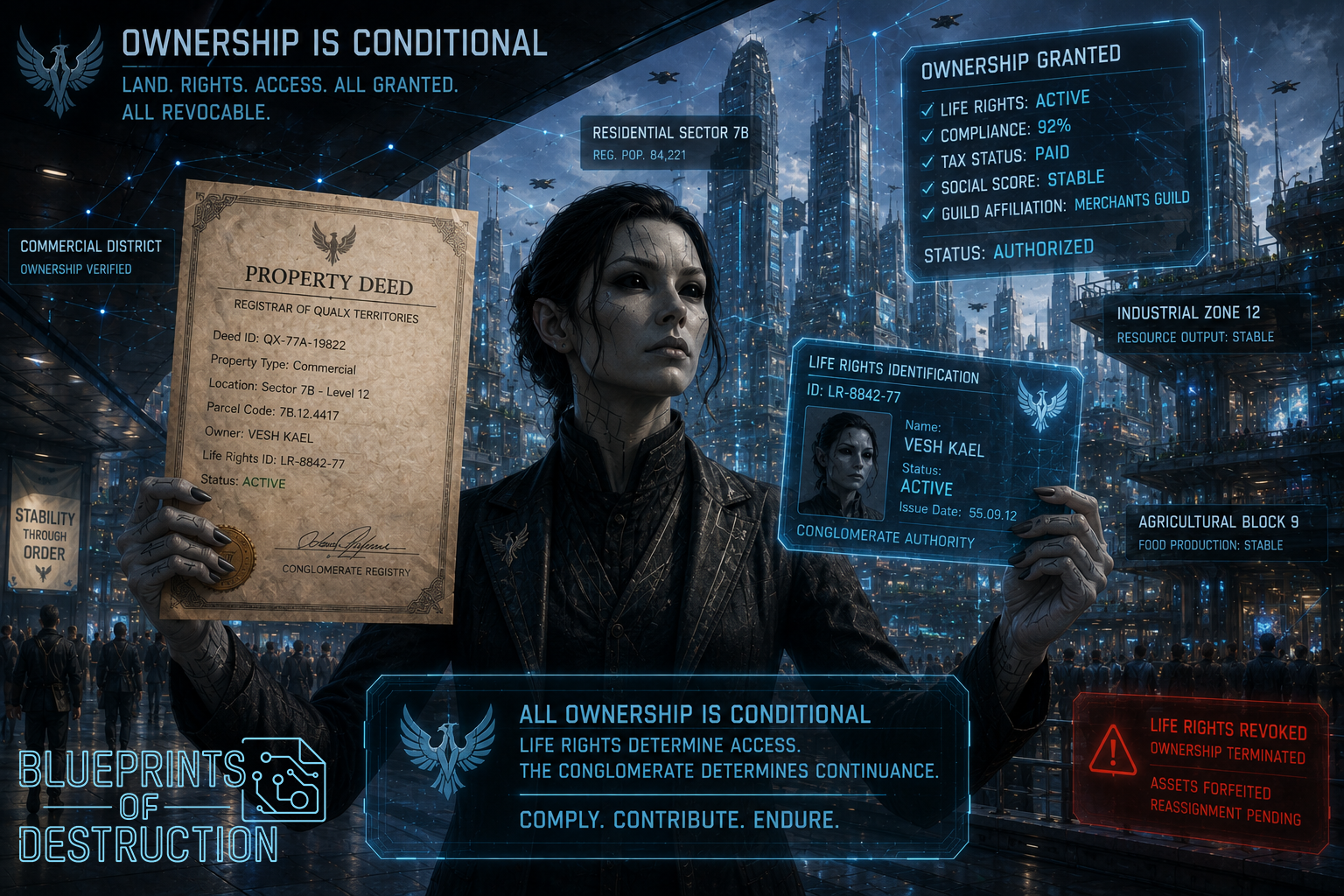
In Qualx, ownership is not a right. Ownership is dictated as a condition of citizenship, as it relates to productivity and financial accessibility. Qualxian individuals do not own anything except as it relates to citizenship and Life Rights. If an individual has full Life Rights, in effect, they can fully own their possessions. With that in mind, Life Rights can be granted, monitored, and even reclaimed.
Ownership of property cannot be technically be revoked, as the ownership of that property is linked directly to the account of the owner's Life Rights. The Conglomerate circumnavigates static ownership through the possible revocation of Life Rights.
Ownership may be dislodged with the movement of Life Rights. If the Conglomerate revokes Life Rights from an individual, there is a risk, and certainly under specific conditions, anything previously owned by that now-former citizen may go to a division of the Harmonic Concordats.
Ownership within Qualx is as interlaced as it is convoluted.
Life Rights, and therefore personal ownership, may be granted, monitored, and reclaimed. Life Rights, by far, are the most valuable currency in Qualx. As a Qualxian, ownership of multiple Life Rights is the best way to help ensure one has the ability to hold onto what they view as their personal possessions.
Territorial management in Qualx is privately held via Life Rights. Those rights are enforced by the Conglomerate.
What Kind of Ownership Exists?
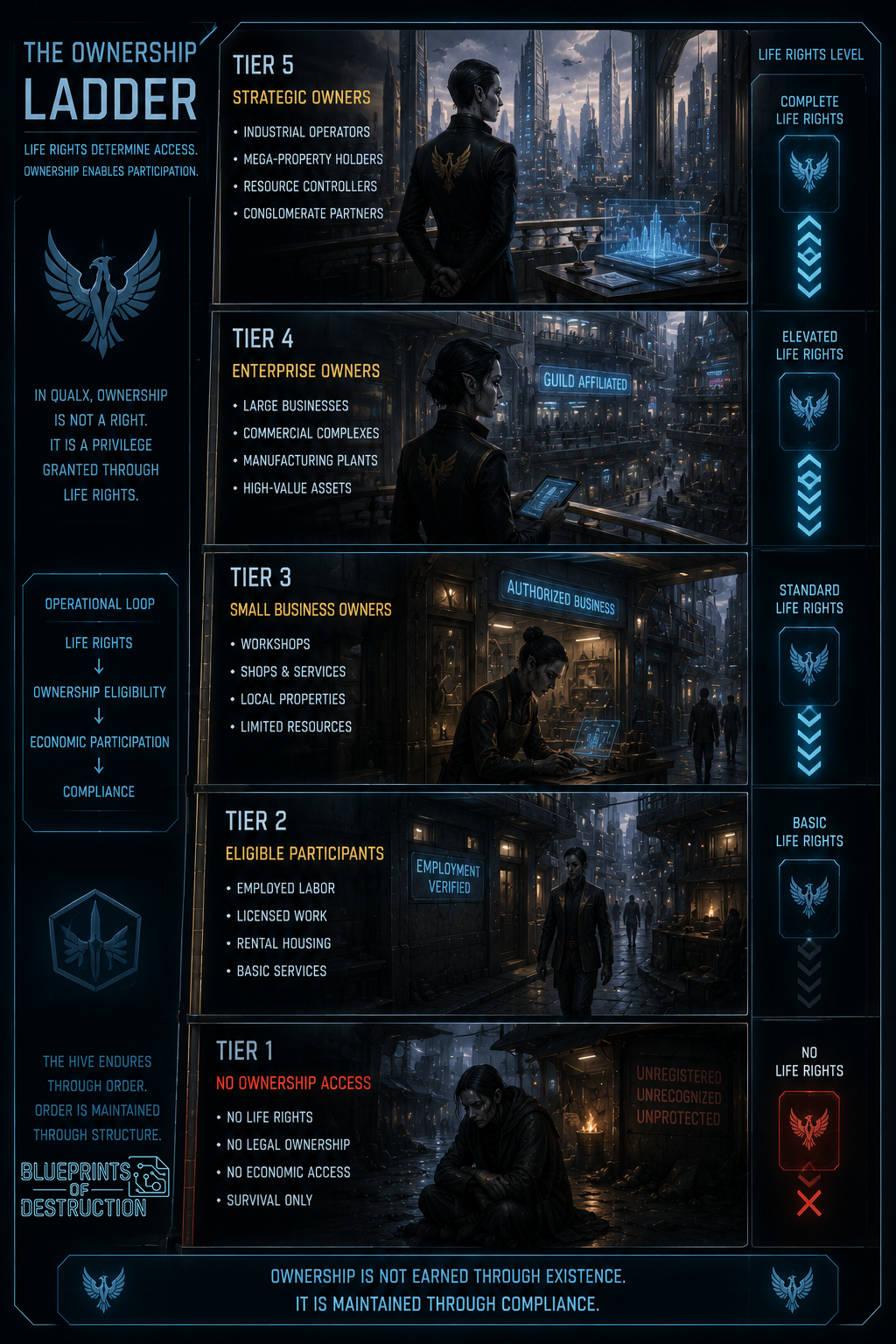
Land, businesses, and resources are privately held. However, ownership is not universal. The gateway to participation is through Life Rights, just as the ability to conduct business is. Those without Life Rights are unable to legally own anything. Life Rights give permission, but not entitlement to.
In addition to this, various factions of Qualxian life would view "ownership" very differently from one another. A Qualxian citizen has one view, a pirate another, the mob something completely different. The conglomerate, while the source of the citizens view point, rarely agrees with those individuals. In addition to that, even unwrits and muzh have a sense of personal ownership, which none of the above may honor or recognize.
This creates an interesting opportunity for characters to clash in worldview and even in what they view as morally correct. The conflict of values stems from each character believing their own view to be true and another to be false.
Ideology as it Shapes Ownership
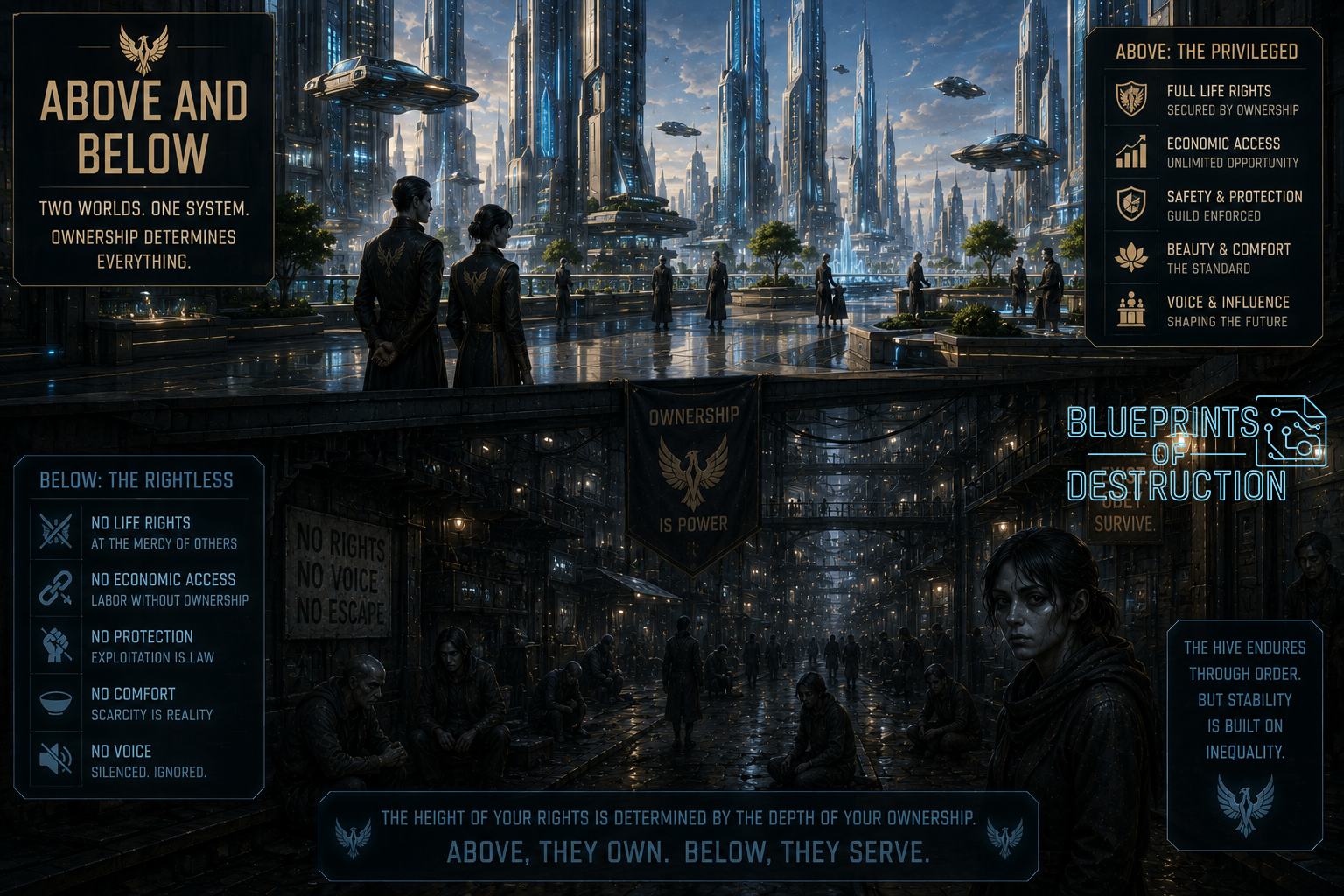
The Conglomerate allows private ownership because it stabilizes society. Distributed ownership reduces unrest and increases compliance. A stable society facilitates high production, which is the Hive's highest interest, and therefore the Conglomerate's main goal. Private ownership is not a kindness. Instead, it is a tool. It produces predictable behavior and measurable results. That efficiency, however, is not without a cost.
Consequences
While private ownership is beneficial to society, it is also how the Conglomerate shows its teeth.
When Life Rights are stripped, the result is also a loss of legal ownership. Confiscated property and businesses are liquidated through controlled auctions. The stripped resources are then offered to those with Life Rights and sufficient finances.
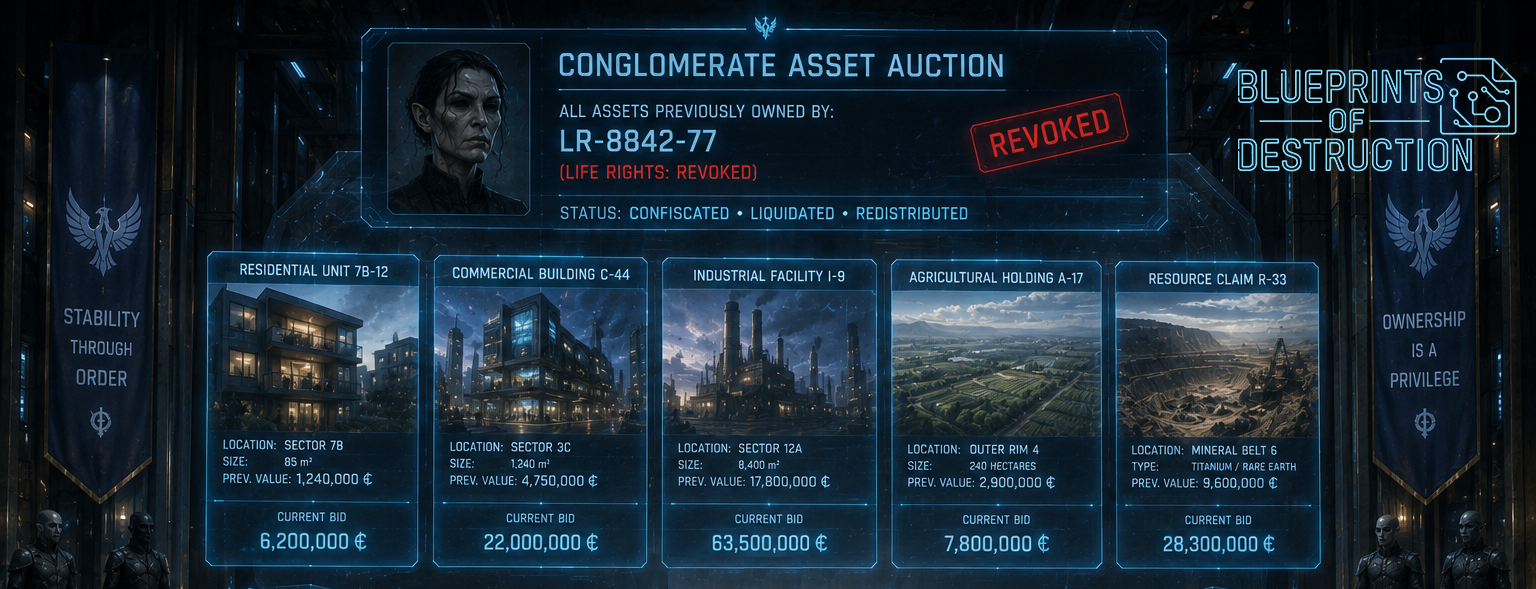
In Qualx, ownership is an illusion. But even this illusion is conditional.
Operational Loop
Loss of Life Rights → Asset Seizure → Auction → "Redistribution"
The Role of Shadow Economies
While the official economies in Qualx are visible and conditional, the shadow economies are adaptive, often invisible, and usually necessity-driven. Much of the shadow economy is mobile or hidden. Within the shadow economies, while Life Rights are often at the center of transactions, one's unique Life Rights status is either unnecessary or entirely irrelevant.
Shadow economies are the complete reverse to the Conglomerate's economy. Even as the Conglomerate is designed for stability, predictability, and efficiency, the shadow economy is made for survival as it traffics in the prohibited. The Conglomerate provides limited resources, if not in quantity, than in selection. On the other hand, the shadow economy traffics in the rare, taboo, and legally excluded. In other words, shadow economies function as the direct foil to the primary system.
If the Conglomerate's system is the light of provision, then the shadow economy fills in the gaps where the Conglomerate's system fails. The shadow economies are necessary for survival for individuals who lack Life Rights, regardless whether they lack them through birth or loss.
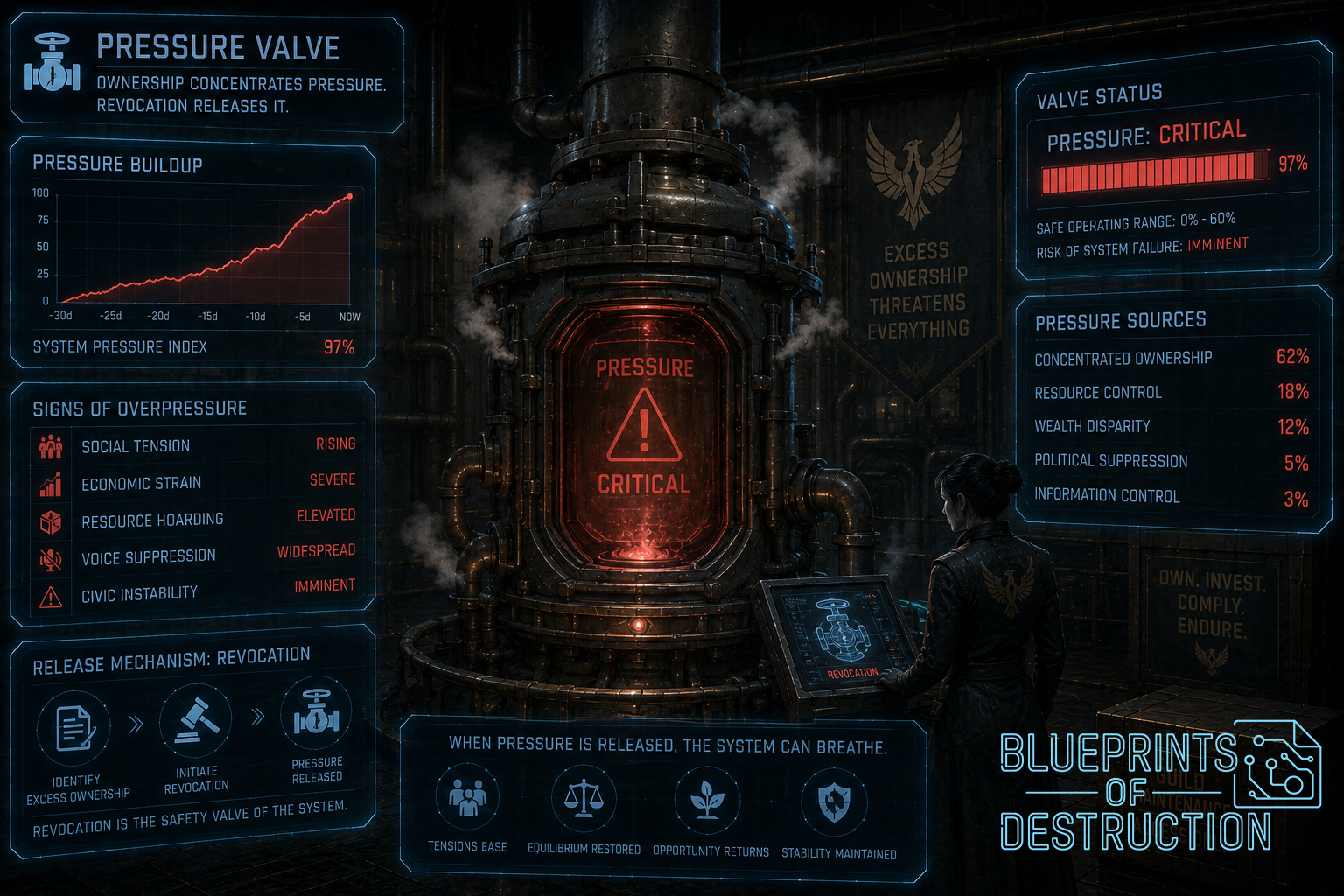
The Conglomerate is aware that these shadow economies exist, and largely tolerates them. These systems act as pressure valves for the Conglomerate's established systems. They absorb both displaced materials, as well as individuals. as they handle the illegal goods the Conglomerate can't or won't work with. Most importantly, it keeps unrest from boiling over. It gives individuals with a need to rebel a way to step outside of the system while still benefiting the whole.
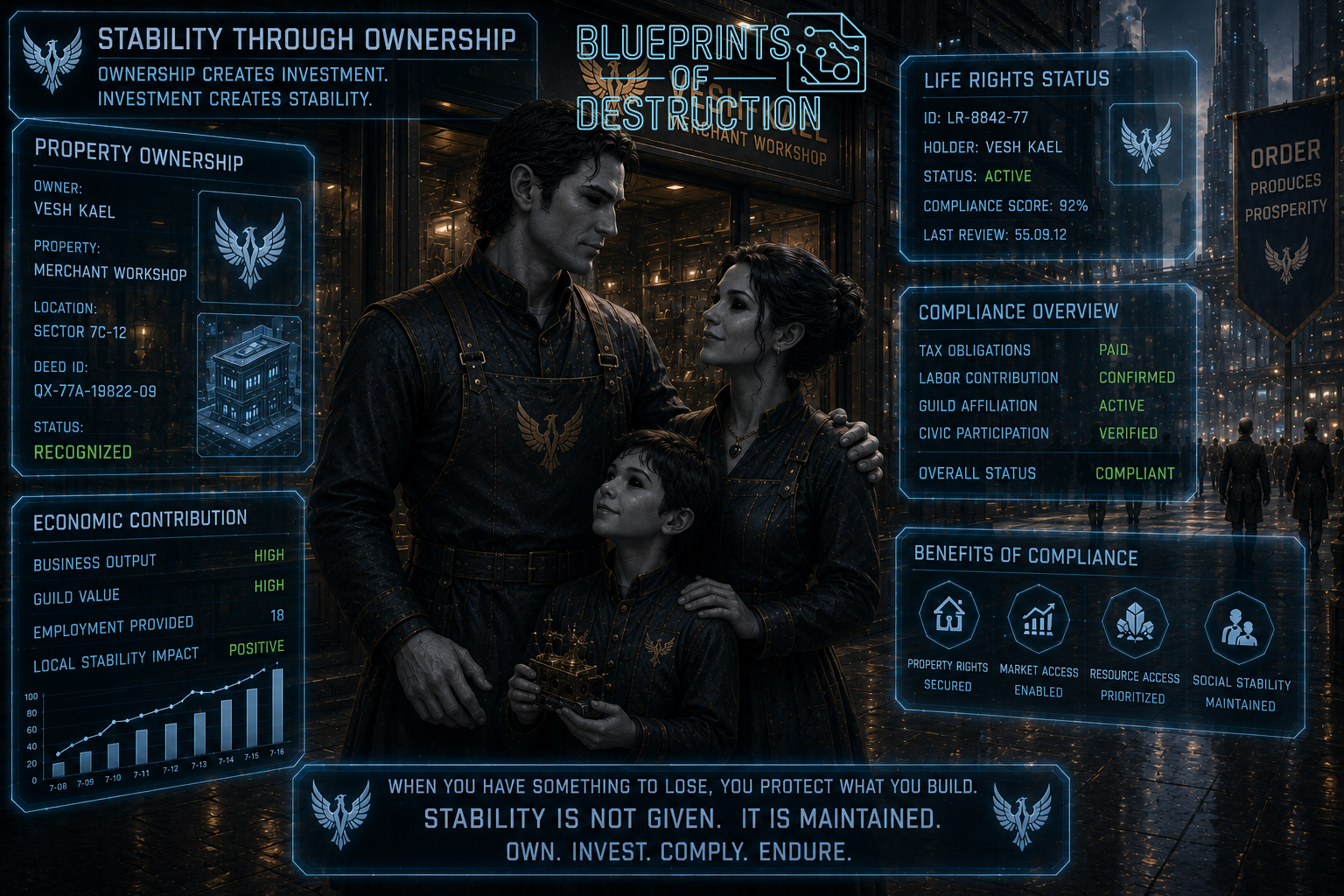
In Qualx, the official economy is designed to produce stability. The shadow economy exists as controlled opposition. It allows for the Conglomerate to condemn the shadow economies publicly, even as they exploit them privately.
Resources are tools. When individuals follow the rules, they are rewarded with stability. When they fall out of the system, the world moves on. Even the shadow economy exists to keep the entire structure from breaking apart.
Worldbuilding backstory is so important because backstory, whether it is for an individual character or for an entire world, layers together to form a complex system. The more you are able to layer these components together, the easier it will be to form a story that is nuanced and detailed. The more complexity and subtlety you can incorporate into your narrative, the easier a reader will be able to immerse themselves into it.
