- Home
- Step-by-Step Story Writing
- Fantasy Worldbuilding: Building a Justice System
Fantasy Worldbuilding: Building a Justice System
Worldbuilding isn't just about the surface: the vast landscapes and mythical creatures. True worldbuilding is about exposing the core elements of a world. Systems, peoples, economics, control, and power. These ideas of power, control, and consequence are the essence of storytelling.
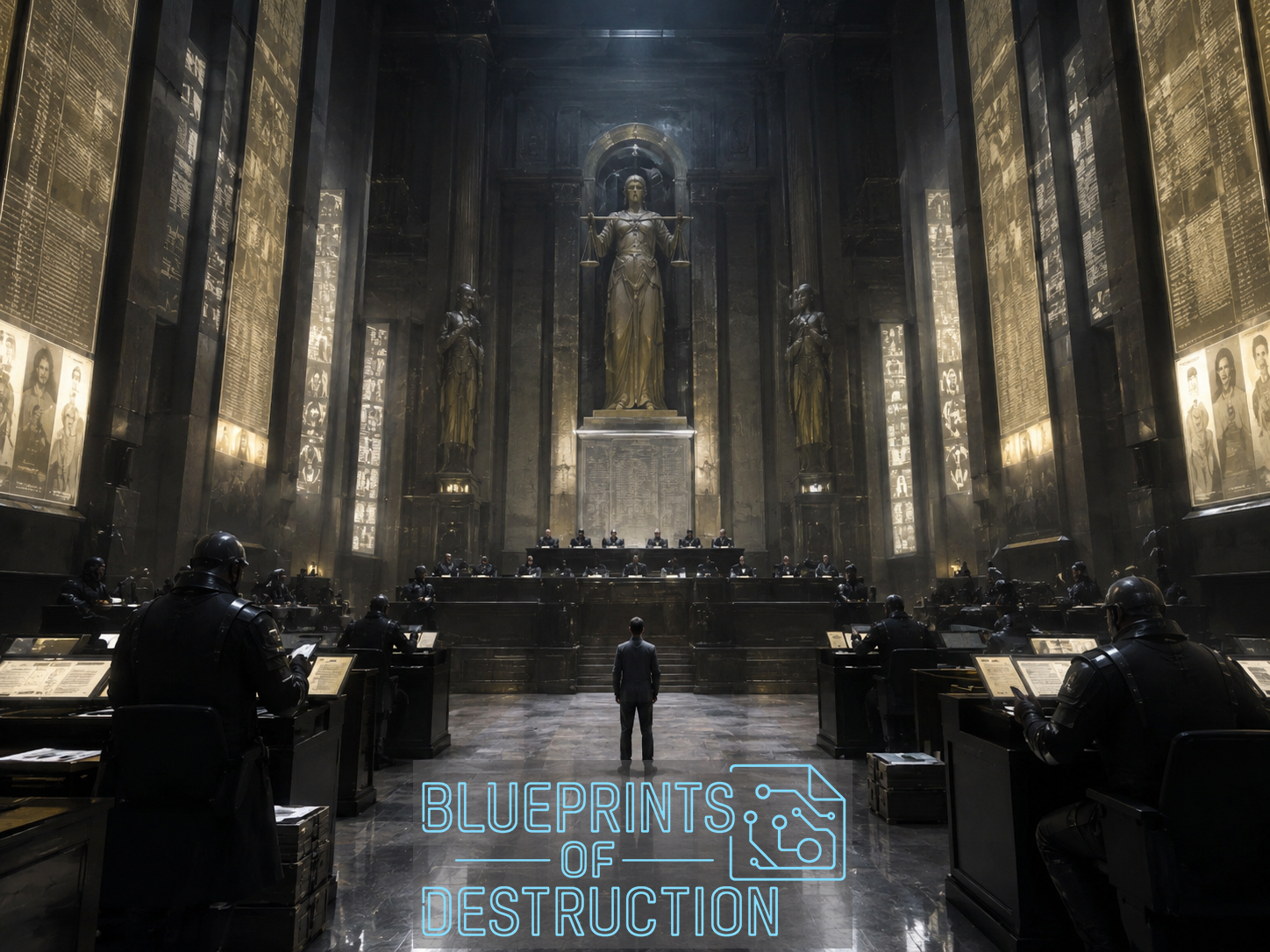
Fifteen Core Questions of Qualx (Collapsible)
Fifteen Core Questions of Qualx (Collapsible)
Structural and Foundational Questions
1. Founding Principle: What was the original purpose or event that led to the formation of Qualx's governing body?
2. Power Source: Who or what grants authority in Qualx? Is authority granted by the people, an inherited class, or divine mandate?
3. Political Hierarchy: Does Qualx have a single central government, or multiple autonomous city-states that operate under one banner?
4. Guilds and Governance: How does the Guild function within the overall government structure? What groups, arms of government, organizations, corporate entities, or separate power blocs interact? Who negotiates with whom?
5. Citizenship and Life Rights: How are Life Rights granted, suspended, revoked, or used as currency? And who has the authority to execute and activate these transactions?
Administrative and Legal Questions
6. Law Enforcement: Who enforces law and order in Qualx? Is it a police-like structure, a military force, mindless automatons, Guild-appointed agents, or is there something darker and more mysterious at play?
7. Judicial System: Who administers justice? Are there trials, arbitration councils, judges, natural disasters sent by gods, or Guild tribunals?
8. Economic Control: What serves as currency in Qualx? And is the economy state-run, Guild-driven, capitalist, resource-based, or is it some kind of hybrid system?
9. Territorial Management: How is land and resource distribution managed? Is there private ownership, state assignments, or a link between Life Rights and the acquisition of raw materials?
Cultural and Ideological Questions
10. Core Ideology: What is the prevailing philosophy or moral compass of the government or people? What mindset helps determine order, progress, control, or survival?
11. Religion and Power: Does religion have any role in Qualx? If so, is it used to legitimize or challenge authority?
12. Information Control: How is knowledge and communication regulated? Is it open and free, heavily censored, or filtered through some kind of in-story gatekeeper or censor?
Political Dynamics
13. Conflict and Rebellion: What forms of dissent exist? Are there underground movements, rival factions, sanctioned opposition, or is it a free-for-all?
14. Military Role: If there is an army? Is it a protector of the people, an enforcer of the regime, or is it fragmented and bureaucratically useless?
15. Foreign Relations: Does Qualx interact with other peoples, nations, or worlds, or is it isolated and self-contained?
Let's take a closer look at the system of Justice: how it is administered, and how this form of power can impact the world you are building.
The Judicial System in Worldbuilding
The essence of justice is the moment of decision. In every system, someone decides:
- Was a law actually broken?
- Is this worth acting on?
- What level of response is justified?
Justice is not about morality. It is about control, legitimacy, and consequence. Once you know who can punish, who must obey, and who cannot be touched, the administrator of justice reveals itself naturally.
The Judicial System in Qualx
In Qualx, the judicial system and enforcement are the same group: The Guild. This is a judicial system that has been collapsed inward. In other words, where the United States has three different branches of government: The Executive, Legislative, and Judicial, Qualx has two equal branches.
It could generally be said God rules by divinity, a king rules by sovereignty, and a president of a coalition of states governs by executive authority. We will take this to be a true statement for the purpose of comparison.
The two equal branches within Qualx operate under the authority of a Grand Archon. The Grand Archon's authority falls somewhere between the divine and the sovereign (PranqenLu refers to this as the Aureate authority). With that in mind, Qualx's two branches of government are there to interpret the mandates of the Grand Archon's Aureate.
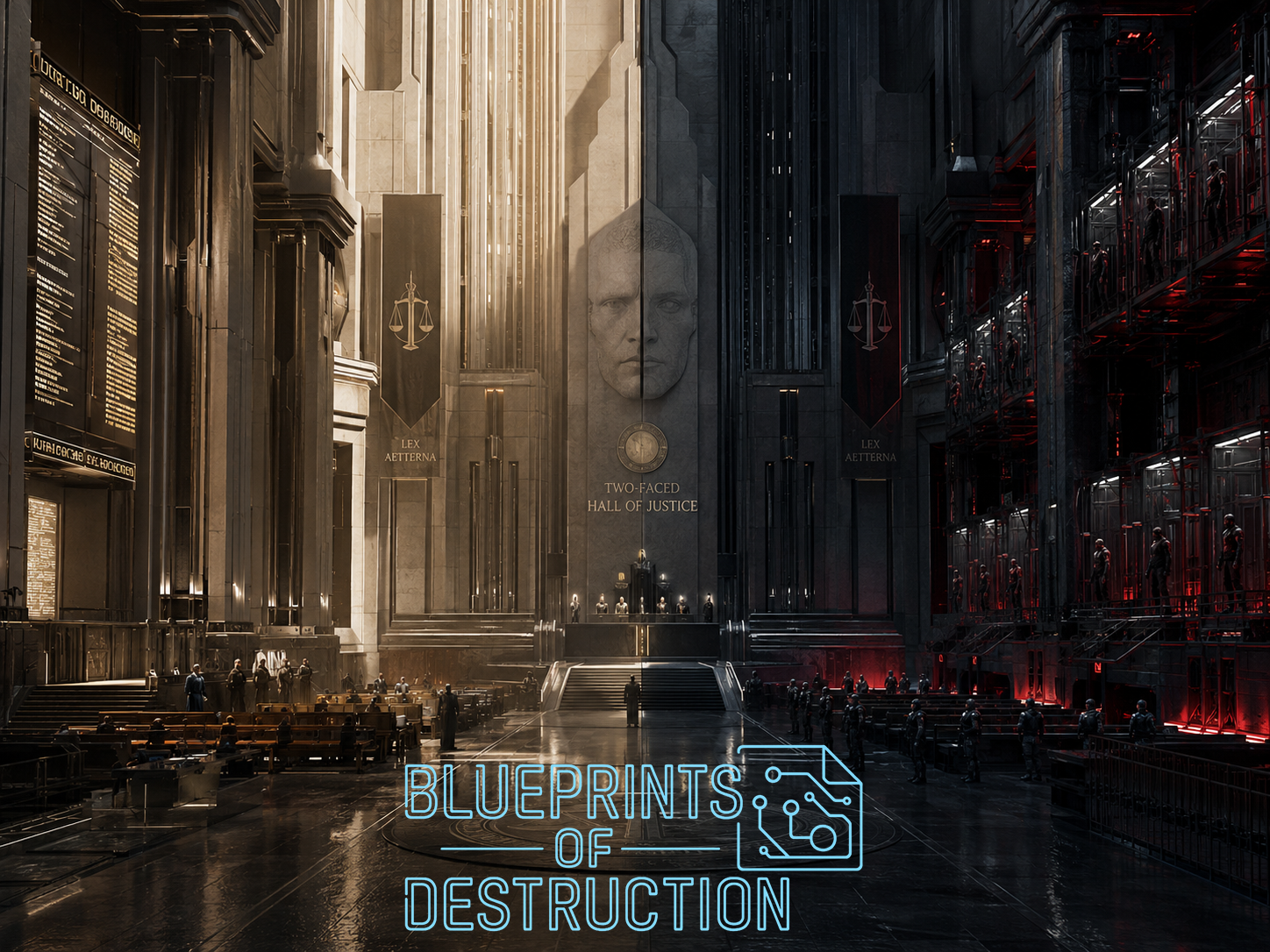
This inward folding of the judicial system and enforcement increases the efficiency of the Guild as it operates. They act as judge, jury, and executioner. This efficiency has a cost. This compression of what would otherwise be two complex systems reduces the overall transparency. It becomes opaque to those it serves.
Through this consolidation, the system becomes more practical. It is very effective, but it is almost too effective. While criminals are promptly dealt with, the system risks turning against the very individuals it was meant to protect.
Instead of simply purging the streets of lawbreakers, it can potentially enact judgment on the innocent. In this case, those who are law-abiding begin to do so out of fear instead of altruism. On the other end of the spectrum, those who otherwise wouldn't have broken any laws begin to lash out as a rejection of the system. Streamlined safety breeds both compliance and compulsion.
Point of Contact
It is helpful to ask yourself how the characters within your world perceive and interact with the judicial system within which you have placed them. Do they attempt to manipulate or weaponize it? Do they cower before it?
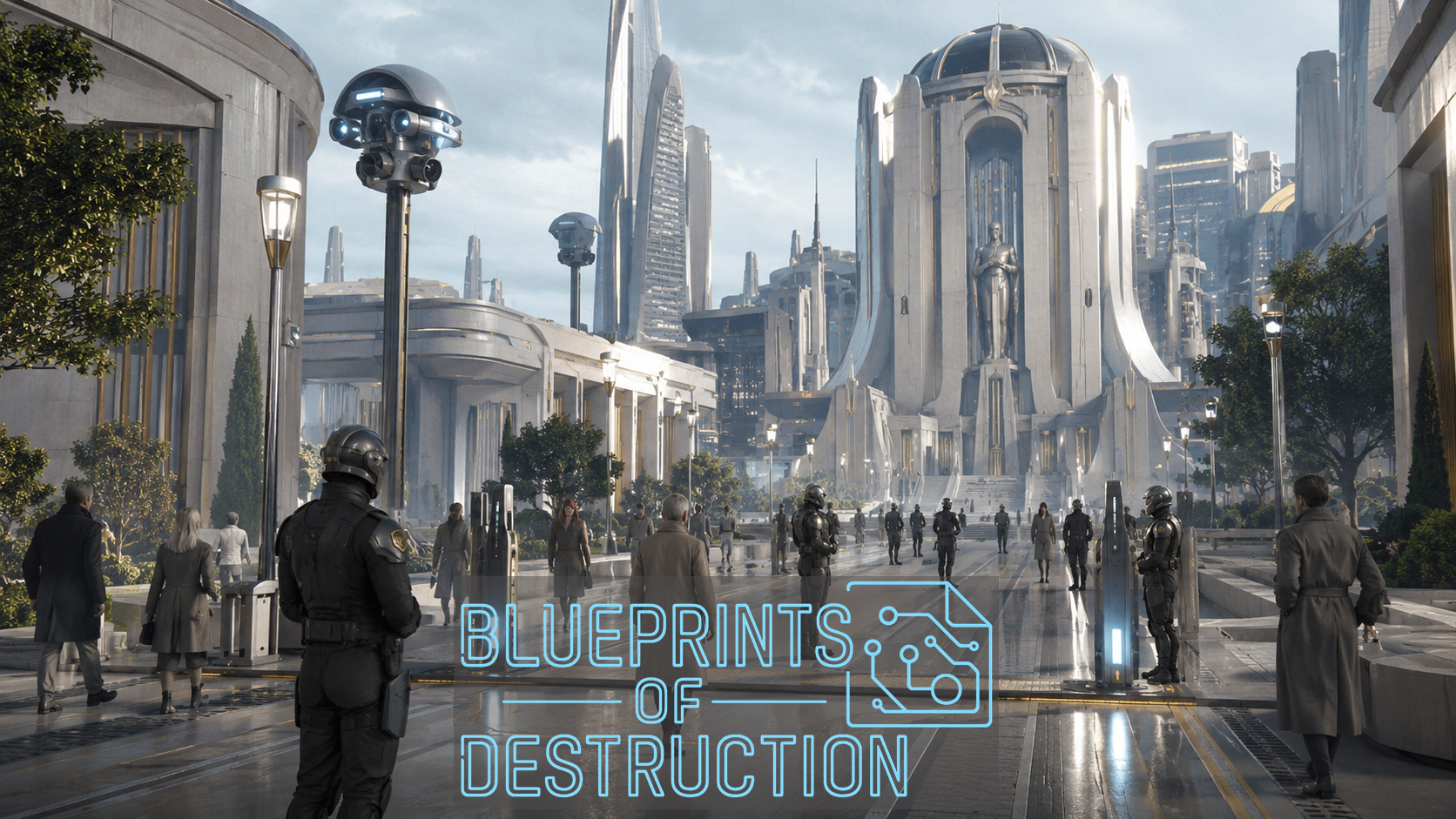
In Qualx, the justice that many citizens interact with on a day-to-day basis is the Guild. While many citizens are wary of the Guild, they don't outright fear the boots on the ground. Since Guild service is compulsory for any male with Life Rights, citizens understand that it is a duty. Yet, many still remain wary. The Guild is seen as necessary but never quite comfortable. Patrols move with precision and purpose, and their presence shifts the atmosphere on the street. Citizens straighten their posture, adjust their tone, and remain aware.
The Guild does not need to threaten; its authority is understood.
While the Guild can be preemptive at times, it depends on the location. Citizens in safer, more stable areas that are less prone to crime are met with a relaxed iteration of the Guild. In the more seedy areas of Qualx where crime is high, the Guild presence is alert, active, and almost always primed to take action. Location can dictate response.
Defined Reality for Fantasy Worldbuilding
The following are questions that you might ask, in order to better learn how your system might present itself:
- Can the system be wrong?
- Can it contradict itself?
- Can a decision be reversed?
- Who authorizes exceptions?
This is more than how the system thinks. It is about how the judicial system executes its actions. Most importantly, it is about causality within the narrative of your story
In the case of the Guild, the system can be wrong. It can contradict itself and decisions can be reversed.
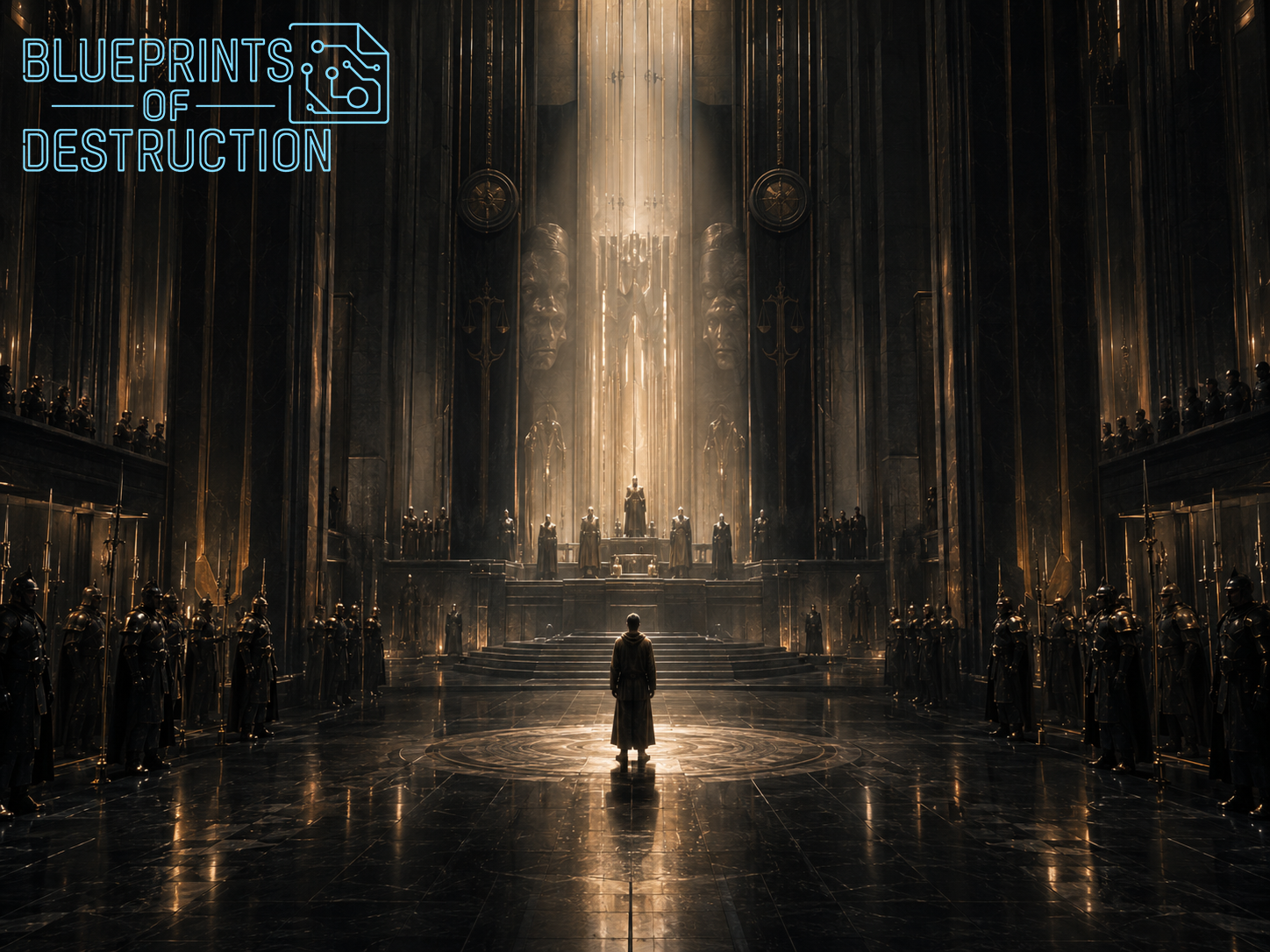
...Or so it claims.
Senators and Archons can be appealed to request a reversal of a decision, and both can authorize exceptions. This, as you can imagine, allows abundant opportunity for conflict within the story.
The Grand Archon is excluded from this general rule. The decisions he makes are final and irreversible.
System Values
Because enforcement and judgment are unified in Qualx's structure, the question of justice helps to reveal what the system values. Qualx's judicial system establishes that it values efficiency and legitimacy over all else. Because these take priority, fairness has a lesser value. Channels to appeal decisions are rarely used by citizens.
The line between criminal and civil issues are well understood by most individuals. While the Guild claims that it can have incorrect rulings, in practice it is rare for anyone to question them outright. Almost all rulings are final.
Developing the Judicial System in Your World
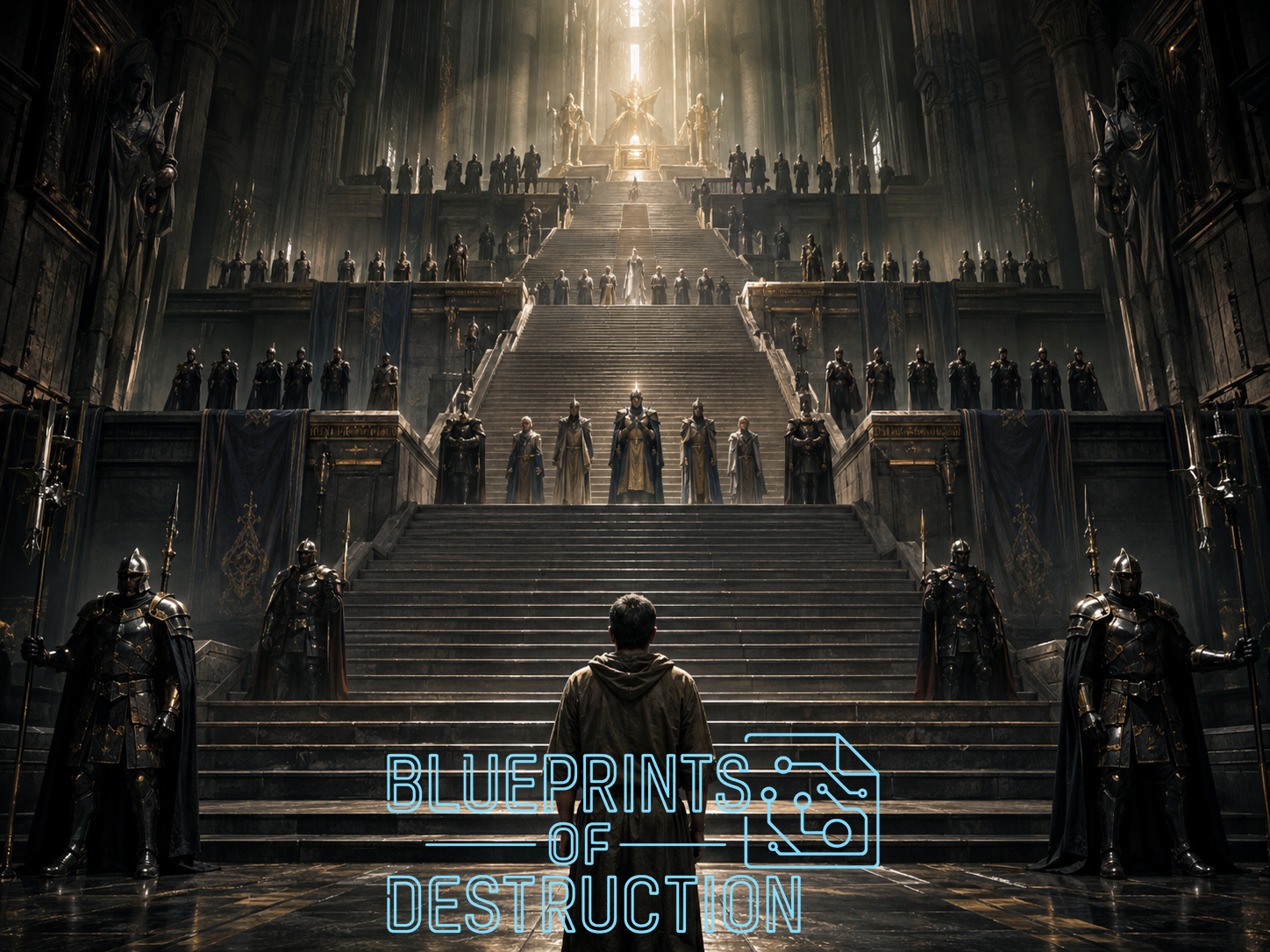
When you build the justice system for your world, you aren't just crafting a system of rules. You are building a form of pressure that will push your story forward. The way that justice works in your world shapes how your characters think, act, and survive. The judicial system is not about right and wrong. It is about tension. It is about conflict and resolution.
This is where stories grow. When you understand who decides, who obeys, and who cannot be challenged, you can begin to understand the heart of your world. When you understand how your world thinks, you are one step closer to telling the powerful stories inside.
The best way to develop your world's own system of justice is to flesh it out through writing. As you test and re-test different scenarios that might happen in your narrative, you will get a feel for how your world ebbs and flows. Go get started!
